
In today’s rapidly growing recycling industry, efficient waste management has become an important priority for businesses across various sectors. From warehouses and supermarkets to recycling centers and manufacturing facilities, companies are looking for reliable ways to reduce waste volume, lower transportation costs, and improve operational efficiency.
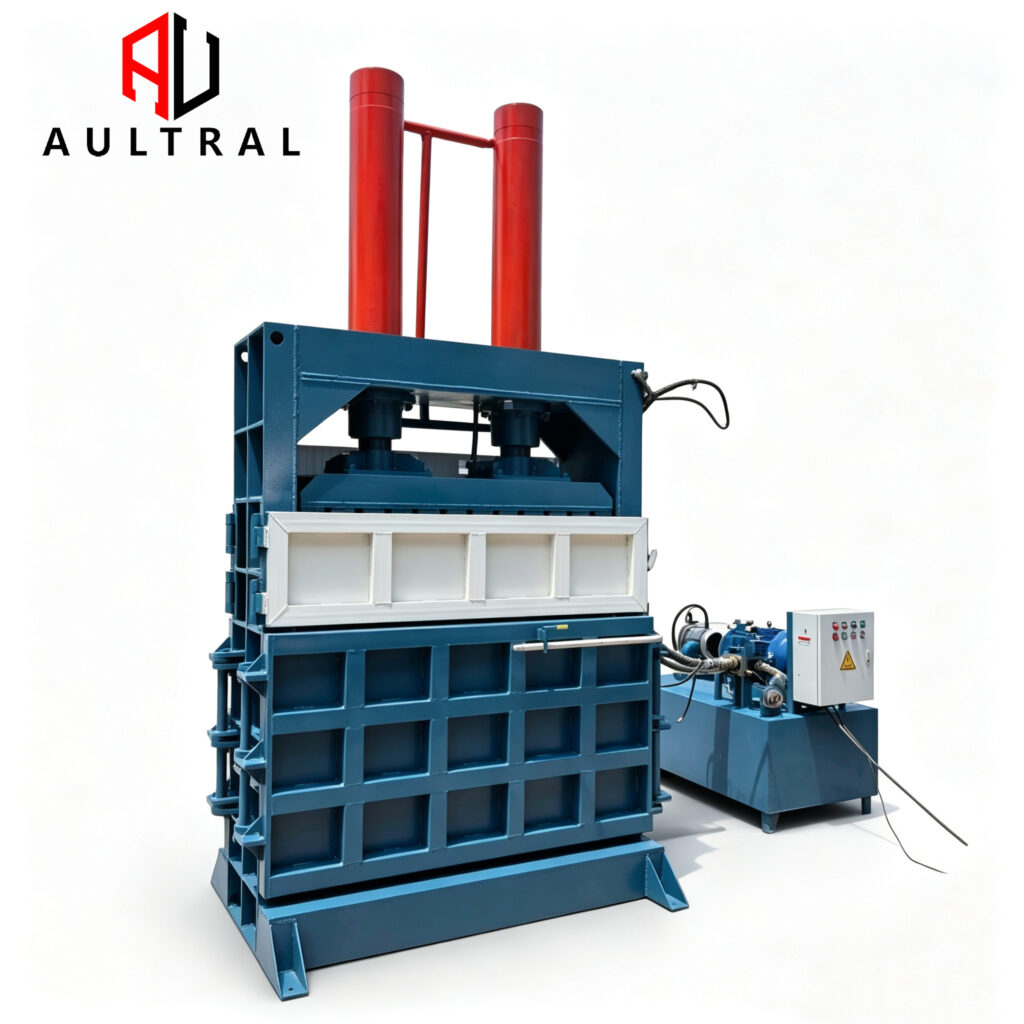
A Vertical Hydraulic Baler is an ideal solution for compacting recyclable materials into dense, manageable bales. With its compact structure, powerful hydraulic system, and easy operation, this machine helps businesses handle waste more efficiently while making better use of valuable storage space.
1. What Is a Vertical Hydraulic Baler?
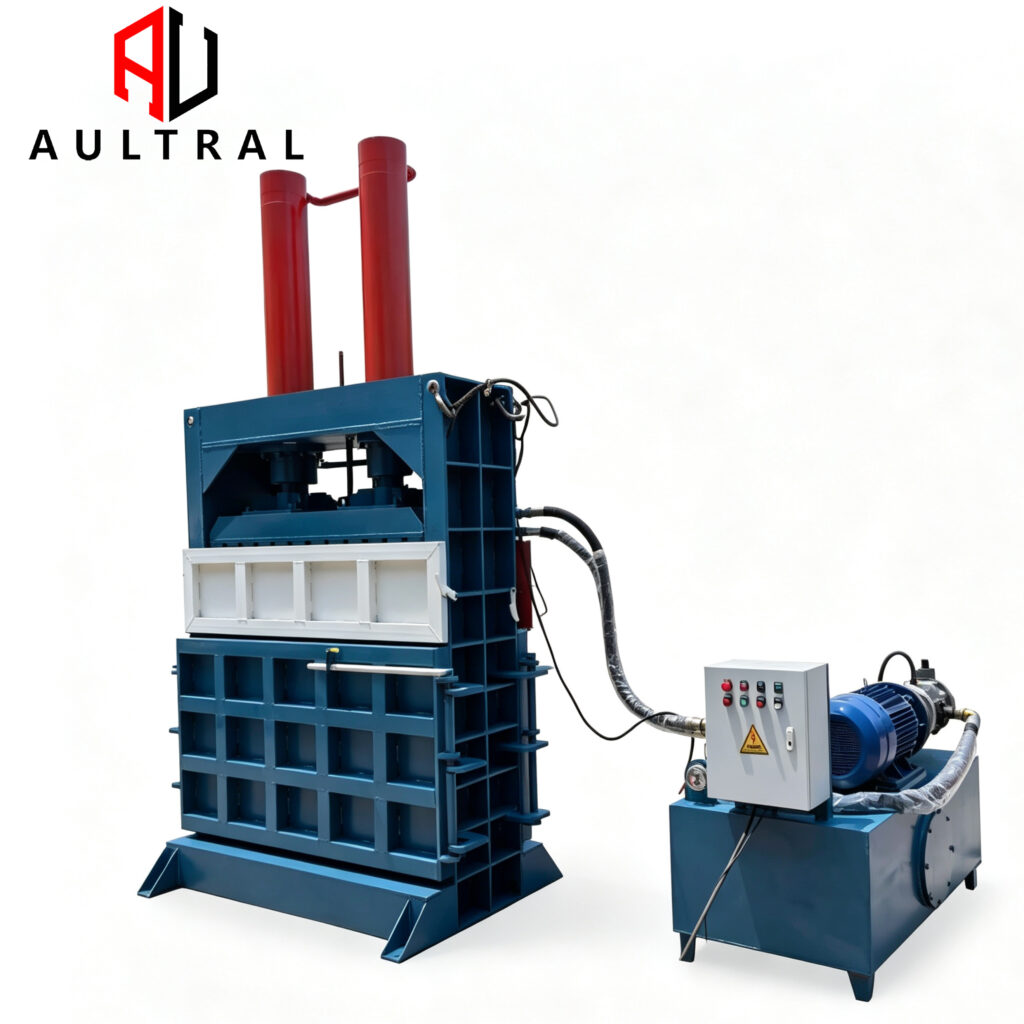
A vertical hydraulic baler is a waste compaction machine that uses hydraulic pressure to compress loose materials into compact bales. Unlike horizontal balers, which are generally designed for large-scale and continuous production, vertical balers feature a vertical compression chamber and a relatively small footprint.
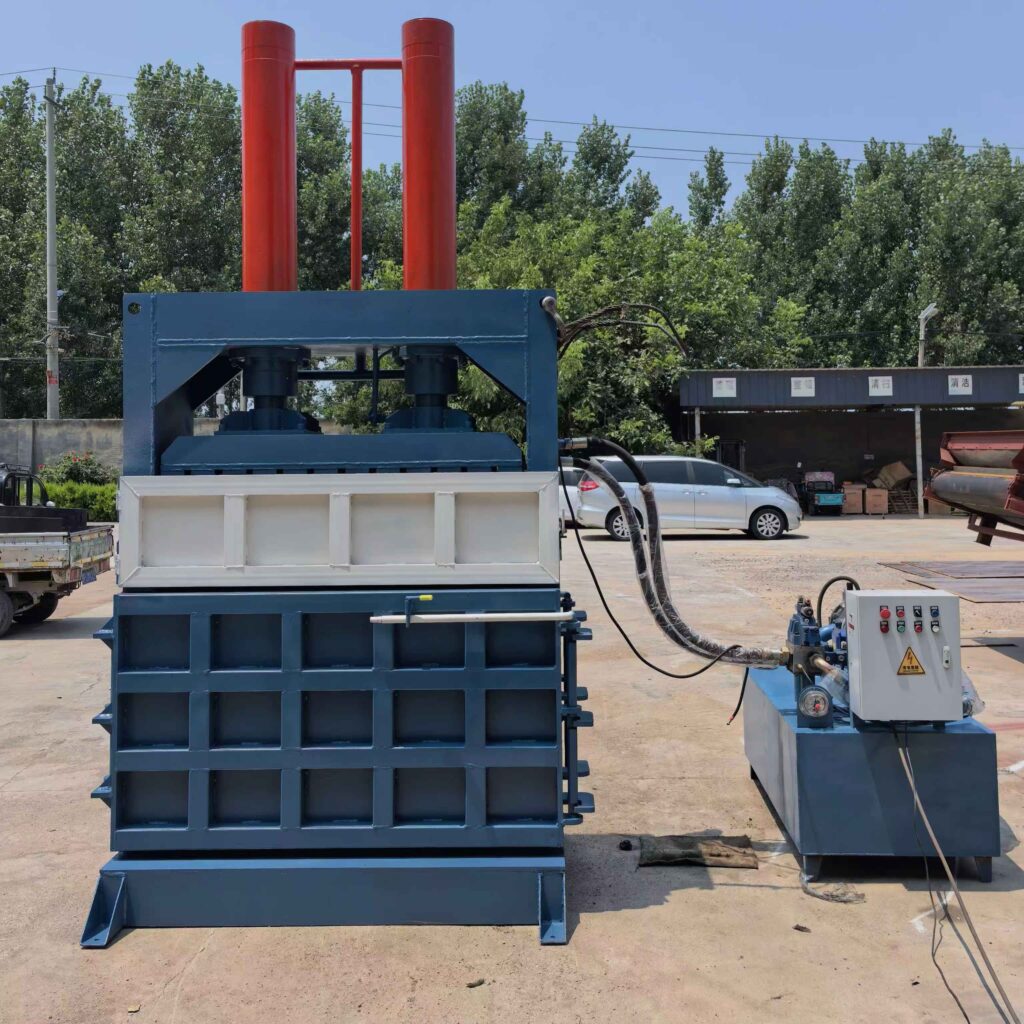
The machine typically consists of a hydraulic cylinder, compression chamber, electric motor, hydraulic pump, control system, and safety protection devices.
Depending on the model and application, vertical balers can be equipped with different pressing forces, chamber dimensions, and bale sizes to meet specific customer requirements.
They are particularly suitable for businesses that generate small to medium volumes of recyclable waste and need a practical, space-saving recycling solution.
2. How Does a Vertical Hydraulic Baler Work?
The working process of a vertical hydraulic baler is simple and efficient.
Step 1: Material Loading
Operators place recyclable materials into the feeding chamber. Depending on the machine design, materials can be loaded manually or through an auxiliary feeding system.
Step 2: Hydraulic Compression
After loading, the operator activates the control system. The hydraulic pump supplies high-pressure oil to the cylinder, driving the pressing plate downward to compress the materials.
Step 3: Bale Formation
The compression process continues until the materials reach the required density and bale size. Multiple compression cycles may be required depending on the material type and feeding volume.
Step 4: Bale Tying
Once compression is completed, the operator secures the bale using steel wire, plastic straps, or other suitable tying materials.
Step 5: Bale Ejection
The finished bale is pushed out using the machine’s ejection mechanism, ready for storage, transportation, or further recycling.
3. What Materials Can a Vertical Baler Process?
One of the biggest advantages of a vertical hydraulic baler is its versatility. Different models can handle a wide range of recyclable materials, including:
- Waste Paper and Cardboard: Suitable for supermarkets, packaging companies, printing factories, and distribution centers.
- Plastic Bottles and PET: Compresses loose plastic bottles into compact bales for easier storage and transportation.
- Plastic Film: Handles stretch film, LDPE film, and other flexible plastic waste.
- Textiles and Clothing: Reduces the volume of discarded garments, fabrics, and textile waste.
- Aluminum Cans: Compresses beverage cans and lightweight aluminum scrap.
- Waste Tires: Specialized vertical tire balers can compress waste tires to reduce storage and transportation space.
- Other Recyclable Materials: Depending on machine configuration, certain models can process different industrial and commercial waste materials.
Choosing the correct machine depends on the material characteristics, daily processing volume, and required bale dimensions.
4. Key Advantages of a Vertical Hydraulic Baler
Space-Saving Design
Vertical balers have a compact structure and require less floor space than many horizontal baling systems. This makes them particularly suitable for facilities with limited working areas.
High Compression Efficiency
Powered by a hydraulic system, the machine generates strong compression force to reduce the volume of loose waste. The resulting bales are easier to stack, store, and transport.
Lower Transportation Costs
By significantly reducing waste volume, businesses can load more compacted materials into trucks or containers, helping reduce transportation frequency and logistics expenses.
Easy Operation
Most vertical balers feature a straightforward control system. Operators can learn the basic operating procedures quickly, helping reduce training time and daily labor requirements.
Flexible Customization
Vertical hydraulic balers can be customized according to different applications. Options include pressing force, bale dimensions, chamber size, motor power, voltage, and ejection methods.
Reliable Hydraulic Performance
A well-designed hydraulic system provides stable compression performance and supports long-term industrial operation when properly maintained.
5. How to Choose the Right Vertical Hydraulic Baler?
Before purchasing a vertical hydraulic baler, it is important to evaluate several key factors.
1. Material Type
Different materials require different compression forces and machine configurations. For example, cardboard, plastic film, aluminum cans, and waste tires have different compression characteristics.
2. Daily Processing Capacity
Consider how many kilograms or tons of material you need to process per day. This helps determine the appropriate machine capacity and operating cycle.
3. Bale Size and Weight
Think about your storage conditions and transportation requirements. Larger and heavier bales may improve loading efficiency, but the machine must be properly matched to your material.
4. Hydraulic Pressure
The required pressing force depends on the material and the desired bale density. Common vertical baler capacities include 20-ton, 40-ton, 60-ton, 80-ton, and higher-pressure models.
5. Power Supply
Confirm the local voltage, frequency, and phase requirements before ordering. Customized electrical configurations can help ensure compatibility with your facility.
6. Safety and After-Sales Support
A reliable supplier should provide appropriate safety protection, operating instructions, technical support, and spare parts services.
6. Applications Across Different Industries
Vertical hydraulic balers are widely used in:
- Recycling centers and waste management companies.
- Supermarkets and shopping malls.
- Warehouses and logistics centers.
- Paper mills and printing factories.
- Plastic recycling facilities.
- Textile and garment factories.
- Automotive and tire recycling businesses.
- Manufacturing and industrial plants.
Whether you operate a small recycling business or manage waste in a large industrial facility, a suitable vertical baler can help improve waste handling efficiency.
7. Why Choose a Customized Vertical Hydraulic Baler?
Every recycling operation has different requirements. A standard machine may not always provide the best solution for your specific materials and working conditions.
A professional supplier should be able to recommend suitable equipment based on your material type, processing capacity, bale size, and installation environment.
At AULTRAL, we focus on providing one-stop waste processing equipment solutions, including hydraulic balers, shredders, crushers, and metal recycling machinery.
Our vertical hydraulic balers can be customized with different pressing forces, bale sizes, motor configurations, and electrical systems to meet the needs of customers in different markets.
We also provide technical support, installation guidance, and after-sales service to help customers achieve stable and efficient operation.
A vertical hydraulic baler is a practical investment for businesses looking to improve waste management, reduce storage requirements, and lower transportation costs.
With its compact design, powerful hydraulic compression, flexible configurations, and wide range of applications, it offers an efficient solution for handling recyclable materials.