
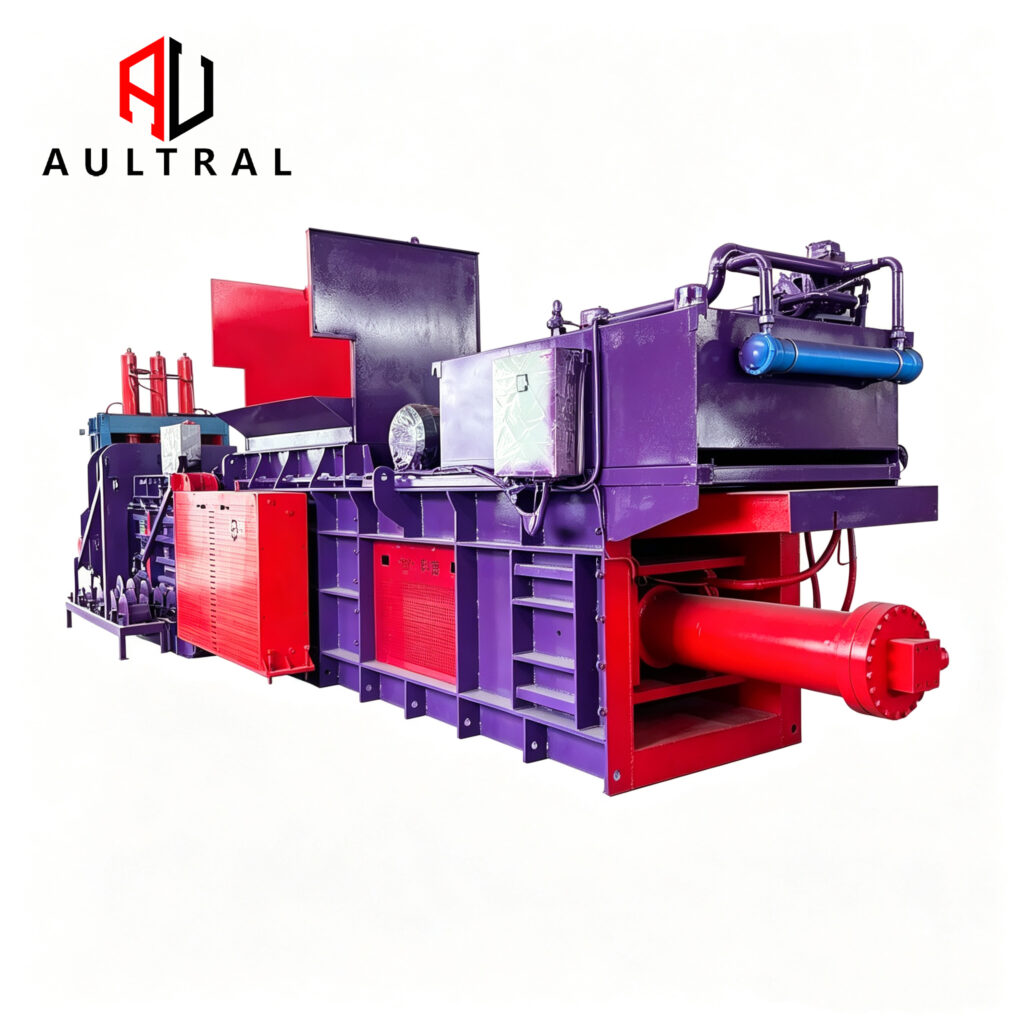
With the increasing demand for efficient waste management and sustainable recycling, businesses need reliable equipment to process large volumes of recyclable materials. From recycling plants and paper mills to warehouses, packaging factories, and manufacturing facilities, handling loose waste can consume valuable storage space, increase labor costs, and create transportation challenges.
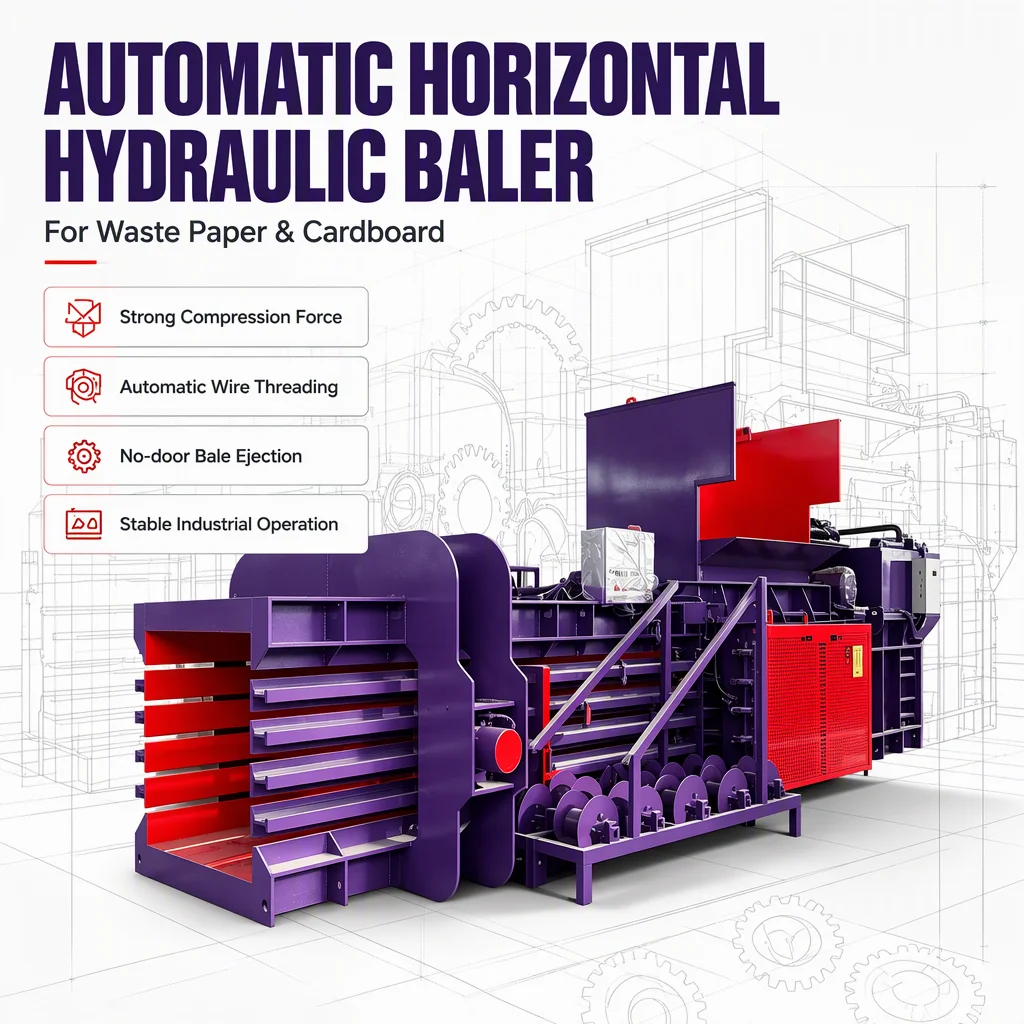
A horizontal automatic hydraulic baler is an efficient solution for compressing recyclable materials into dense, uniform bales. Equipped with a powerful hydraulic system and an automatic control system, this machine can streamline the baling process, improve operational efficiency, and reduce manual handling.
In this guide, we will explore how horizontal automatic balers work, their key advantages, common applications, and how to choose the right machine for your business.
What Is a Horizontal Automatic Hydraulic Baler?
A horizontal automatic hydraulic baler is an industrial recycling machine designed to compress large quantities of recyclable materials horizontally inside a compression chamber. Hydraulic cylinders generate the required force to compact loose materials into dense bales, which are then automatically tied and discharged according to the machine’s configuration.
Unlike conventional manual balers, fully automatic horizontal balers typically integrate automatic feeding, hydraulic compression, bale tying, and bale discharge functions. Once the machine is properly configured and operating conditions are met, these processes can run continuously with limited manual intervention.
Depending on the model and application, a horizontal automatic baler can process:
- Waste paper, cardboard, and cartons
- Waste plastics and plastic film
- PET bottles and other suitable plastic packaging
- Aluminum cans and selected light metal scrap
- Textile waste and industrial fabric offcuts
- Other compressible recyclable materials
For high-volume recycling operations, an automatic horizontal baler offers an effective way to standardize bale production and simplify downstream material handling.
How Does an Automatic Horizontal Baler Work?
The working process of an automatic hydraulic baler generally involves four main stages.
1. Automatic Material Feeding
Recyclable materials are delivered into the compression chamber through a conveyor belt, feeding hopper, or other compatible feeding system. The feeding arrangement can be selected according to the material characteristics and required processing capacity.
2. Hydraulic Compression
A hydraulic power unit drives the compression cylinder, pushing the material forward and reducing its volume. Repeated compression cycles build up the material inside the chamber until the required bale length or operating condition is reached.
3. Automatic Bale Tying
Once the bale reaches the preset conditions, the automatic tying system secures it with suitable baling wire or other specified tying materials. The tying method depends on the machine design and the type of material being processed.
4. Bale Discharge
After tying, the finished bale is discharged from the machine for storage, transportation, or further recycling. The entire process can be coordinated by a PLC control system, helping operators monitor machine operation and manage production more efficiently.
The actual cycle time and hourly output depend on the material, machine specifications, feeding consistency, bale dimensions, and operating conditions.
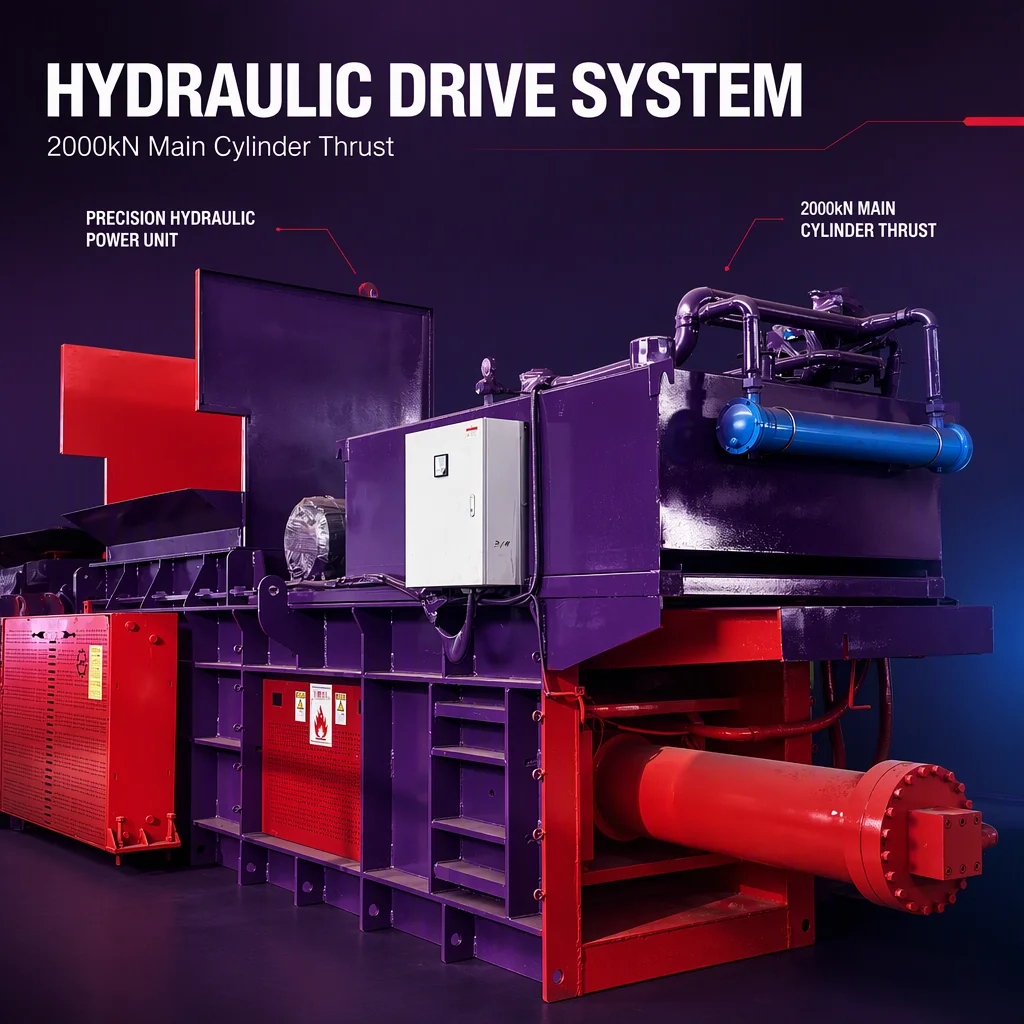 Key Advantages of a Horizontal Automatic Hydraulic Baler
1. High Processing Efficiency
Automatic feeding, compression, and tying reduce the need for repeated manual operations. This makes horizontal automatic balers particularly suitable for recycling facilities handling substantial quantities of waste every day.
For example, selected high-capacity models can be configured to process approximately 15 tons of material per hour. Actual output must be confirmed according to the material type, bulk density, and machine configuration.
2. Reduced Labor Requirements
A PLC-controlled automatic system helps coordinate the baling cycle and minimizes routine manual handling. Operators can focus on monitoring the equipment, managing material supply, and performing routine inspections.
The number of operators required depends on the feeding system, plant layout, safety procedures, and production volume.
3. Dense and Uniform Bales
Hydraulic compression produces compact bales that are easier to stack, store, and transport. Consistent bale dimensions can also simplify warehouse management and improve loading efficiency.
4. Lower Storage and Transportation Costs
Loose recyclable materials often occupy considerable space. Compressing them into dense bales helps businesses use storage areas more effectively and may reduce transportation costs by improving vehicle or container loading efficiency.
Actual savings depend on the material, bale density, freight rates, and logistics arrangements.
5. Intelligent Control and Reliable Operation
Many modern horizontal automatic balers use a PLC control system and industrial electrical components, such as Schneider Electric components where specified. The control system coordinates the operating sequence and supports consistent machine performance.
Appropriate safety interlocks, emergency-stop functions, protective guarding, and operator training are essential for safe operation.
6. Flexible Configuration
Horizontal automatic hydraulic balers are available in different compression forces, chamber dimensions, motor power ratings, and feeding configurations. Depending on the application, customers can select equipment designed for lightweight packaging waste or more demanding industrial recycling processes.
Applications Across Different Industries
Horizontal automatic balers are widely used in industries where recyclable materials are generated in large quantities.
Recycling Centers: Process mixed paper, cardboard, plastics, and other suitable recyclable materials for easier storage and transportation.
Paper Mills and Packaging Factories: Compact waste paper, cardboard sheets, cartons, and production offcuts.
Plastic Recycling Plants: Compress selected plastic film, bottles, and packaging materials before further processing.
Logistics and Distribution Centers: Manage large quantities of packaging waste generated by warehousing and distribution operations.
Manufacturing Facilities: Handle suitable production scrap and packaging waste to maintain an organized working environment.
Large Commercial Waste Management Operations: Improve the efficiency of waste collection, sorting, and baling processes.
For metal scrap, heavy-duty applications, or materials with special handling requirements, the machine must be selected according to the material’s characteristics and the required bale specifications.
How to Choose the Right Horizontal Automatic Baler
Choosing the right machine requires evaluating your production requirements rather than comparing compression force alone.
Material Type and Characteristics
Identify the materials to be processed, including their dimensions, moisture content, bulk density, and feeding behavior. Different materials may require different chamber designs and compression configurations.
Required Processing Capacity
Determine your target hourly or daily output. Make sure the feeding conveyor, compression system, and bale tying mechanism can work together to support the required throughput.
Bale Size and Weight
Consider the requirements of your customers, storage area, forklifts, and transportation containers. The desired bale dimensions and weight will influence the machine model and chamber configuration.
Hydraulic Pressure and Motor Power
Compression force and installed power affect performance, but they must be matched to the material and production target. Ask the supplier to confirm the expected output under realistic operating conditions.
Automation Level
Consider whether you need automatic feeding, PLC control, automatic bale tying, and automatic discharge. A properly integrated system can improve production consistency and reduce routine manual handling.
Electrical Requirements and Installation Space
Confirm the local voltage, frequency, phase, available power supply, and installation dimensions before ordering. Also consider conveyor layout, maintenance access, and material flow throughout the facility.
After-Sales Service
Choose a supplier that can provide technical documentation, operating instructions, spare parts, installation support, and ongoing service.
Why Choose AULTRAL Horizontal Automatic Balers?
AULTRAL provides waste processing equipment solutions for recycling facilities and industrial customers worldwide. Our horizontal automatic hydraulic balers can be configured according to different materials, production targets, and installation requirements.
Depending on the selected model, available features may include:
- High-force hydraulic compression systems
- PLC automatic control
- Automatic bale tying
- Conveyor feeding solutions
- Customized bale dimensions and machine configurations
- Electrical configurations tailored to local requirements
We focus on helping customers identify suitable equipment based on actual processing needs, rather than recommending a machine based only on its rated compression force.
Whether you are establishing a new recycling plant or upgrading an existing waste handling system, AULTRAL can help you evaluate an appropriate horizontal baling solution.
Frequently Asked Questions
Q1: What materials can a horizontal automatic baler process?
Common applications include waste paper, cardboard, plastic film, PET bottles, and selected textile or light metal materials. Compatibility depends on the machine design.
Q2: What is the production capacity of a horizontal automatic baler?
Capacity varies by model and material. Some high-capacity configurations can reach approximately 15 tons per hour, but the actual output should be confirmed through application-specific evaluation or testing.
Q3: Does an automatic baler require manual tying?
A fully automatic model generally integrates automatic bale tying. Semi-automatic configurations may require operators to complete certain tying or handling steps.
Q4: Can the machine be customized?
Yes. Depending on the model, customization may include compression force, feeding conveyor, bale dimensions, motor power, voltage, and other configuration options.
Q5: What information is needed for a quotation?
Provide your material type, estimated hourly or daily processing volume, desired bale size and weight, local power supply, and installation conditions. Photos or videos of the material are also helpful.
A horizontal automatic hydraulic baler is a valuable investment for businesses looking to improve recycling efficiency, reduce waste volume, and streamline material handling. With automated feeding, powerful hydraulic compression, and automatic bale tying, it can support consistent production in demanding industrial environments.