
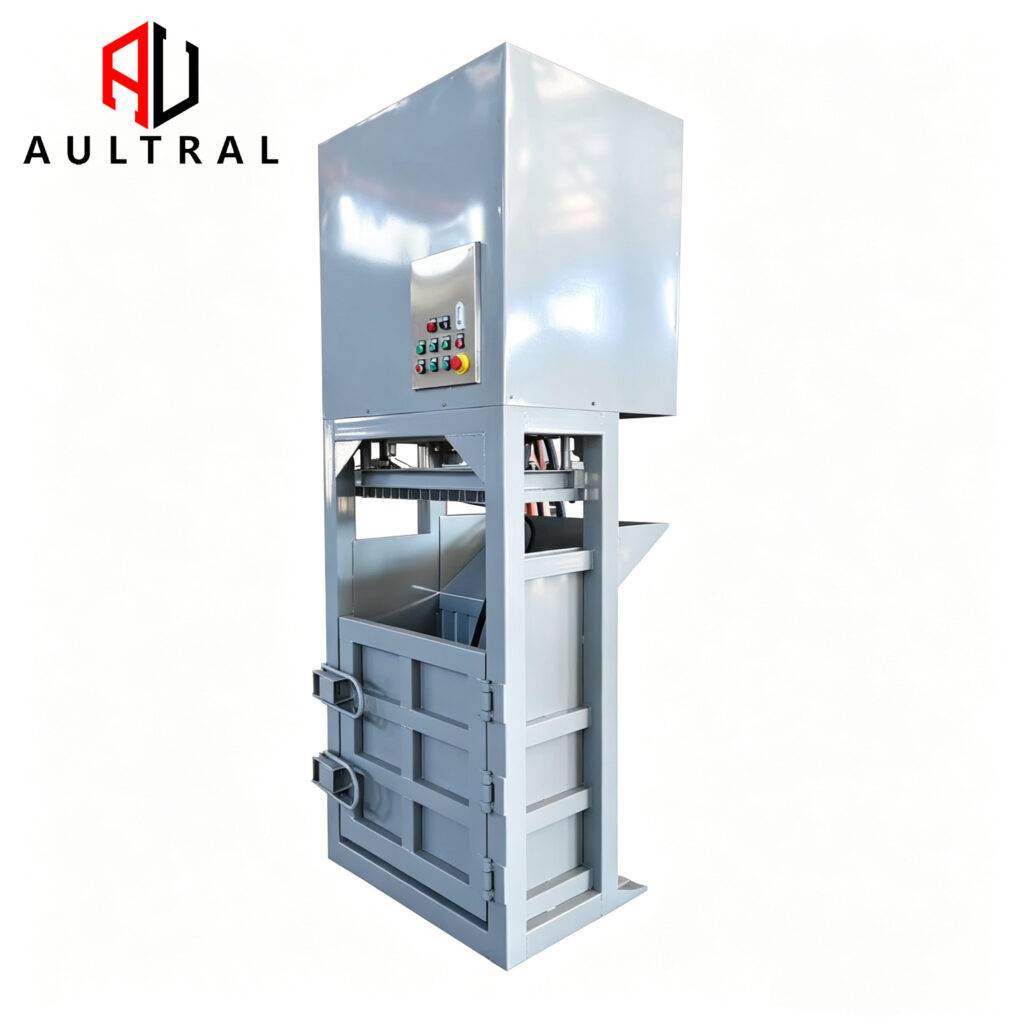
In modern waste management and recycling operations, efficiency is not always about using the biggest machine. For small businesses, warehouses, supermarkets, and recycling facilities, a compact and reliable baling machine can make a significant difference.
A 10-ton vertical hydraulic baler is designed to provide an economical and practical solution for businesses that need to reduce waste volume without investing in large industrial equipment. With its compact structure, simple operation, and reliable hydraulic compression system, this machine helps turn loose recyclable materials into neat, manageable bales.
Whether you are handling cardboard boxes, plastic bottles, paper, or other lightweight recyclable materials, a 10T vertical baler can help improve your daily waste management process.
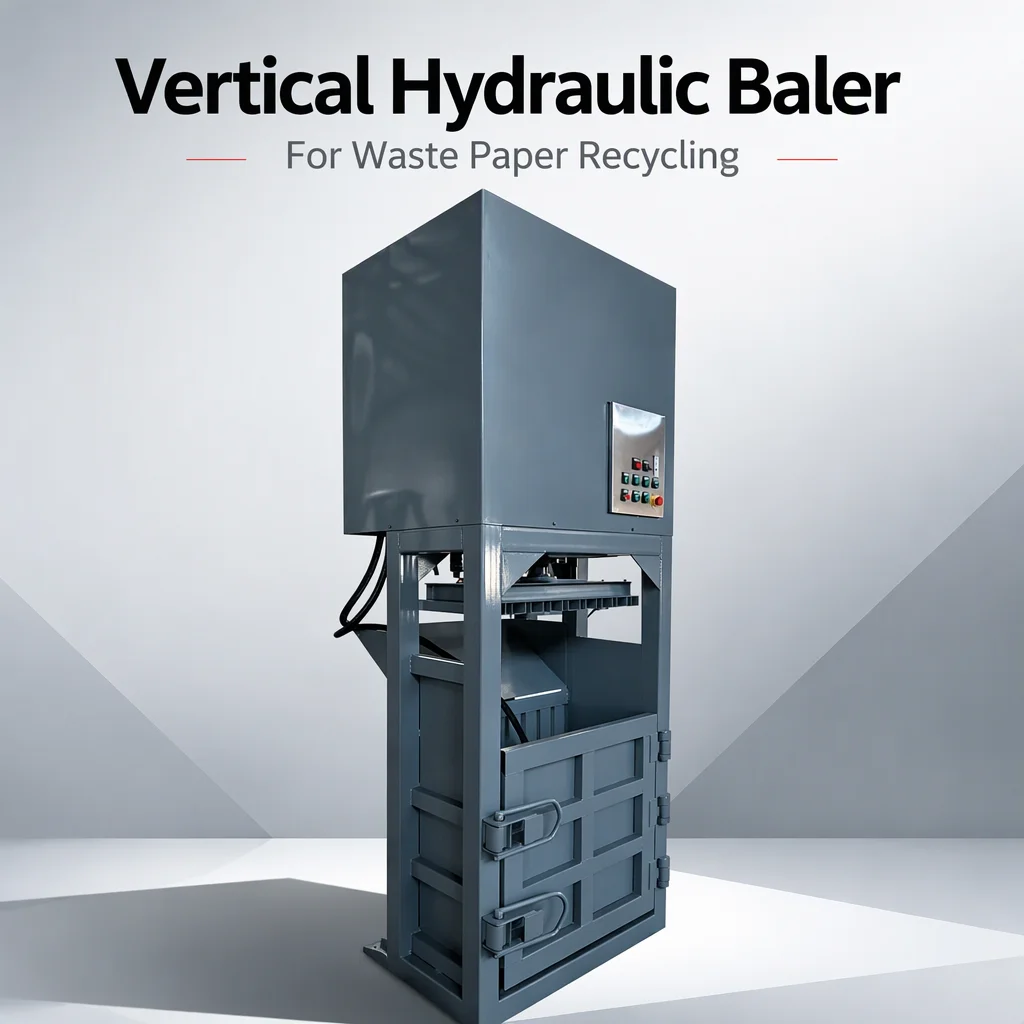 1. What Makes a 10-Ton Vertical Hydraulic Baler Special?
A 10-ton vertical hydraulic baler is a compact waste compaction machine that uses hydraulic pressure to compress recyclable materials into smaller and denser bales.
The machine features a vertical compression chamber, allowing materials to be pressed from top to bottom. Compared with large horizontal baling systems, its compact design requires less installation space and is suitable for businesses with limited working areas.
The 10-ton pressing force makes it an excellent choice for small-scale waste recycling applications where moderate compression capacity is sufficient.
Typical configurations include:
- Hydraulic pressing force: 10 tons
- Compression chamber: Customized according to requirements
- Bale size: Depending on machine configuration
- Hydraulic power system: Electric motor and hydraulic pump
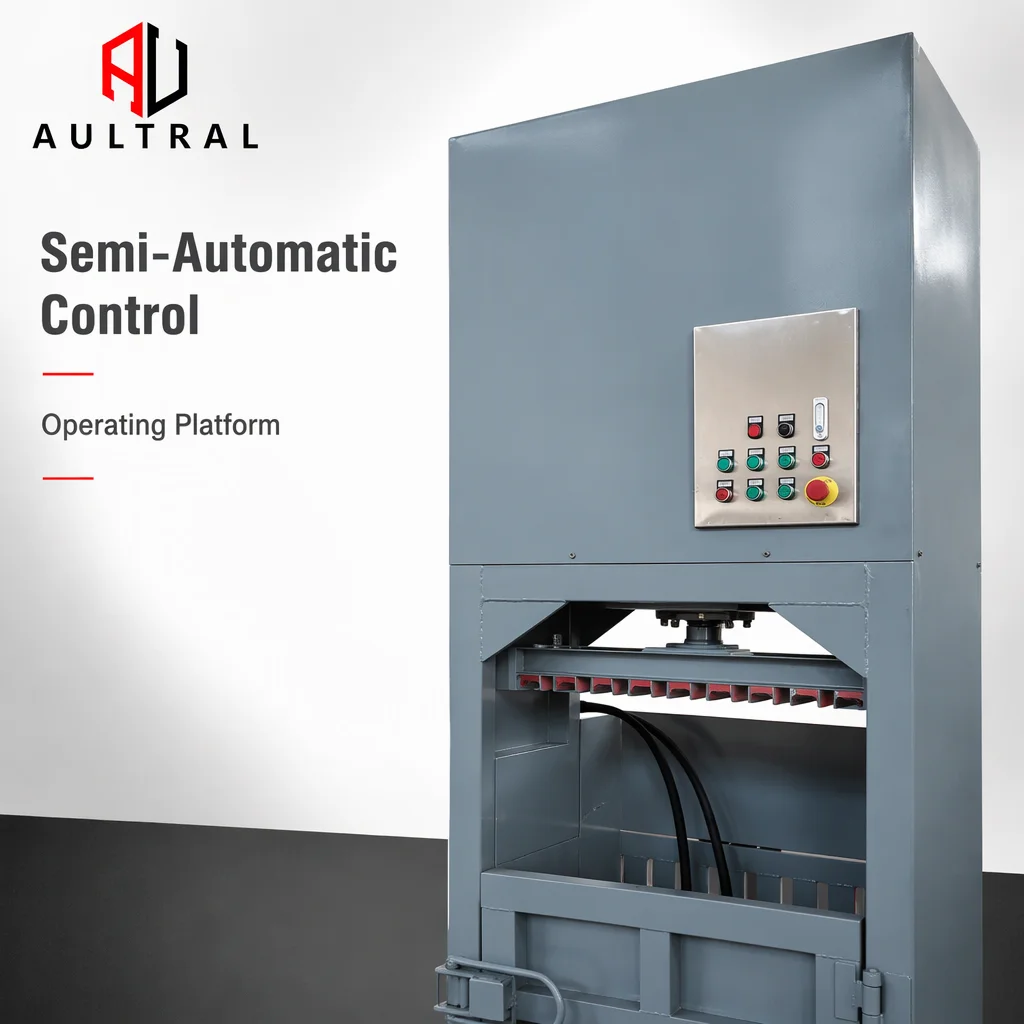
- Operation: Manual feeding with hydraulic control
- Installation: Compact floor-standing design
The machine can also be configured according to different voltage, frequency, and operational requirements.
2. How Does a 10T Vertical Baler Work?
The working principle is based on hydraulic pressure. The hydraulic pump delivers pressurized oil to the hydraulic cylinder, which drives the pressing plate downward to compress the materials.
The complete operation generally involves four steps.
Step 1: Loading Materials
Operators place recyclable waste into the compression chamber through the feeding opening.
Step 2: Hydraulic Compression
Once the material is loaded, the hydraulic system activates and drives the pressing plate downward to compress the waste.
Step 3: Bale Tying
After reaching the required compression level, the operator secures the compressed material using suitable straps or tying wires.
Step 4: Bale Ejection
The finished bale is removed through the machine’s ejection mechanism, ready for storage, transportation, or recycling.
This straightforward process makes the 10-ton vertical baler easy to operate and suitable for businesses without specialized technical personnel.
3. What Materials Can a 10-Ton Vertical Hydraulic Baler Handle?
Although compact in size, a 10T vertical hydraulic baler can be used for various recyclable materials, depending on their characteristics and the machine configuration.
Common applications include:
Waste Paper and Cardboard
Ideal for supermarkets, warehouses, shopping malls, and packaging companies. It compresses loose cardboard boxes and waste paper into compact bales.
Plastic Bottles
Suitable for compressing empty PET bottles and other lightweight plastic containers, reducing their storage volume before transportation.
Plastic Film
Can be used for packaging film, stretch film, and certain types of flexible plastic waste.
Textile Waste
Suitable for compressing fabric scraps, old clothing, and other lightweight textile materials.
Other Lightweight Recyclables
Certain applications involving aluminum cans and similar recyclable materials may also be considered after evaluating the material characteristics.
Selecting the correct machine configuration is important to achieve satisfactory compression results.
 4. Five Reasons to Choose a 10T Vertical Hydraulic Baler
1. Compact Design for Limited Spaces
Not every business has enough room for a large industrial baling system. The 10-ton vertical baler features a space-saving structure, making it suitable for small workshops, warehouses, and recycling stations.
2. Cost-Effective Waste Management
For businesses with relatively low waste volumes, investing in a large-capacity baler may not be necessary. A 10T model offers a more economical entry point into professional waste compaction.
3. Reduced Storage and Transportation Costs
Loose cardboard and plastic waste occupy considerable space. Compressing these materials into compact bales makes storage more organized and helps improve transportation efficiency.
4. Simple and Convenient Operation
The machine is designed with an easy-to-understand operating system. Its straightforward hydraulic operation helps operators complete daily baling tasks efficiently.
5. Flexible Applications
From commercial waste collection to small recycling operations, the machine can serve different industries. Customized configurations allow businesses to select a suitable solution for their actual requirements.
5. Who Should Invest in a 10-Ton Vertical Baler?
A 10T vertical hydraulic baler is particularly suitable for businesses that generate small to moderate quantities of recyclable waste.
Typical users include:
- Supermarkets and retail stores.
- Small and medium-sized warehouses.
- Packaging and printing companies.
- Small recycling collection centers.
- Textile workshops.
- Distribution and logistics facilities.
- Manufacturing plants with limited recyclable waste output.
For these businesses, the machine provides a practical way to improve waste handling without requiring a complicated production line.
6. How to Select the Right 10T Hydraulic Baling Machine?
Before purchasing a 10-ton vertical baler, buyers should consider several important factors.
Material Type: Identify whether you mainly process cardboard, plastic bottles, plastic film, or textile waste.
Daily Processing Volume: Estimate the amount of waste generated per day to determine whether a 10-ton model can meet your requirements.
Bale Dimensions: Consider the desired bale size and weight according to your storage and transportation conditions.
Power Supply: Confirm your local voltage, frequency, and phase requirements to ensure electrical compatibility.
Installation Space: Check the available floor space, ceiling height, and access conditions for machine installation.
Providing these details to your supplier will help ensure that the recommended equipment matches your actual operating conditions.
7. Get a Practical Waste Compaction Solution from AULTRAL
At AULTRAL, we understand that different businesses have different waste management requirements.
We provide a range of hydraulic baling machines, including compact vertical balers, heavy-duty vertical balers, and automatic horizontal baling systems.
Our equipment solutions can be customized according to pressing force, bale dimensions, motor power, voltage, and material requirements.
Whether you are starting a small recycling business or improving waste management in an existing facility, our team can help you identify a suitable machine.
We also provide technical consultation, operating guidance, and after-sales support to help customers operate their equipment with confidence.
A 10-ton vertical hydraulic baler may be compact, but it offers real value to businesses looking for a simple and affordable waste compaction solution.
By reducing loose waste volume, improving storage conditions, and making transportation more efficient, this machine helps businesses manage recyclable materials in a more organized way.