
In the metal recycling industry, efficiency begins with effective scrap processing. Large, irregular, and bulky metal materials can be difficult to handle, transport, and recycle without proper cutting equipment. For scrap yards, steel processing plants, and metal recycling facilities, having a reliable cutting machine is essential for improving productivity and reducing operating costs.
The Tiger Head Hydraulic Shear, also known as a hydraulic alligator shear, is designed to tackle these challenges. With its distinctive jaw-shaped cutting structure and powerful hydraulic system, this machine delivers strong cutting performance for various types of metal scrap.
Whether processing steel bars, aluminum profiles, copper pipes, or industrial metal offcuts, a tiger head hydraulic shear provides an efficient solution for reducing scrap materials into smaller, manageable pieces.
 1. What Is a Tiger Head Hydraulic Shear?
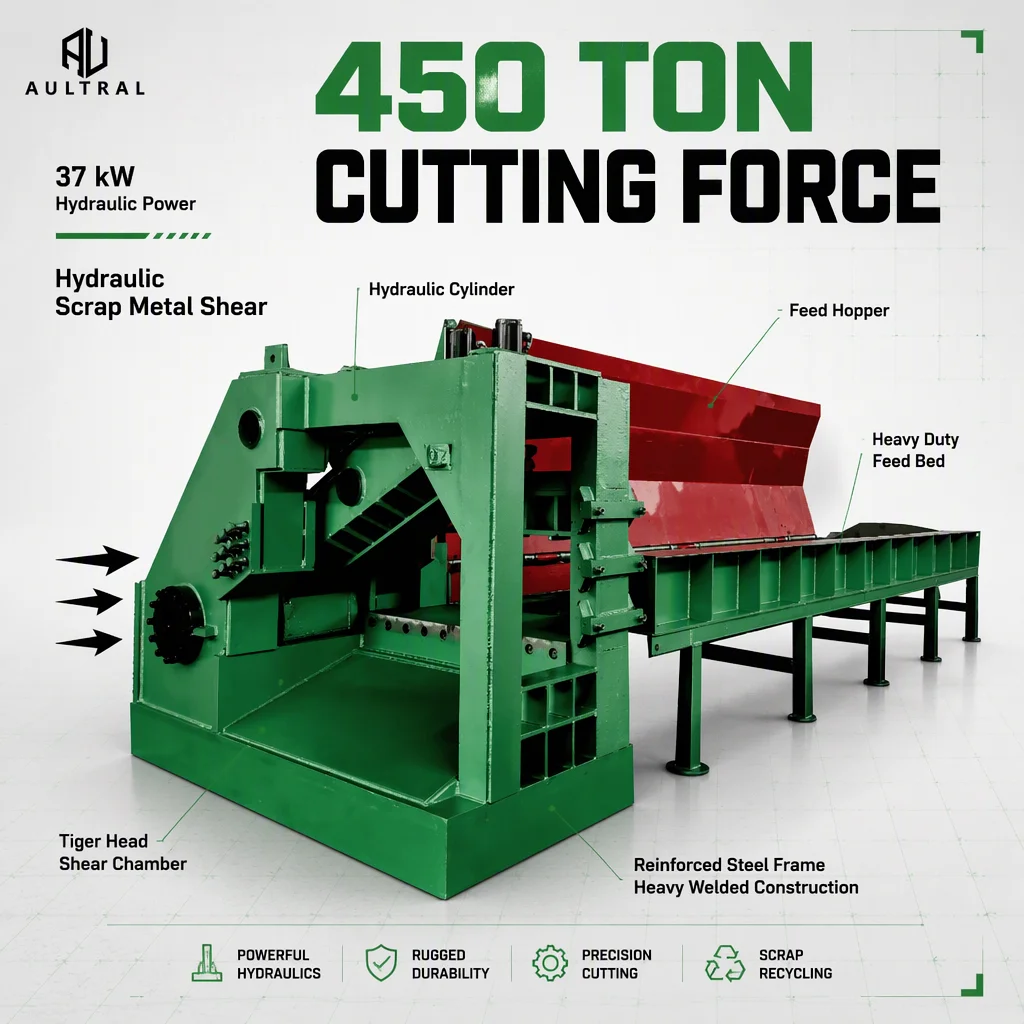
A tiger head hydraulic shear is an industrial metal cutting machine that uses hydraulic pressure to drive a movable cutting blade against a fixed blade. Its cutting head features a distinctive jaw-like design, which gives the machine its common name.
The machine is widely used in metal recycling facilities where scrap materials need to be cut before further sorting, transportation, melting, or processing.
A typical tiger head hydraulic shear consists of several major components:
- Heavy-duty steel machine frame
- Movable upper cutting blade
- Fixed lower cutting blade
- Hydraulic driving cylinder
- Hydraulic power station
- Electric motor
- Electrical control system
- Material positioning mechanism
The hydraulic system provides the force required to cut metal materials efficiently, while the robust machine structure supports stable operation under demanding working conditions.
Different models are available with different cutting forces, blade lengths, and configurations to meet various recycling requirements.
2. How Does a Tiger Head Hydraulic Shear Work?
The working principle of a tiger head hydraulic shear is based on hydraulic pressure and mechanical shearing force.
Step 1: Material Feeding
The operator places metal scrap into the cutting chamber, positioning the material between the upper and lower blades.
Step 2: Material Positioning
The material is adjusted to the appropriate cutting position. Depending on the machine configuration, a hydraulic hold-down device may be used to improve material stability.
Step 3: Hydraulic Compression and Cutting
When the machine is activated, hydraulic oil drives the cylinder, causing the upper cutting blade to move downward. The material is cut through the shearing action between the two blades.
Step 4: Blade Return
After completing the cutting stroke, the hydraulic system returns the movable blade to its original position, preparing the machine for the next operation.
This cycle can be repeated according to the material feeding speed and required processing capacity.
3. What Materials Can a Tiger Head Hydraulic Shear Process?
One of the key advantages of a tiger head hydraulic shear is its ability to handle different types of metal scrap.
Steel Bars and Reinforcing Steel
Suitable for cutting steel bars, reinforcing bars, and selected structural steel materials within the rated cutting capacity.
Aluminum Profiles
Widely used in aluminum recycling facilities to cut aluminum window frames, extrusion profiles, and industrial aluminum offcuts.
Copper Pipes and Tubes
Can process copper pipes, metal tubes, and other suitable non-ferrous metal materials.
Steel Plates and Metal Sheets
Suitable for cutting certain metal sheets, strips, and plate offcuts, depending on their thickness and material strength.
Industrial Metal Scrap
Can process various metal scraps generated by manufacturing, construction, automotive dismantling, and metal fabrication industries.
Note: Actual cutting capacity depends on material hardness, cross-sectional dimensions, and machine specifications. Stainless steel and high-strength materials may require higher cutting forces.
 4. Why Is a Tiger Head Hydraulic Shear Essential for Metal Recycling?
Powerful Hydraulic Cutting Force
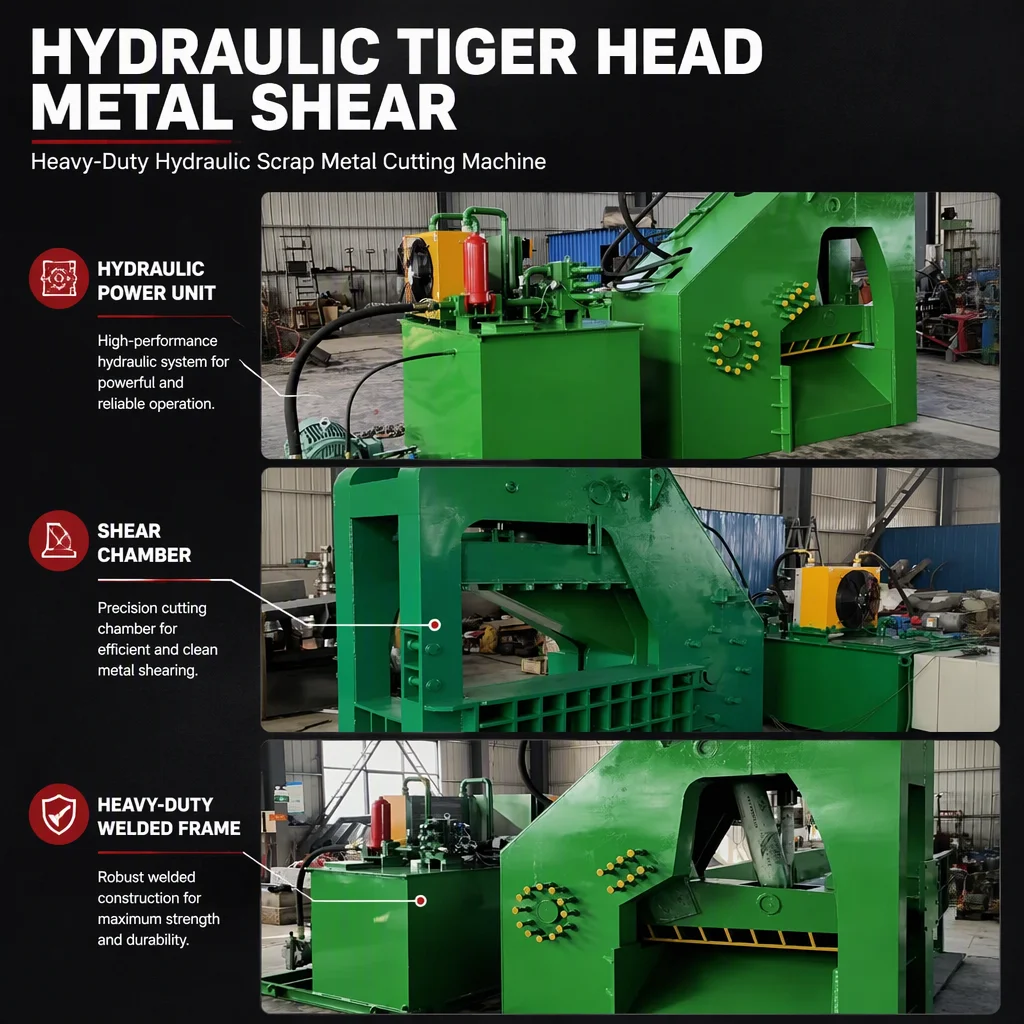
The hydraulic drive system generates strong and consistent cutting force, allowing the machine to process various metal materials efficiently.
Heavy-Duty Construction
A robust steel frame is designed to withstand repeated cutting operations and demanding industrial working conditions.
Compact and Practical Design
Compared with some large-scale metal shearing systems, the tiger head structure offers a relatively compact installation footprint, making it suitable for different recycling workshops and scrap yards.
Improved Processing Efficiency
Long, irregular, and bulky metal scrap can be cut into smaller pieces, making subsequent sorting, storage, transportation, and melting easier.
Reduced Labor Requirements
Hydraulic cutting reduces the need for manual cutting operations and helps improve overall workplace productivity.
Convenient Maintenance
The cutting blades can be inspected, maintained, and replaced when necessary. Proper hydraulic system maintenance also helps extend equipment service life.
5. Tiger Head Hydraulic Shear vs. Gantry Shear: Which Is Better?
Both machines are widely used in the metal recycling industry, but they serve different processing requirements.
| Comparison | Tiger Head Hydraulic Shear | Gantry Shear |
|---|---|---|
| Structure | Jaw-shaped cutting head | Large gantry-style frame |
| Main Application | Profiles, bars, pipes and scrap | Large volumes of bulky scrap |
| Installation Space | Relatively compact | Generally larger |
| Feeding Method | Individual or batch feeding | Often equipped with a large feeding chamber |
| Typical Application | Small and medium scrap processing | Heavy-duty industrial recycling |
A tiger head hydraulic shear is often a practical choice for businesses handling mixed metal scrap, while a gantry shear is more suitable for large-scale processing of bulky and heavy materials.
6. How to Choose the Right Tiger Head Hydraulic Shear?
Selecting the correct hydraulic shear is essential for achieving efficient and safe operation.
Before purchasing, consider the following factors:
1. Material Type
Identify whether you mainly process carbon steel, stainless steel, aluminum, copper, or mixed metal scrap.
2. Maximum Material Dimensions
Provide the maximum material thickness, width, diameter, or cross-sectional dimensions. These details are essential for determining the required cutting force.
3. Required Cutting Force
Hydraulic tiger head shears are available in different capacities, such as 100 tons, 160 tons, 200 tons, 250 tons, and 315 tons. The appropriate model should be selected according to the actual material characteristics.
4. Blade Length
The cutting blade length determines the available cutting width. A suitable blade size helps improve material positioning and operating efficiency.
5. Daily Processing Capacity
Consider your expected hourly or daily scrap processing volume to determine the appropriate machine configuration.
6. Power Supply
Confirm the local voltage, frequency, and phase requirements before ordering. Customized electrical configurations can be arranged for different markets.
7. Applications Across Different Industries
Tiger head hydraulic shears are commonly used in:
- Scrap metal recycling yards
- Steel mills and metal processing plants
- Aluminum recycling facilities
- Copper and non-ferrous metal recycling centers
- Automotive dismantling businesses
- Construction and demolition waste recycling
- Metal fabrication workshops
- Industrial manufacturing facilities
For larger recycling operations, tiger head hydraulic shears can also work alongside metal shredders, hydraulic balers, magnetic separators, and other recycling equipment to create a more efficient processing workflow.
8. Customized Tiger Head Hydraulic Shear Solutions from AULTRAL
At AULTRAL, we understand that different customers have different metal cutting requirements.
We provide hydraulic metal shearing equipment in various capacities and configurations to meet the needs of recycling businesses and industrial customers worldwide.
Our tiger head hydraulic shears can be customized according to:
- Hydraulic cutting force
- Blade length and cutting width
- Motor power and hydraulic system
- Electrical voltage and frequency
- Machine structure and configuration
- Additional feeding and material handling requirements
Beyond hydraulic shears, our product range also includes vertical and horizontal balers, metal shredders, crushers, and other waste processing equipment.
Our goal is to provide practical, reliable, and cost-effective machinery solutions that help customers improve their recycling operations.
Make Metal Cutting More Powerful and Efficient
A tiger head hydraulic shear is more than just a metal cutting machine. It is an important piece of equipment for improving scrap preparation, reducing material size, and increasing the efficiency of metal recycling operations.
With its powerful hydraulic system, robust construction, and flexible applications, it provides a practical solution for scrap yards, metal recycling centers, and industrial facilities.