
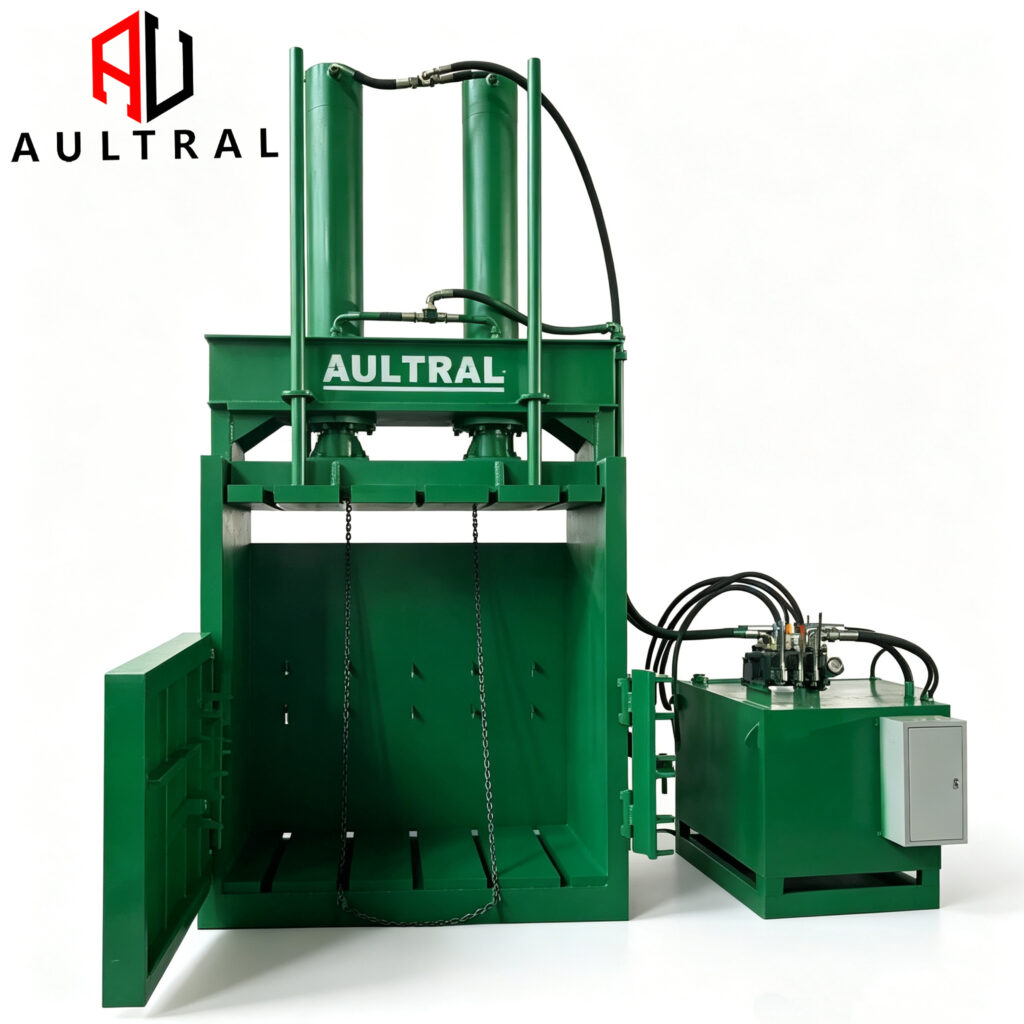
With the rapid growth of the automotive industry, the number of end-of-life tires generated worldwide continues to increase. Waste tires occupy valuable storage space, create transportation challenges, and require proper handling before recycling. For tire recycling companies, scrap yards, waste management facilities, and tire collection centers, efficient compression is an essential step in improving operational efficiency.
A Vertical Tire Baler is a practical and cost-effective machine designed to compress waste tires into compact, manageable bales. By significantly reducing the volume of loose tires, this equipment helps businesses optimize storage space, lower transportation costs, and improve the efficiency of tire recycling operations.
In this article, we will explore how a vertical tire baler works, its key advantages, applications, and the important factors to consider when selecting the right machine.
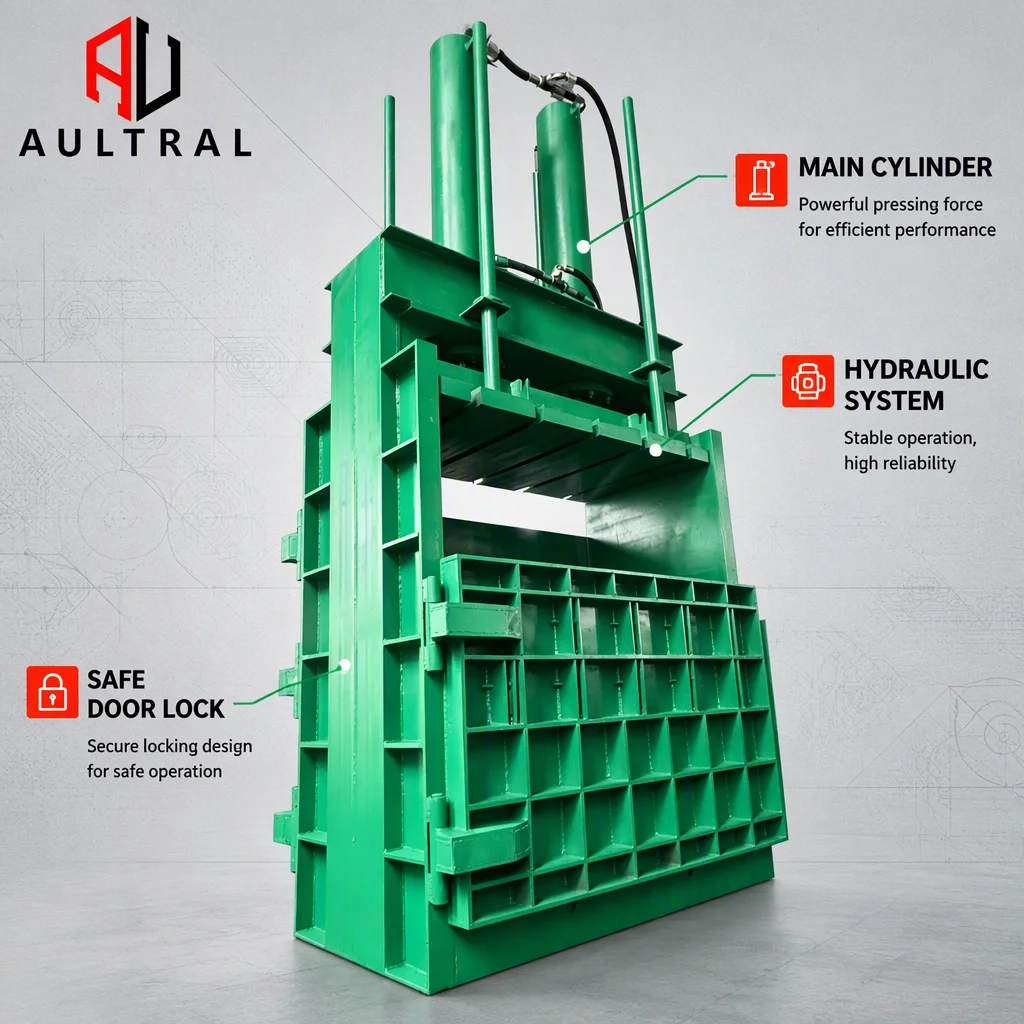 1. What Is a Vertical Tire Baler?
A vertical tire baler is a hydraulic compression machine specifically designed to compress used tires into dense, compact bundles. Unlike conventional horizontal balers, its vertical structure requires relatively little floor space, making it suitable for facilities with limited working areas.
The machine uses a hydraulic cylinder to generate powerful compression force, pushing multiple waste tires into a compression chamber. Once the desired compression is achieved, the compressed tires are secured with steel wires or other suitable binding materials to maintain their compact shape.
Depending on the machine design and customer requirements, vertical tire balers can be customized with different pressure capacities, chamber dimensions, feeding systems, and bale sizes.
2. How Does a Vertical Tire Baler Work?
The working process of a vertical tire baler is straightforward and efficient. Generally, it consists of four main steps:
Step 1: Tire Feeding
Operators load used tires into the compression chamber manually or through an optional feeding arrangement. The chamber is designed to accommodate different tire sizes, depending on the machine specifications.
Step 2: Hydraulic Compression
After loading, the hydraulic system activates the main cylinder. The pressing plate moves downward, applying strong pressure to compress the tires and reduce their overall volume.
Step 3: Bale Binding
Once compression is completed, the compressed tires are secured using steel wires or other appropriate binding materials. Proper binding helps maintain bale stability during handling, storage, and transportation.
Step 4: Bale Ejection
After binding, the finished tire bale is released from the chamber using the machine’s designed discharge or ejection mechanism.
This process allows operators to transform loose waste tires into compact bundles that are easier to handle and transport.
3. Key Advantages of a Vertical Tire Baler
Choosing a vertical tire baler offers several operational and economic benefits.
3.1 Significant Volume Reduction
Loose waste tires take up considerable storage space because of their irregular shape and internal air space. Hydraulic compression helps reduce their overall volume, allowing businesses to store more tires within the same facility.
3.2 Lower Transportation Costs
Compressed tire bales are easier to stack, handle, and load. By improving loading efficiency and utilizing container or truck space more effectively, businesses can potentially reduce transportation costs per tire.
3.3 Space-Saving Vertical Design
Compared with many horizontal baling systems, vertical tire balers have a compact footprint. This makes them an ideal choice for small and medium-sized tire collection centers, recycling facilities, and scrap yards.
3.4 Powerful Hydraulic Performance
The hydraulic system provides consistent compression force to handle different types of waste tires. Different pressure capacities can be selected according to the customer’s tire dimensions, required bale density, and production targets.
3.5 Easy Operation and Maintenance
A well-designed vertical tire baler features a straightforward operating structure and accessible hydraulic components. With proper operator training and regular maintenance, the machine can provide reliable long-term performance.
4. Applications of Vertical Tire Balers
Vertical tire balers are widely used in different industries involved in waste tire collection, storage, and recycling.
Typical applications include:
- Waste tire collection and recycling centers
- Scrap yards and metal recycling facilities
- Used tire dealers and tire wholesalers
- Automotive service centers and tire replacement businesses
- Municipal waste management departments
- Tire transportation and logistics companies
- Waste tire processing plants
Whether handling passenger car tires, light truck tires, or certain larger tire types, the machine can be configured according to actual material dimensions and processing requirements.
For oversized industrial and mining tires, a customized compression solution may be required.
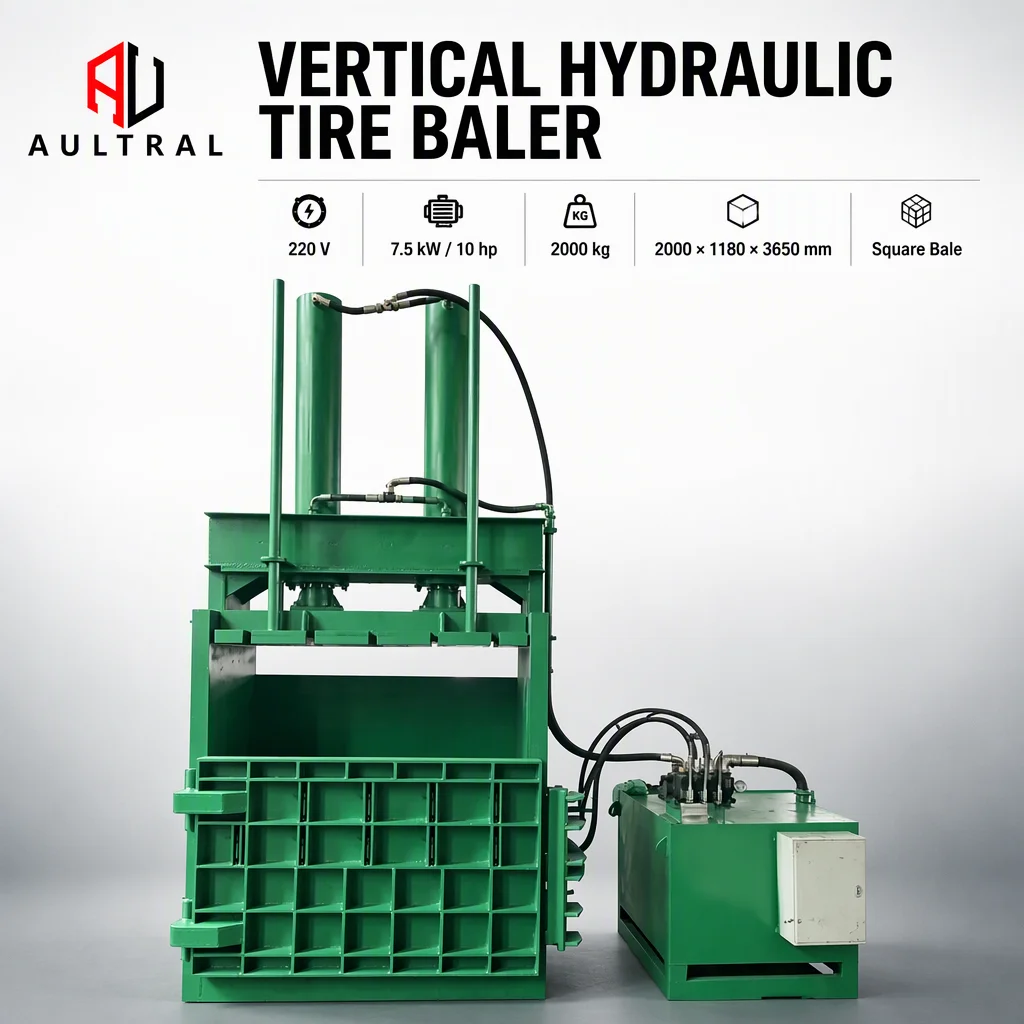 5. How to Choose the Right Vertical Tire Baler?
Selecting the right machine is important for achieving efficient and reliable operation. Before purchasing a vertical tire baler, buyers should consider the following factors:
Compression Force
Hydraulic pressure capacity directly influences the machine’s compression performance. Common configurations can vary according to tire type, quantity, and desired bale specifications.
Bale Size and Weight
Different recycling and transportation requirements may require different bale dimensions and weights. Buyers should confirm the target bale size before selecting a model.
Tire Dimensions
Passenger car tires, truck tires, and off-road tires have different dimensions. Providing tire diameter, width, and photographs helps manufacturers recommend a suitable compression chamber.
Power Supply
The machine’s motor power, voltage, frequency, and phase should match the electrical standards of the installation location.
Operating Method
Depending on the available workforce and production requirements, customers can choose an appropriate feeding, compression, and discharge arrangement.
After-Sales Support
Reliable technical support, spare parts availability, installation guidance, and warranty services are also important considerations when purchasing industrial recycling equipment.
6. Why Choose a Customized Tire Baling Solution?
Every tire recycling operation has different requirements. A standard machine may not always deliver the best results for every application.
A professional equipment supplier should be able to provide customized solutions based on tire dimensions, daily processing capacity, available installation space, and transportation requirements.
At AULTRAL, we focus on providing one-stop waste processing equipment solutions, including hydraulic balers, shredders, crushers, and metal recycling machinery.
Our vertical tire baling solutions can be customized according to customer requirements, including:
- Different hydraulic pressure capacities
- Customized compression chamber dimensions
- Suitable hydraulic power systems
- Electrical configurations for different countries
- Customized bale dimensions and discharge arrangements
We also provide technical consultation, equipment guidance, and after-sales support to help customers achieve stable and efficient operation.
A vertical tire baler is an effective solution for businesses looking to improve waste tire storage, handling, and transportation efficiency. With its compact structure, powerful hydraulic compression system, and flexible customization options, it provides a practical solution for tire collection centers, recycling companies, and waste management facilities.