
In modern recycling and waste management industries, efficient material handling is essential for reducing operating costs and improving productivity. Large quantities of waste paper, cardboard, plastic, textiles, packaging materials, and other recyclable materials can occupy significant storage space when they are handled in loose form.
A horizontal hydraulic baler machine provides an efficient solution by compressing loose recyclable materials into compact, dense bales. With powerful hydraulic pressure, a robust structure, and flexible operating options, horizontal balers are widely used in recycling plants, waste management facilities, paper mills, packaging factories, textile recycling centers, and industrial production facilities.
 What Is a Horizontal Hydraulic Baler?
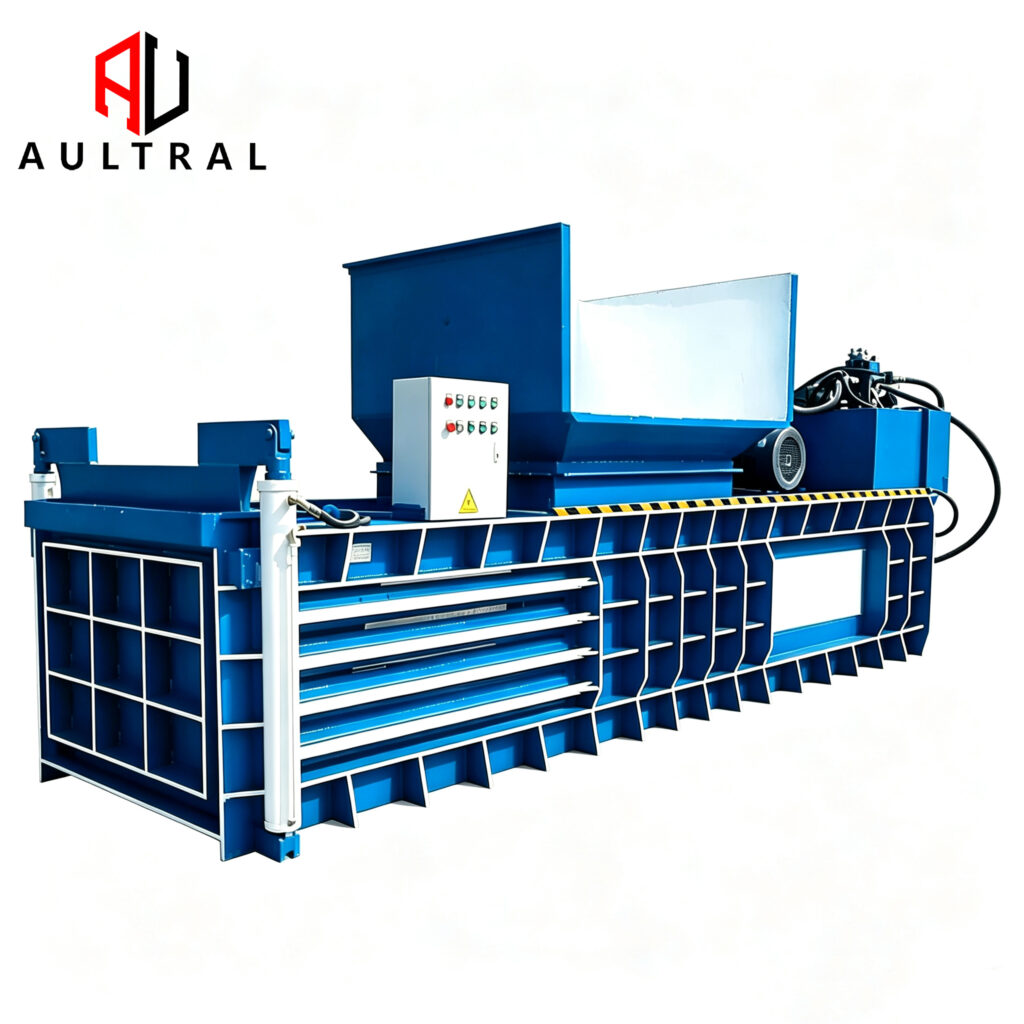
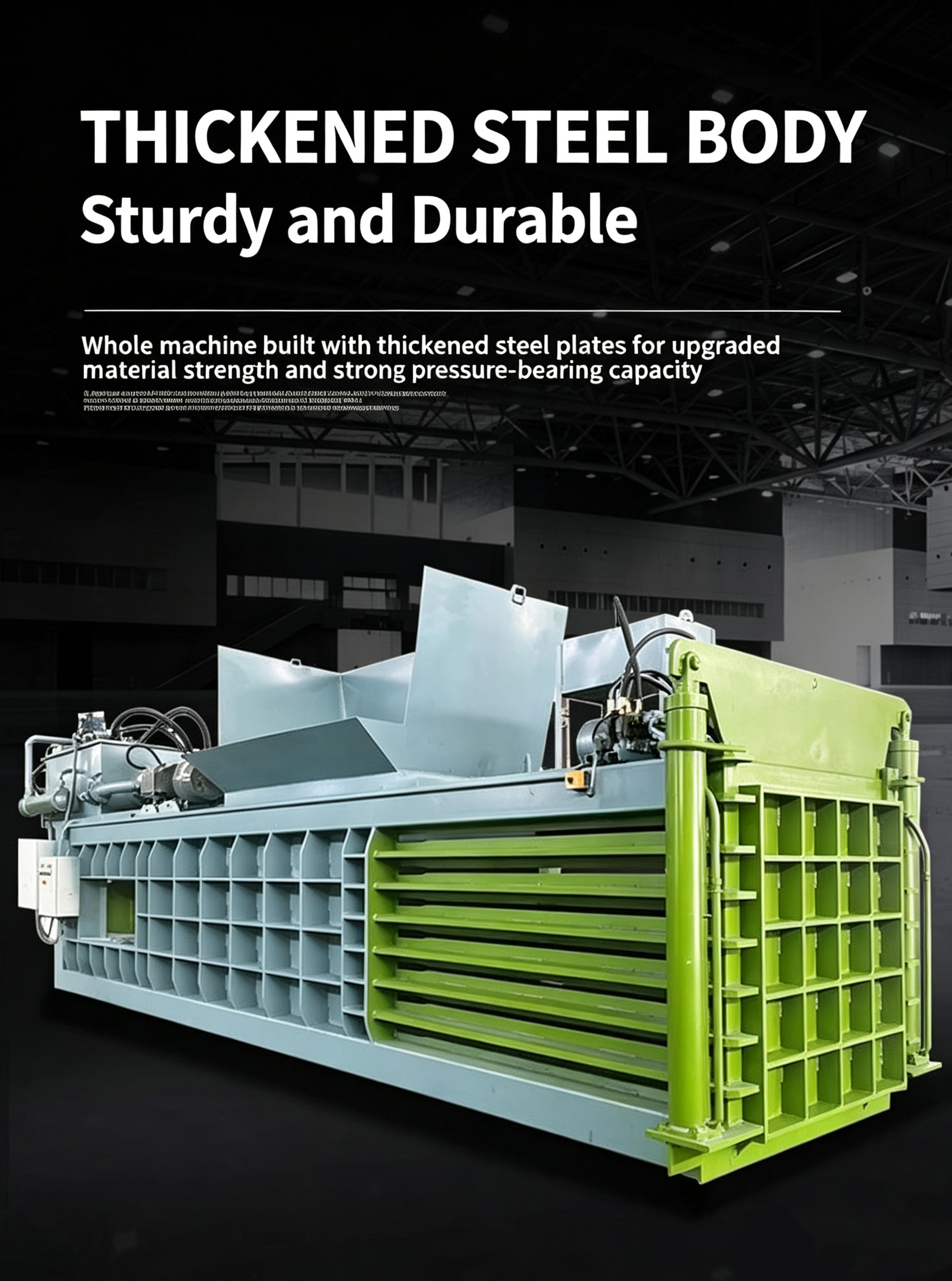
A horizontal hydraulic baler is an industrial recycling machine that uses hydraulic power to compress waste materials horizontally inside a large pressing chamber.
The machine typically consists of a hydraulic power system, compression chamber, hydraulic cylinder, pressing head, feeding hopper, electrical control system, and bale discharge mechanism.
During operation, recyclable materials are loaded into the feeding chamber. The hydraulic cylinder drives the pressing head forward, compressing the material into a dense bale. After reaching the required compression level, the bale is tied or secured and then discharged from the machine.
Compared with manual packing, a hydraulic baler can significantly improve working efficiency while reducing labor intensity and storage requirements.
Why Choose a Horizontal Hydraulic Baler?
1. High Compression Efficiency
The main advantage of a horizontal hydraulic baler is its powerful compression capability.
Loose waste materials such as cardboard, paper, plastic film, and textiles can occupy a large amount of space. Hydraulic compression significantly reduces their volume and produces compact bales that are easier to stack, transport, and handle.
For recycling businesses processing large quantities of materials every day, this can greatly improve overall operational efficiency.
2. Suitable for High-Volume Recycling
Horizontal balers are particularly suitable for medium- and large-scale recycling operations.
Compared with small manual or vertical balers, horizontal machines generally provide a larger feeding chamber and higher processing capacity. They can continuously process large quantities of recyclable materials, making them suitable for commercial and industrial applications.
Typical applications include:
- Waste paper recycling
- Cardboard recycling
- Plastic film recycling
- Textile recycling
- Used clothing recycling
- Packaging waste management
- Industrial waste processing
- Recycling centers
3. Reduce Storage Requirements
One of the biggest challenges in waste management is the large volume of loose materials.
A warehouse filled with loose cardboard or plastic can quickly reach its storage capacity. By compressing the materials into compact bales, businesses can make much better use of their available warehouse space.
Bales can also be stacked more efficiently, improving warehouse organization and reducing handling time.
4. Lower Transportation Costs
Transportation costs are an important part of recycling operations.
Loose waste materials contain a large amount of empty space, meaning trucks and containers may reach their volume limits before reaching their maximum payload.
After compression, the same vehicle can transport a significantly larger amount of recyclable material by volume. This can help reduce transportation frequency and improve logistics efficiency.
 Main Applications
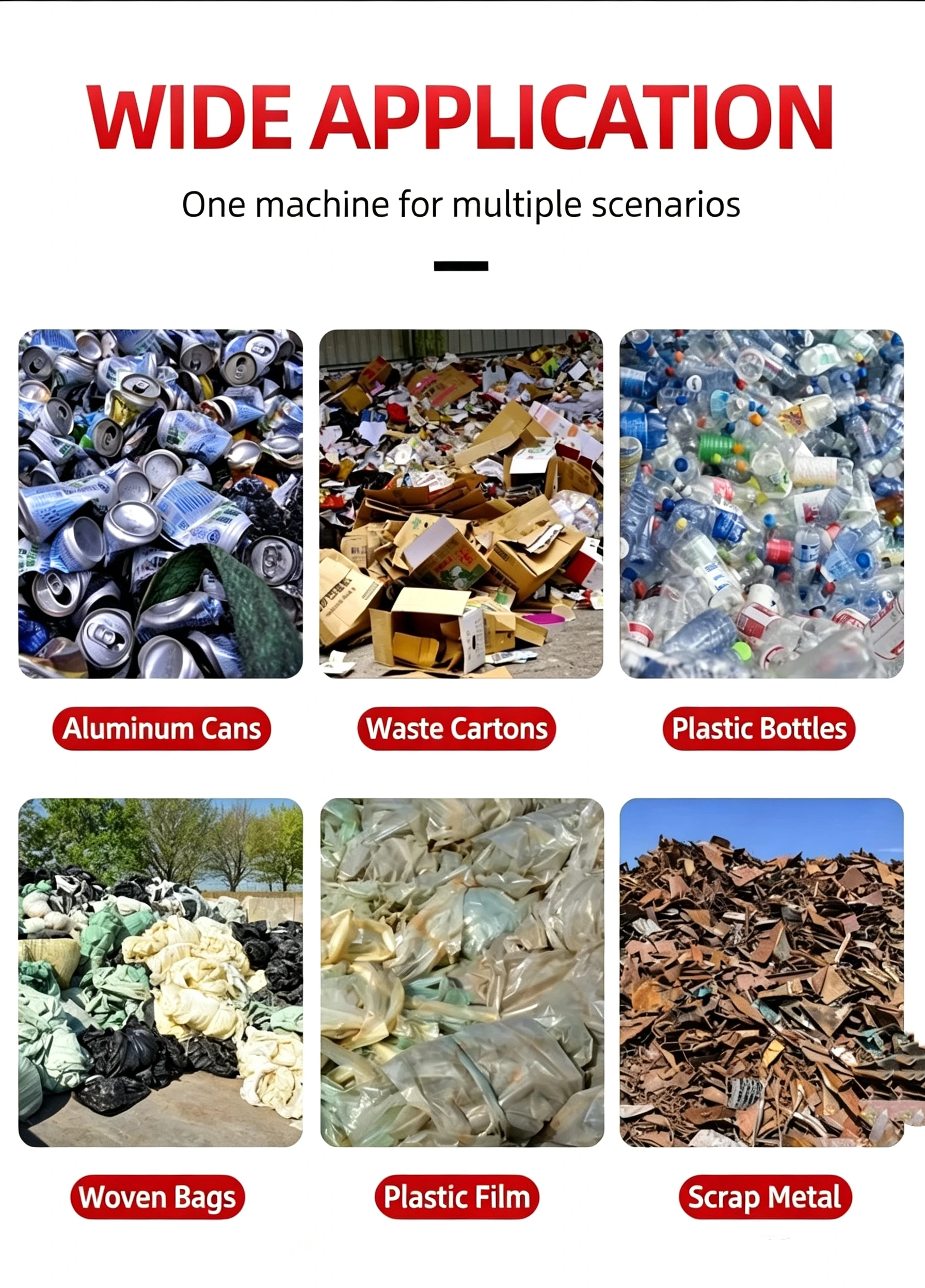
Waste Paper and Cardboard
Horizontal hydraulic balers are widely used for compressing newspapers, magazines, cardboard boxes, office paper, and other paper waste.
The compressed bales are easier to store and transport to paper mills or recycling facilities for further processing.
Plastic Film
Waste PE film, PP film, packaging film, and other flexible plastics can be difficult to store because of their large volume and low density.
A horizontal baler compresses these materials into compact packages, making collection and transportation more efficient.
Textile and Clothing Waste
Garment factories, textile manufacturers, second-hand clothing businesses, and textile recycling companies often generate large quantities of fabric and used clothing.
A horizontal hydraulic baler can compress these materials into dense bales for easier storage, transportation, resale, or further recycling.
Industrial Recyclable Waste
Manufacturing facilities may generate packaging materials, plastic waste, paper waste, and other recyclable materials during daily production.
Installing a horizontal baler near the waste collection area can help companies organize recyclable materials and improve their internal waste management process.
Horizontal Hydraulic Baler vs. Vertical Baler
Both horizontal and vertical balers are widely used in recycling applications, but they are designed for different operating requirements.
Vertical balers generally have a compact footprint and are suitable for businesses with limited space or relatively moderate processing volumes.
Horizontal balers are more suitable for higher-volume operations where continuous feeding, larger capacity, and higher productivity are important.
When choosing between the two, customers should consider material type, daily processing volume, available space, bale weight, automation requirements, and budget.
 Automatic and Semi-Automatic Options
Horizontal hydraulic balers can be configured according to different production requirements.
Semi-Automatic Horizontal Baler
Semi-automatic models are suitable for businesses that require reliable compression performance while maintaining a relatively simple operating process.
Operators typically load the material, control the compression cycle, and manually complete the bale tying process.
Fully Automatic Horizontal Baler
For high-volume recycling facilities, a fully automatic horizontal baler can provide a higher level of automation.
Depending on the configuration, the system can integrate automatic feeding, compression, bale formation, strapping, and bale discharge. Conveyor systems can also be added to create a more continuous recycling workflow.
This reduces manual intervention and helps improve production efficiency.
Key Factors When Choosing a Horizontal Hydraulic Baler
Selecting the right machine requires more than simply looking at hydraulic pressure. Several factors should be considered.
Material Type
Different materials have different compression characteristics. Customers should provide detailed information about whether they are processing cardboard, paper, plastic film, textiles, PET bottles, or mixed materials.
Processing Capacity
Daily or hourly processing requirements are important when selecting machine specifications. A machine that is too small may limit production, while an unnecessarily large machine can increase investment costs.
Bale Size and Weight
Bale dimensions and weight should match the customer’s transportation, storage, and downstream recycling requirements.
Feeding Method
Depending on the production process, materials can be loaded manually or automatically through conveyors and feeding systems.
Power Supply
The machine’s voltage, frequency, and phase should be confirmed according to the customer’s local electrical standards.
Automation Requirements
Customers processing large volumes may benefit from automatic feeding and bale tying systems, while smaller recycling operations may prefer a simpler semi-automatic configuration.
Maintenance and Long-Term Performance
Regular maintenance is essential for keeping a hydraulic baler operating efficiently.
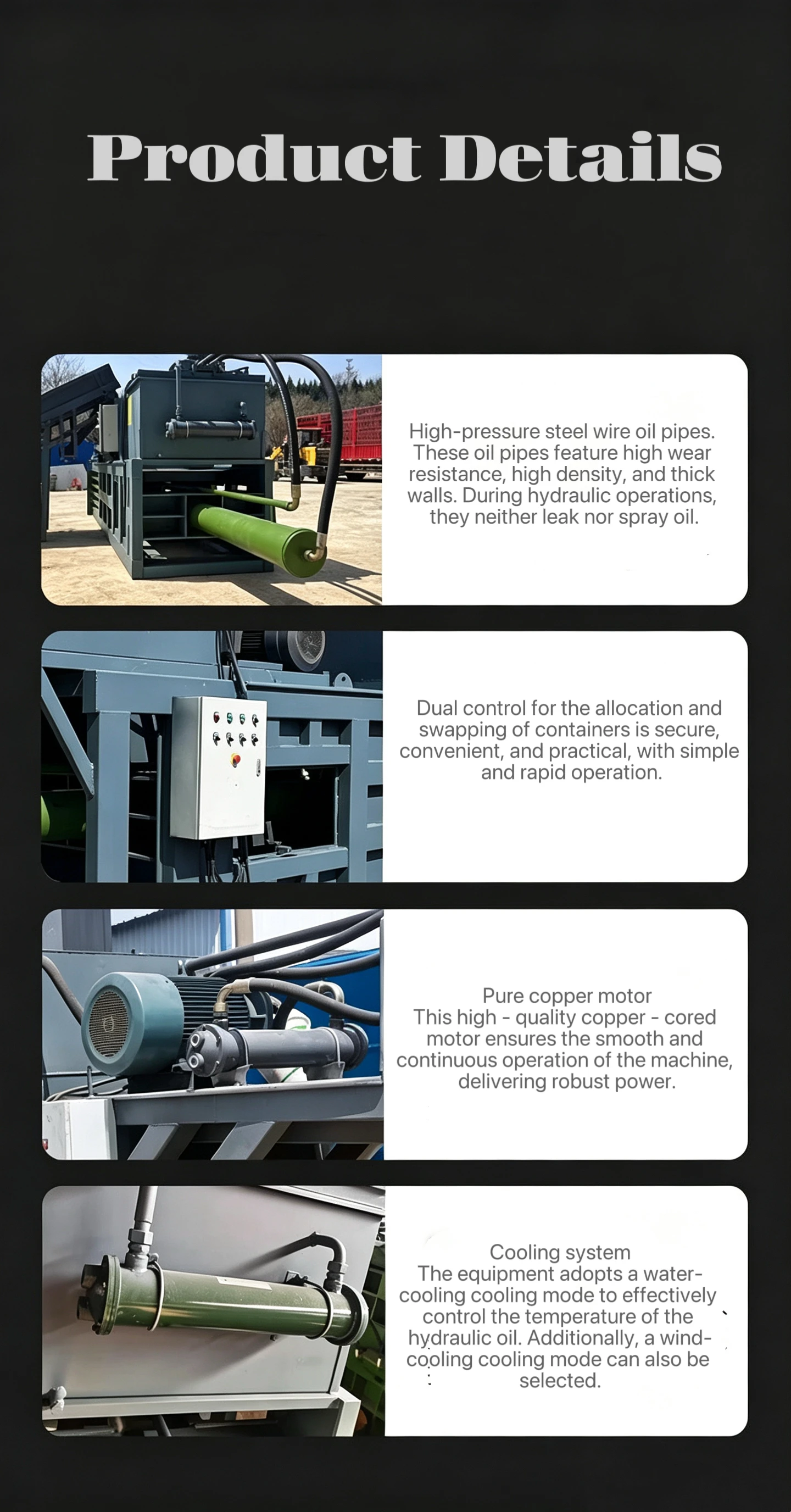
Operators should regularly inspect hydraulic hoses, oil levels, seals, electrical components, pressing components, and safety devices. Hydraulic oil should be maintained according to the manufacturer’s recommendations, and moving parts should be inspected periodically.
The compression chamber should also be cleaned regularly to prevent accumulated materials from affecting machine operation.
Proper maintenance can help reduce unexpected downtime and extend the service life of the equipment.
Environmental and Economic Benefits
A horizontal hydraulic baler provides both environmental and economic advantages.
By making recyclable materials easier to collect and transport, the machine supports higher recycling rates and reduces unnecessary waste disposal.
At the same time, compact bales can reduce warehouse requirements, transportation frequency, labor costs, and material handling expenses.
For recycling companies, these benefits can contribute to a more efficient and sustainable business model.
The horizontal hydraulic baler machine is an important piece of equipment for modern recycling and waste management operations. Its powerful hydraulic compression system, large processing capacity, flexible configuration, and ability to produce compact bales make it suitable for a wide range of recyclable materials.