
The demand for efficient metal recycling equipment continues to grow as industries around the world focus on resource recovery, waste reduction, and sustainable production. Every day, large quantities of scrap steel, aluminum, copper, iron, and mixed metal waste are generated by manufacturing plants, automobile dismantling facilities, construction companies, and scrap yards.
However, scrap metal is often bulky, irregular, and difficult to transport or sort. A Metal Crusher Production Line provides an efficient solution by crushing and processing scrap metal into smaller, more manageable materials. With integrated crushing, conveying, magnetic separation, screening, and sorting equipment, a complete production line can significantly improve recycling efficiency and material recovery.
What Is a Metal Crusher Production Line?
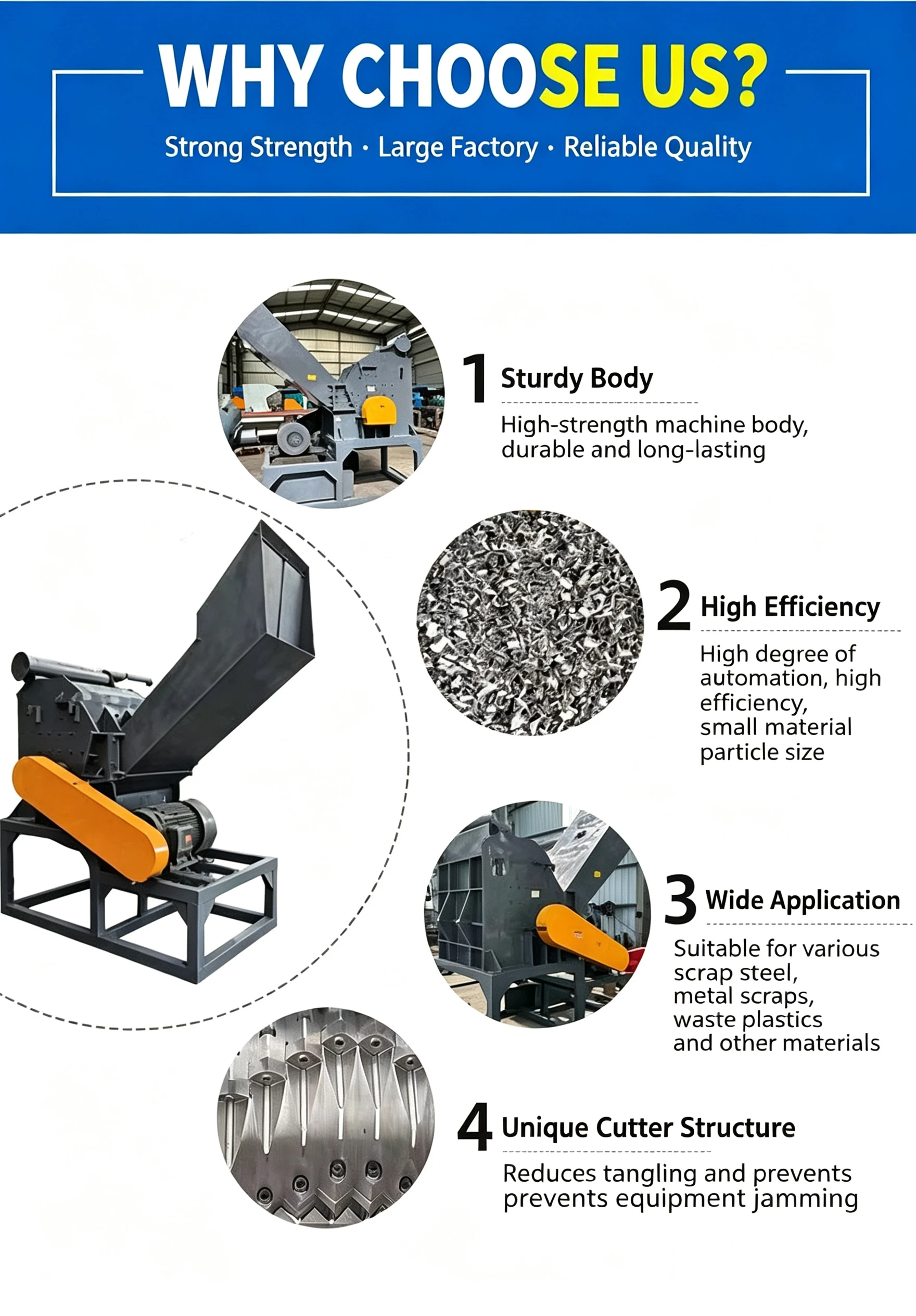
A metal crusher production line is an integrated system designed to process and reduce various types of metal scrap. Unlike a standalone metal crusher, a complete production line combines several machines to create a continuous recycling process.
A typical metal crusher production line may include:
- Feeding hopper
- Conveyor system
- Primary metal crusher
- Secondary crusher
- Magnetic separator
- Eddy current separator
- Vibrating screen
- Dust collection system
- Control cabinet
The specific equipment configuration depends on the type of scrap metal, required capacity, input material size, and desired final particle size.
The main purpose of the line is to reduce bulky metal waste into smaller pieces while separating valuable ferrous and non-ferrous metals for further recycling.
 How Does a Metal Crusher Production Line Work?
A complete metal recycling process generally consists of several stages.
1. Feeding
Scrap metal is first loaded into the feeding hopper. A conveyor system then transports the material continuously into the crushing equipment.
The feeding system can be designed for manual loading, forklift feeding, or automatic conveyor feeding depending on the production requirements.
2. Primary Crushing
The primary metal crusher performs the first stage of size reduction. Large and irregular scrap metal is broken into smaller pieces that are easier to handle and process.
The crusher can be designed for different types of materials, including scrap steel, aluminum, copper, metal sheets, profiles, and other recyclable metal waste.
3. Secondary Crushing
For applications requiring smaller and more uniform output, a secondary crushing stage can be added.
The secondary crusher further reduces the material size and improves the efficiency of downstream separation equipment.
This two-stage crushing process is particularly useful for high-capacity recycling plants.
4. Magnetic Separation
After crushing, ferrous metals such as iron and steel can be separated using a magnetic separator.
The magnetic separator removes ferrous materials from the mixed crushed stream, allowing them to be collected separately for further processing.
This improves the purity and value of the recovered materials.
5. Non-Ferrous Metal Separation
If the production line processes mixed materials containing aluminum and copper, an eddy current separator can be added.
This equipment helps separate non-ferrous metals from other materials and can improve the overall recovery rate of valuable resources.
6. Screening
A vibrating screen or similar screening machine can classify the crushed materials according to particle size.
Different sizes can be separated and returned for further crushing if necessary, creating a more uniform final product.
Materials That Can Be Processed
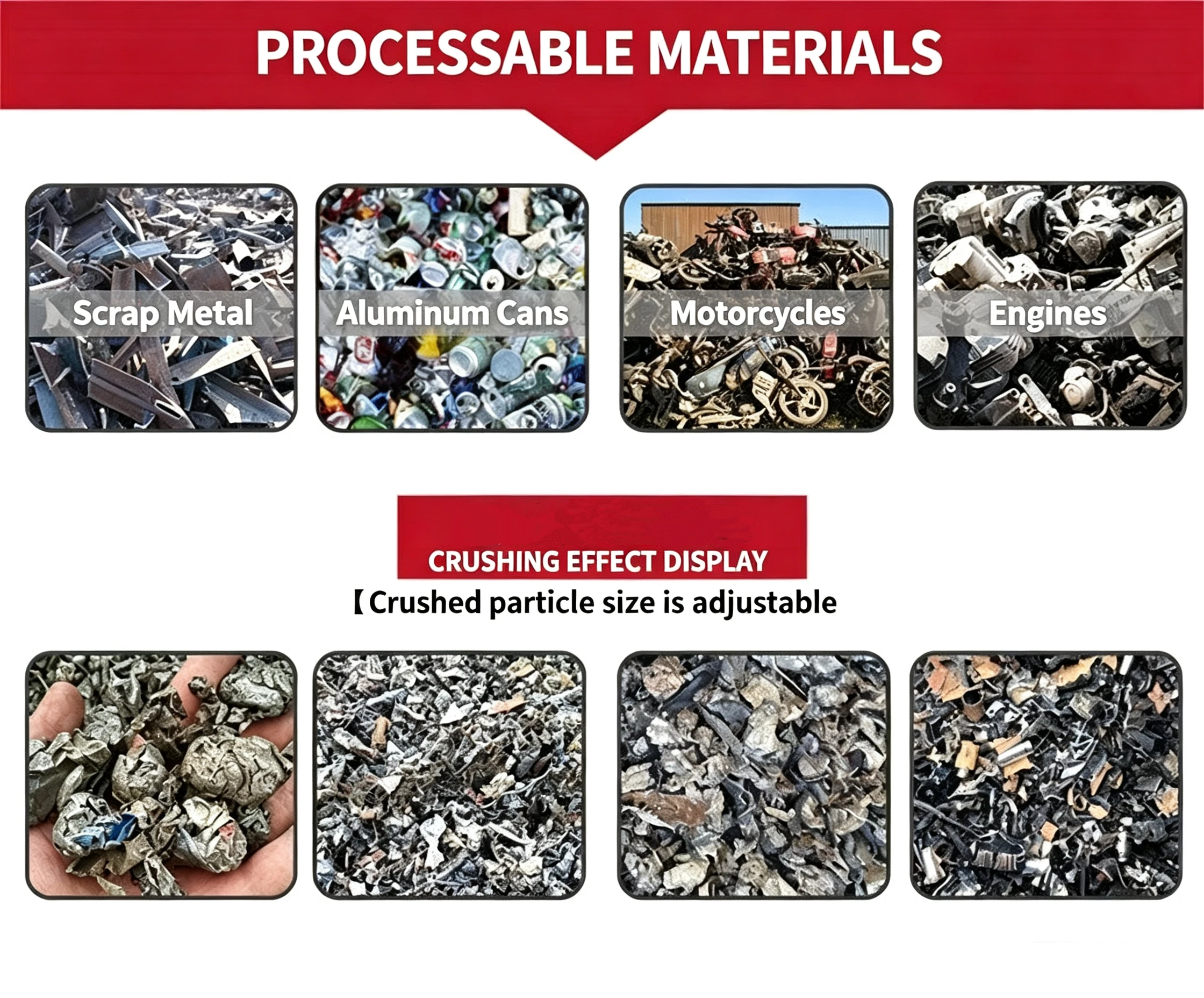
One of the major advantages of a metal crusher production line is its versatility.
Scrap Steel
Steel scrap from manufacturing, construction, and demolition can be crushed into smaller pieces for easier transportation and recycling.
Aluminum
The line can process aluminum cans, sheets, profiles, and other aluminum scrap. Aluminum recycling is particularly valuable because recovered aluminum can be reused in many industrial applications.
Copper
Copper scrap from electrical cables, manufacturing waste, and industrial components can be processed and separated for resource recovery.
Automobile Scrap
End-of-life vehicles contain significant quantities of steel, aluminum, and other metals. A properly configured metal recycling line can process vehicle scrap after dismantling and prepare the materials for further separation.
Industrial Metal Waste
Factories often produce metal offcuts, defective components, metal sheets, pipes, and other production waste. A metal crusher line can convert these materials into more manageable recyclable materials.
Key Advantages of a Metal Crusher Production Line
High Processing Efficiency
A complete production line allows crushing, conveying, and separation to operate continuously. This is much more efficient than manually cutting and sorting scrap metal.
For medium- and large-scale recycling facilities, continuous processing can significantly increase daily production.
Reduced Scrap Volume
Large metal waste can occupy considerable warehouse and transportation space. Crushing reduces the size of the material, making it easier to store and transport.
This can help companies reduce logistics costs and improve warehouse utilization.
Improved Metal Recovery
Integrating crushing with magnetic and non-ferrous separation allows different metal types to be recovered more effectively.
Higher material purity can increase the commercial value of recycled metals.
Lower Labor Requirements
Automation reduces the need for manual feeding, material handling, and sorting.
A centralized control system can allow operators to monitor the production line from a single control panel.
Flexible Configuration
Every recycling business has different requirements. A metal crusher production line can be customized according to material type, production capacity, output size, and separation requirements.
 How to Choose the Right Metal Crusher Production Line
Choosing the right equipment requires careful consideration of several factors.
Material Type
The type of metal being processed is one of the most important factors. Light aluminum scrap, heavy steel scrap, and mixed metal waste may require different crushing technologies.
Input Size
The maximum dimensions of the incoming scrap determine the required feeding system and crusher specifications.
Large metal structures may require pre-processing or a heavy-duty primary crusher.
Processing Capacity
Customers should determine the required capacity in tons per hour or tons per day.
Higher capacity requirements may require larger crushers, stronger motors, wider conveyors, and more efficient separation systems.
Output Size
The desired final particle size should also be considered. Different recycling applications require different material sizes, so the crusher configuration should match the customer’s downstream processing requirements.
Separation Requirements
If the customer needs to separate steel, aluminum, copper, and other materials, additional magnetic or eddy current separation equipment may be necessary.
Automation and Control
Modern metal crusher production lines can be equipped with PLC-based control systems for centralized operation.
The control system can coordinate crushers, conveyors, magnetic separators, screens, and other equipment. Sensors and overload protection can also help protect the machines during operation.
An automated system can improve production stability while reducing operator workload.
 Maintenance and Safety
Regular maintenance is essential for ensuring reliable long-term operation.
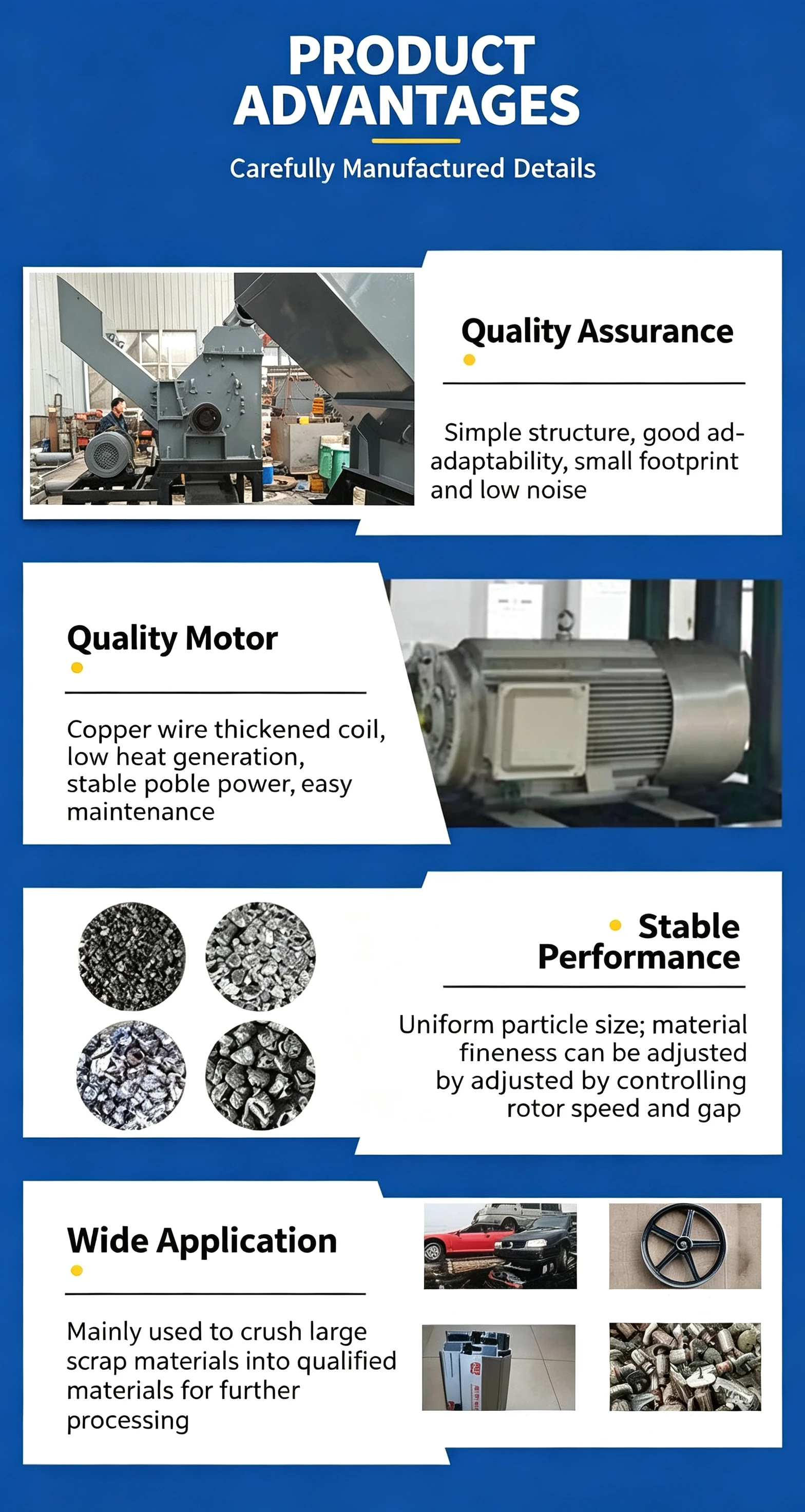
Crusher blades, hammers, bearings, motors, belts, hydraulic components, and electrical systems should be inspected regularly. Wear parts should be replaced when necessary to maintain crushing efficiency.
Safety equipment such as emergency stop switches, protective guards, overload protection, and interlocking systems should also be included in the production line.
Operators should receive proper training and follow the manufacturer’s operating instructions.
A Metal Crusher Production Line is a practical and efficient solution for modern scrap metal recycling. By integrating crushing, conveying, screening, and metal separation technologies, the system can transform bulky scrap metal into valuable recyclable materials.
Whether processing scrap steel, aluminum, copper, automobile scrap, or industrial metal waste, a properly designed production line can help businesses improve productivity, reduce storage and transportation costs, lower labor requirements, and increase material recovery.