
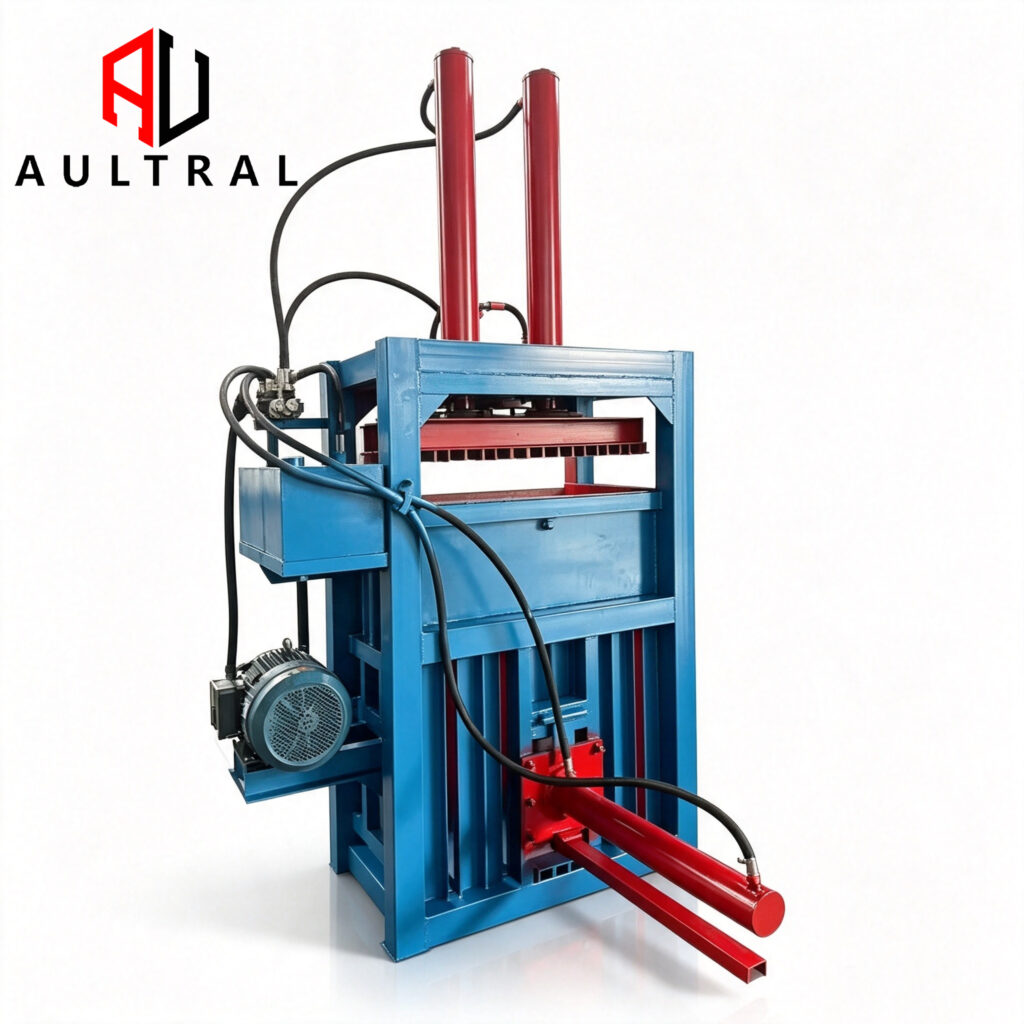
As global industries continue to focus on waste reduction and resource recovery, efficient waste compression equipment has become increasingly important. Waste paper, cardboard, plastic film, textiles, used clothing, and other recyclable materials often occupy a large amount of storage space when handled in loose form. This creates challenges for warehouses, recycling centers, and waste management companies.
The 40T Vertical Hydraulic Baler Machine is a compact and efficient solution for compressing recyclable waste into dense, easy-to-handle bales. With a powerful 40-ton hydraulic pressing force, this vertical baler is designed to reduce material volume, improve storage efficiency, and lower transportation costs. Its space-saving design makes it particularly suitable for small and medium-sized recycling businesses.
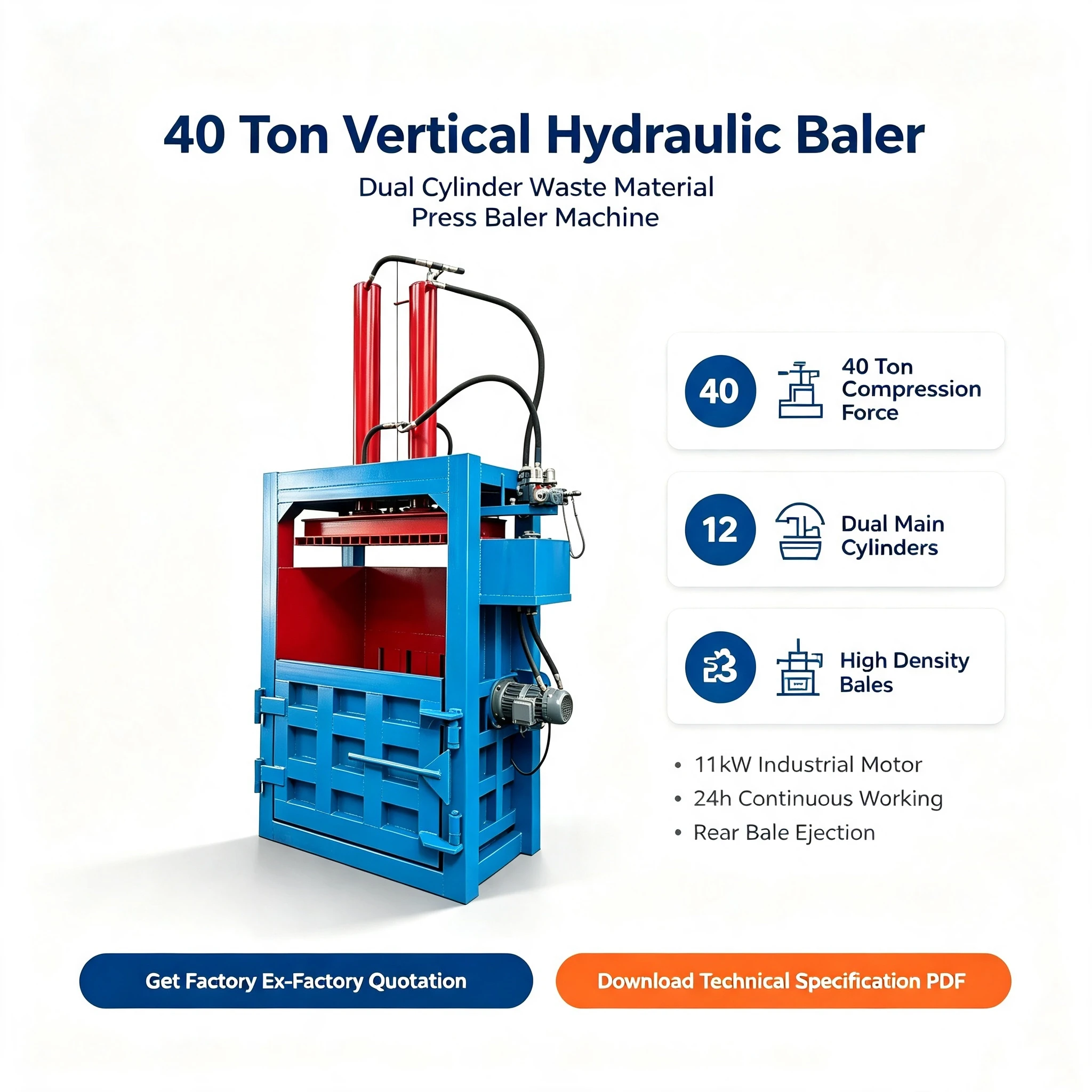
What Is a 40T Vertical Hydraulic Baler?
A 40T vertical hydraulic baler is an industrial waste compression machine that uses a hydraulic cylinder to generate strong downward pressing force. The machine compresses loose recyclable materials inside a vertical chamber and forms them into compact bales.
Compared with manual packing, a hydraulic vertical baler provides much higher compression efficiency and significantly reduces labor requirements. Depending on the material and machine configuration, the finished bales can be tied with straps, wires, or other suitable packing materials for convenient handling.
The 40-ton model offers a good balance between pressing capacity, machine size, operating efficiency, and investment cost.
Key Features of the 40T Vertical Hydraulic Baler
1. Powerful 40-Ton Hydraulic Compression
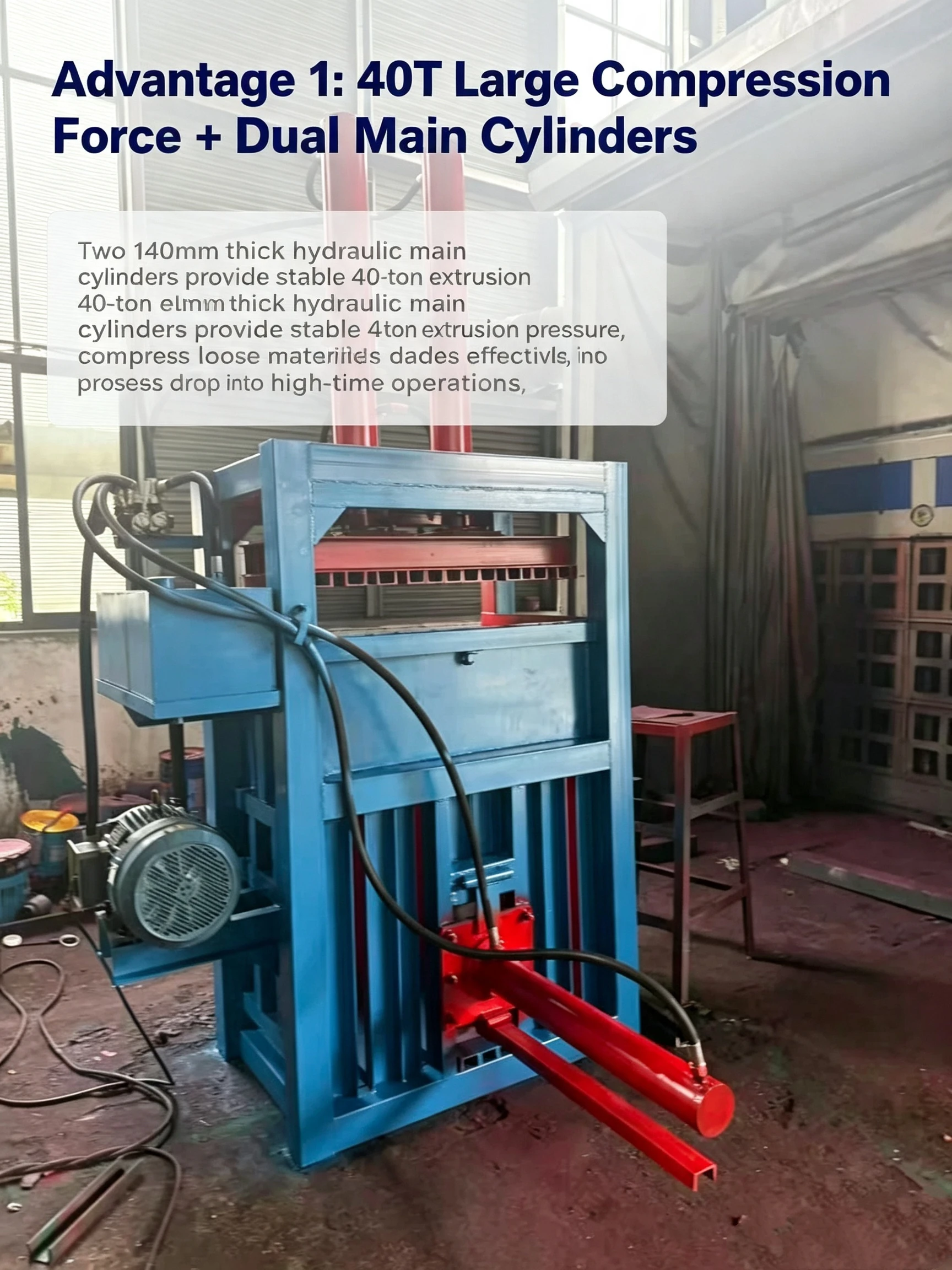
The machine provides up to 40 tons of hydraulic pressing force, allowing it to effectively compress a wide range of soft and lightweight recyclable materials.
It can be used for:
- Waste paper
- Cardboard
- Used clothing
- Textile waste
- Plastic film
- PET bottles
- Packaging materials
- Fabric scraps
- Other recyclable waste
The strong hydraulic system helps create compact bales that are easier to store and transport.
2. Space-Saving Vertical Design
One of the main advantages of a vertical hydraulic baler machine is its compact footprint. The vertical structure makes better use of available floor space compared with many horizontal baling systems.
This makes the 40T vertical baler an excellent choice for:
- Recycling centers
- Garment factories
- Warehouses
- Supermarkets
- Textile recycling facilities
- Small scrap yards
- Waste collection stations
Businesses with limited workshop space can install the machine without requiring a large production area.
3. Easy and Convenient Operation
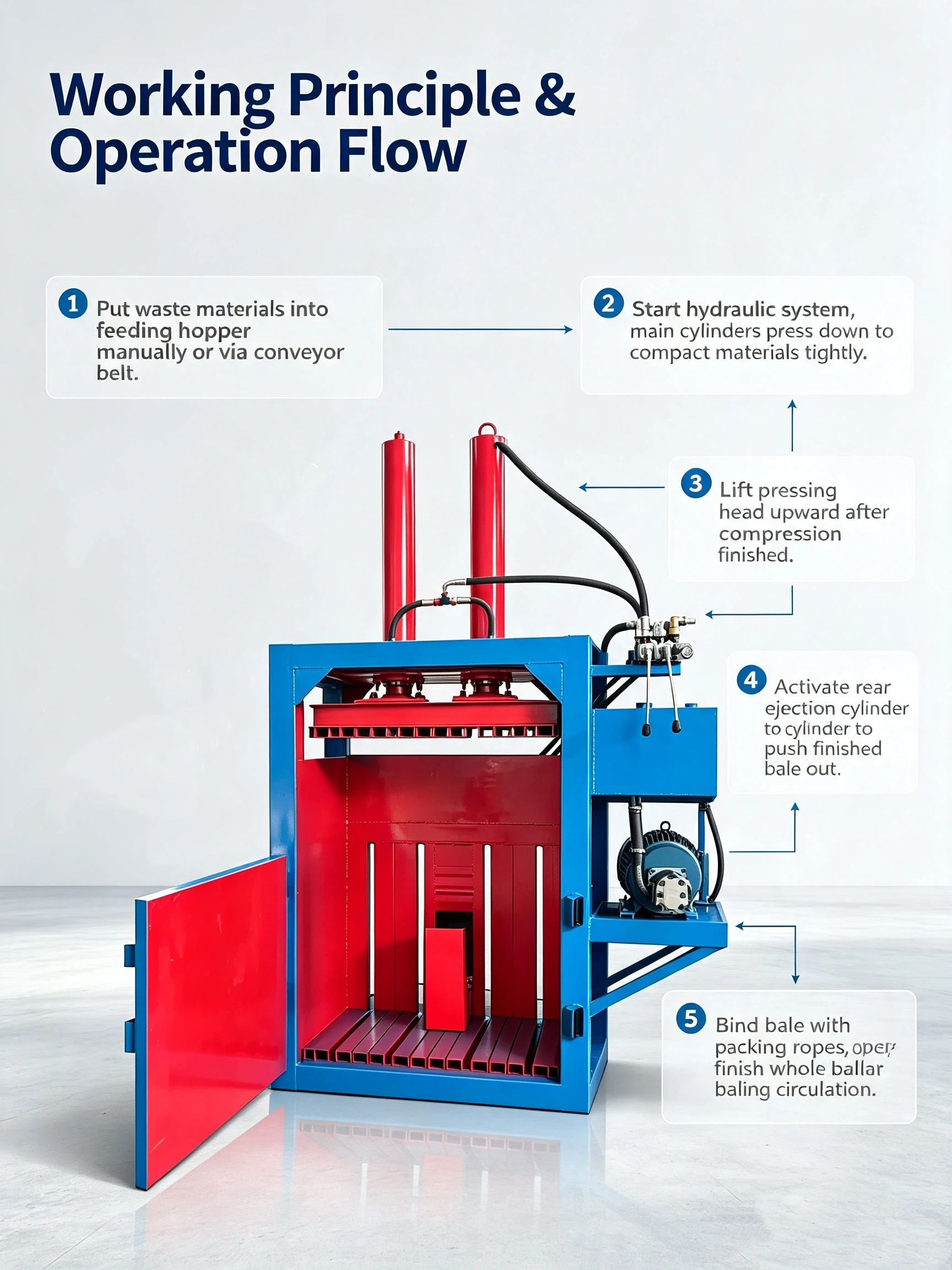
The 40T vertical baler is designed for straightforward operation. Workers place recyclable materials into the compression chamber, start the hydraulic system, and allow the pressing plate to compress the material.
After compression, the bale can be tied and removed from the machine. This simple working process helps reduce operator training requirements and improves daily productivity.
4. Durable Construction
A reliable industrial baler requires a strong frame and stable hydraulic system. The 40T vertical hydraulic baler is manufactured with a heavy-duty steel structure designed to withstand repeated compression cycles.
Proper maintenance of the hydraulic system, cylinder, seals, and electrical components can help extend the machine’s service life and maintain stable performance.
 How Does a 40T Vertical Baler Work?
The working process is relatively simple.
First, recyclable materials are loaded into the vertical compression chamber. The operator then activates the hydraulic system. The hydraulic cylinder drives the pressing plate downward, applying pressure to the material.
As the material is compressed, its volume is significantly reduced. Once the desired compression level is reached, the pressing plate returns to its original position. The compressed material is then tied securely to form a stable bale.
The finished bale can be moved using a pallet truck, forklift, or other material-handling equipment, depending on its weight and dimensions.
Applications of a 40T Hydraulic Baler
Waste Paper and Cardboard Recycling
Waste paper and cardboard are among the most common materials processed by vertical balers. Compression reduces their volume and makes them easier to store and transport to paper recycling facilities.
Textile and Clothing Recycling
Garment factories and second-hand clothing recycling businesses generate large quantities of textile waste. A 40T clothing baler can compress used clothes, fabric scraps, and textile materials into compact bales, helping maximize warehouse capacity.
Plastic Waste Recycling
Plastic film, packaging materials, and certain plastic containers can also be compressed to reduce their volume before further recycling or transportation.
Commercial Waste Management
Retail stores, warehouses, distribution centers, and commercial facilities can use a vertical hydraulic baler to manage recyclable waste generated during daily operations.
 Benefits of Using a 40T Vertical Hydraulic Baler
Reduce Storage Space
Loose recyclable materials can occupy a significant amount of warehouse space. Compression greatly reduces their volume, allowing businesses to store more materials in the same area.
Lower Transportation Costs
Compact bales make better use of truck and container space. More material can be transported per load, helping reduce transportation costs.
Improve Labor Efficiency
Compared with manual compression and packing, hydraulic baling equipment requires less physical labor and allows workers to process larger quantities of material more efficiently.
Improve Bale Handling
Uniform and compact bales are easier to stack, move, load, and transport. This improves the overall workflow of recycling operations.
Support Sustainable Recycling
By making recyclable materials easier to collect, store, and transport, the 40T vertical baler contributes to more efficient material recovery and supports the development of a circular economy.
How to Choose the Right 40T Vertical Baler
Before purchasing a 40T hydraulic baling machine, customers should consider several factors.
Material: Determine whether the machine will mainly process paper, cardboard, clothing, textiles, plastic, or mixed recyclable materials.
Bale Weight: The required bale weight will influence the machine configuration and operating method.
Daily Capacity: Estimate the amount of material that needs to be processed per day to ensure the machine can meet production requirements.
Power Supply: Confirm the local voltage, frequency, and phase requirements before ordering.
Available Space: Measure the installation area and ensure sufficient space for feeding, bale removal, and maintenance.
Automation Level: Depending on production requirements, customers can choose manual, semi-automatic, or more automated baling solutions.
The 40T Vertical Hydraulic Baler Machine offers an efficient and practical way to compress recyclable materials while reducing storage requirements, transportation costs, and labor intensity. Its powerful hydraulic system, compact vertical design, simple operation, and wide range of applications make it suitable for recycling centers, textile factories, warehouses, waste management companies, and other recycling businesses.