
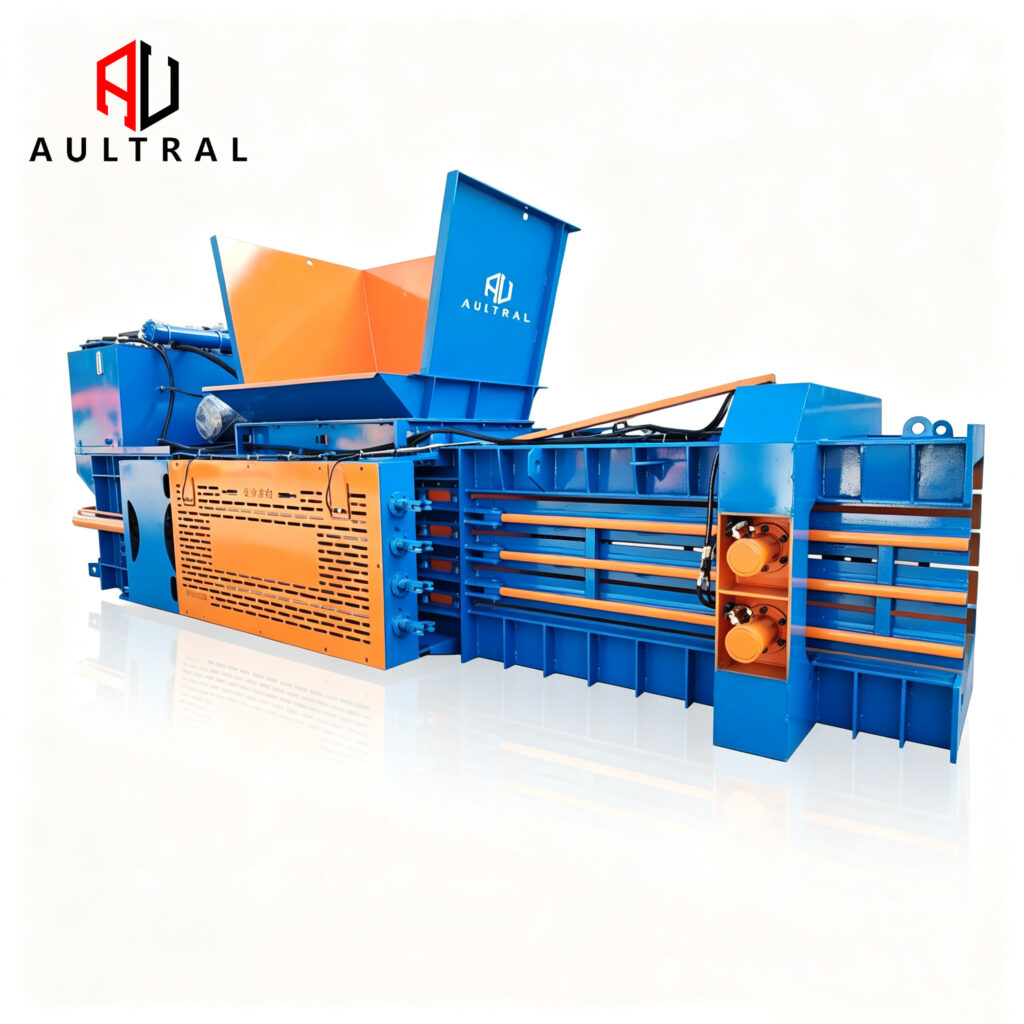
As recycling industries continue to grow, efficient collection, compression, storage, and transportation of recyclable materials have become increasingly important. Materials such as waste paper, cardboard, plastic bottles, plastic film, textile waste, used tires, and other recyclable products can take up a large amount of space when stored in loose form.
An automatic horizontal hydraulic baler provides an efficient solution by compressing loose materials into compact and easy-to-handle bales. With automatic feeding, hydraulic compression, bale formation, tying, and discharge, the machine can help recycling companies improve productivity while reducing storage and transportation costs.
 What Is an Automatic Horizontal Hydraulic Baler?
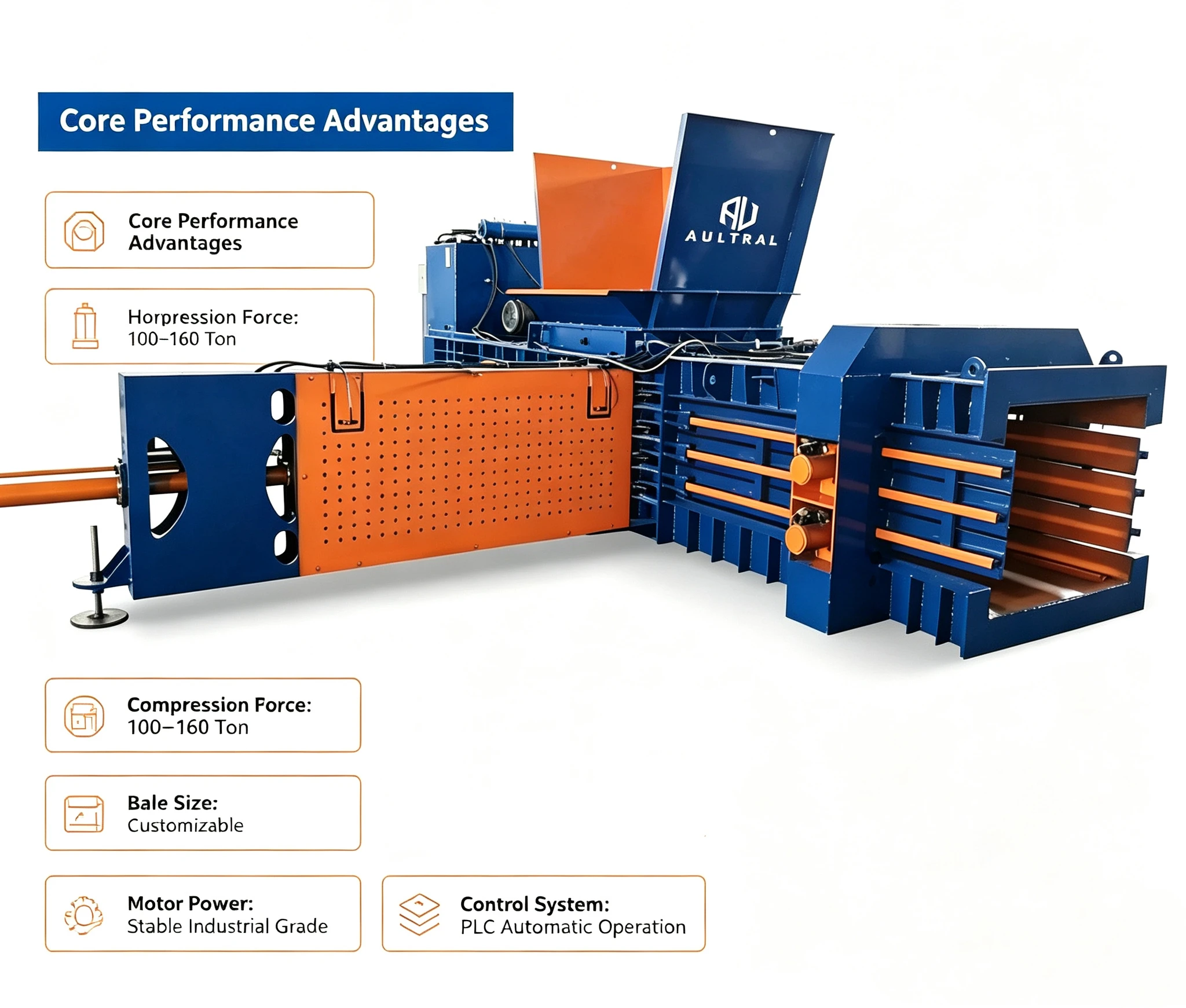
An automatic horizontal hydraulic baler is an industrial recycling machine designed to continuously compress recyclable materials into dense bales.
Unlike conventional vertical balers, the horizontal design is particularly suitable for medium- and high-volume recycling operations. Materials can be continuously fed into the machine through a conveyor system, allowing the baler to operate with less manual intervention.
The powerful hydraulic system generates high compression force to reduce the volume of recyclable materials. Once the required bale size is reached, the machine can automatically complete the tying and discharge process.
Bale dimensions, bale weight, feeding opening, hydraulic pressure, motor power, and automation level can be customized according to different applications.
What Materials Can Be Baled?
One of the major advantages of a horizontal hydraulic baler is its versatility. With the appropriate machine configuration, it can be used for many different recyclable materials.
Typical applications include:
- Waste paper
- Cardboard and OCC
- Plastic bottles
- PET bottles
- Plastic film
- PP and PE materials
- Textile and waste clothes
- Woven bags
- Used tires
- Rubber materials
- Packaging waste
- Other compressible recyclable materials
Different materials have different densities, shapes, moisture levels, and compression characteristics. Therefore, the ideal baler configuration should be selected according to the actual material and required bale specifications.
For example, waste paper and cardboard can be compressed into dense rectangular bales for convenient storage and transportation. Plastic bottles can be compressed to dramatically reduce their loose volume, while used tires can be compressed into compact bundles for easier handling and logistics.
 How Does the Automatic Horizontal Baler Work?
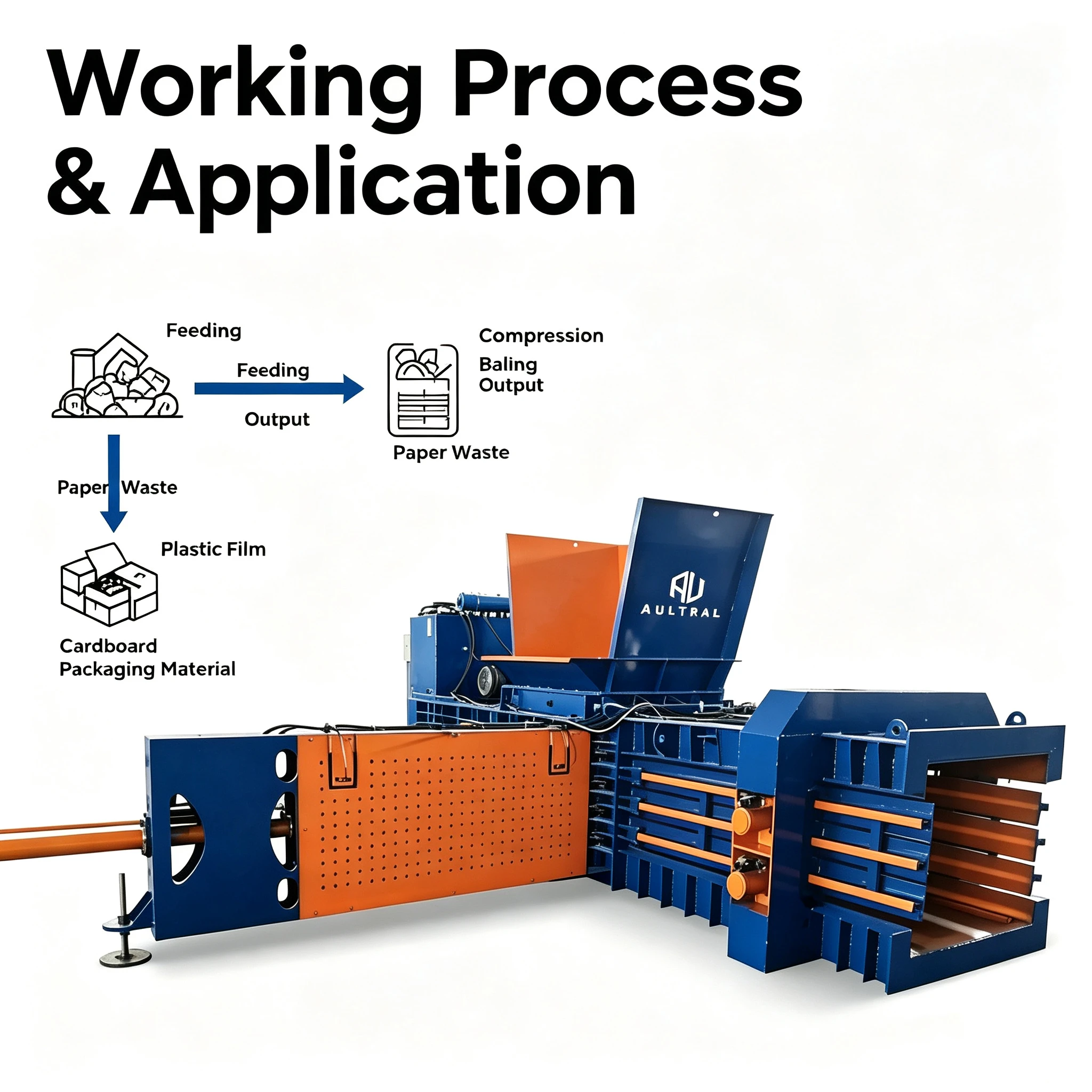
The complete working process is designed to provide efficient and continuous operation.
1. Material Feeding
Recyclable materials are delivered into the feeding hopper manually or through a conveyor system.
For high-volume applications, an automatic conveyor feeding system can continuously transfer material into the baling chamber, reducing manual loading requirements.
2. Hydraulic Compression
Once the material enters the chamber, the hydraulic cylinder drives the ram forward and compresses the material with high pressure.
The hydraulic system provides strong and stable compression, helping achieve a compact and uniform bale.
3. Bale Formation
The compression process continues until the required bale size or density is reached.
The bale length can be designed or adjusted according to the customer’s requirements. Different bale sizes can also be selected to match transportation, storage, or downstream recycling requirements.
4. Automatic Tying
After the bale is formed, the automatic tying system secures the material using multiple straps or wires, depending on the machine configuration.
This keeps the bale compact during handling and transportation.
5. Bale Discharge
The finished bale is automatically discharged from the machine. A forklift or other material-handling equipment can then move the bale to the storage or loading area.
This continuous process makes the horizontal baler suitable for recycling facilities that handle large amounts of material every day.
Key Benefits of an Automatic Horizontal Hydraulic Baler
Higher Recycling Efficiency
Automation allows the machine to perform feeding, compression, tying, and discharge with limited manual intervention. This can significantly improve the overall efficiency of a recycling operation.
Significant Volume Reduction
Loose waste materials often occupy considerable storage space. Hydraulic compression reduces the volume of the material and transforms it into compact bales.
This allows recycling facilities to make better use of their available warehouse and yard space.
Lower Transportation Costs
Compressed bales are easier to stack and handle than loose materials. More recyclable material can be loaded into a truck or container, potentially reducing transportation costs per unit of material.
Reduced Manual Labor
Automatic operation reduces repetitive manual feeding and bale-handling work. This can help companies improve labor efficiency and create a more streamlined recycling process.
Easier Storage and Handling
Uniform bales are easier to stack, move, load, and store. Forklifts can efficiently handle the finished bales, making them suitable for warehouses, recycling centers, and material recovery facilities.
Applications in Different Recycling Industries
Waste Paper and Cardboard
Paper and cardboard are among the most common applications for horizontal balers. Supermarkets, warehouses, printing companies, packaging facilities, and recycling centers can compress large quantities of cardboard and paper into dense bales.
This greatly reduces storage volume and makes the material easier to transport to paper mills or recycling facilities.
Plastic Bottle Recycling
Plastic bottles are lightweight but occupy a large volume when collected loose. A hydraulic baler can compress PET and other plastic bottles into compact bales, making collection, storage, and transportation much more efficient.
Used Tire Baling
Used tires are bulky and difficult to store efficiently. A suitable horizontal hydraulic baler can compress multiple tires into compact bundles, helping reduce the space required for storage and transportation.
For tire applications, the machine configuration should be selected according to tire size, required bale dimensions, bale weight, and handling method.
Textile Recycling
Waste clothes, textile scraps, and other fibrous materials can also be compressed into compact bales. This is useful for textile recycling companies, used clothing collection centers, and sorting facilities.
 How to Choose the Right Horizontal Baler
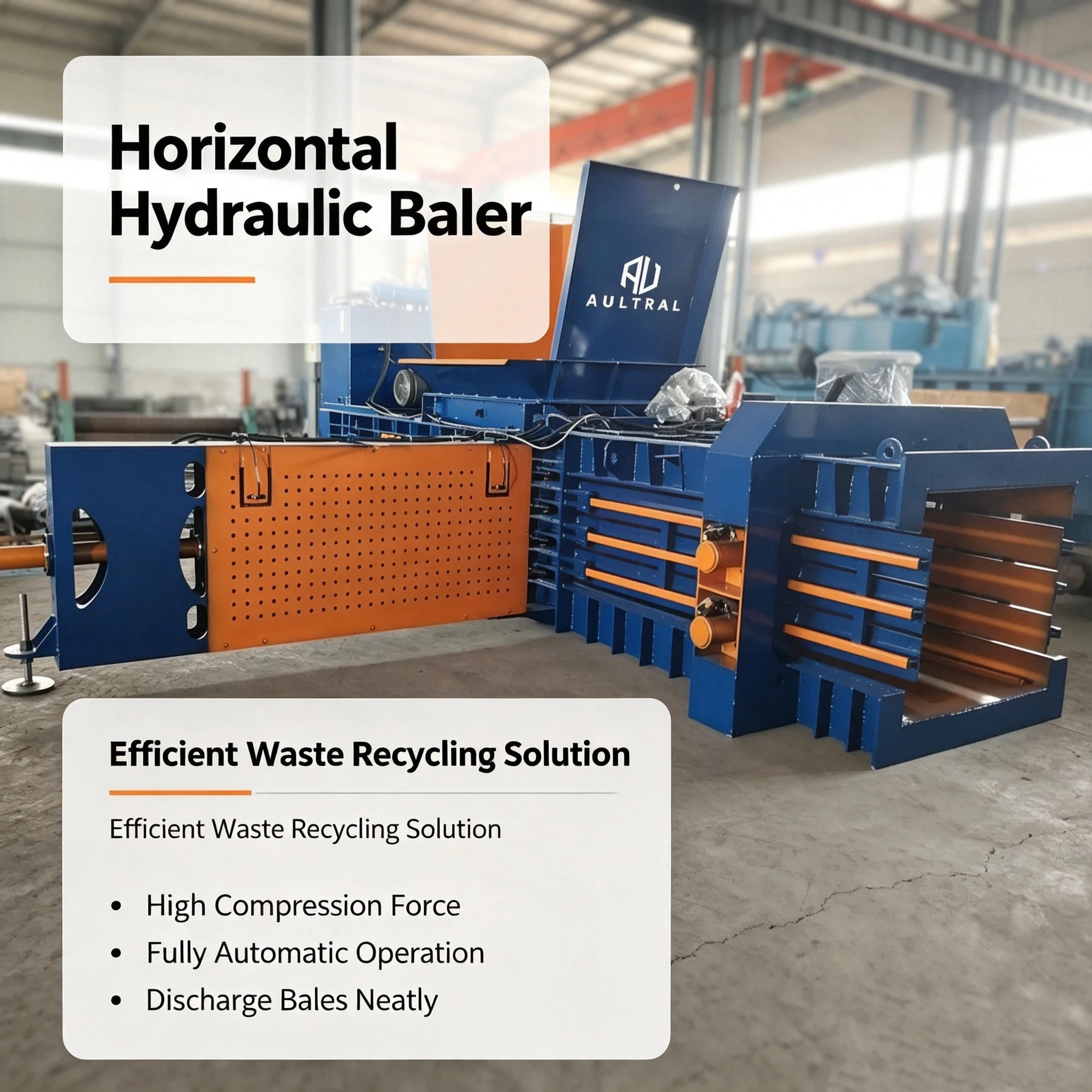
Choosing the correct baler requires understanding the actual working conditions of the recycling facility.
Material Type
First, determine exactly what material will be processed. Different materials require different compression characteristics and machine configurations.
Processing Capacity
The expected hourly or daily throughput is an important factor. Higher-volume applications may require larger feeding openings, stronger hydraulic systems, and automatic conveyor feeding.
Bale Size and Weight
The desired bale size and weight should be considered according to storage space, forklift capacity, transportation requirements, and the specifications accepted by downstream buyers.
Feeding Method
Manual feeding may be suitable for smaller operations, while conveyor feeding is recommended for continuous and high-volume applications.
Electrical Requirements
The local voltage, frequency, and phase should be confirmed before production so that the electrical system can be properly configured for the customer’s location.
Installation Space
The available space should include not only the baler itself, but also the feeding conveyor, bale discharge area, forklift operating area, and material storage area.
Customized Baling Solutions from AULTRAL
At AULTRAL, we provide hydraulic baling solutions for different recycling applications. Instead of offering only one standard configuration, we can customize the machine according to the customer’s actual material and working requirements.
Depending on the application, the machine can be configured with:
- Customized feeding opening
- Automatic conveyor feeding
- Adjustable bale length
- Customized bale dimensions
- Automatic bale tying
- Different hydraulic systems
- Customized motor power
- Customized voltage and frequency
- Different control system configurations
- Customized bale discharge solutions
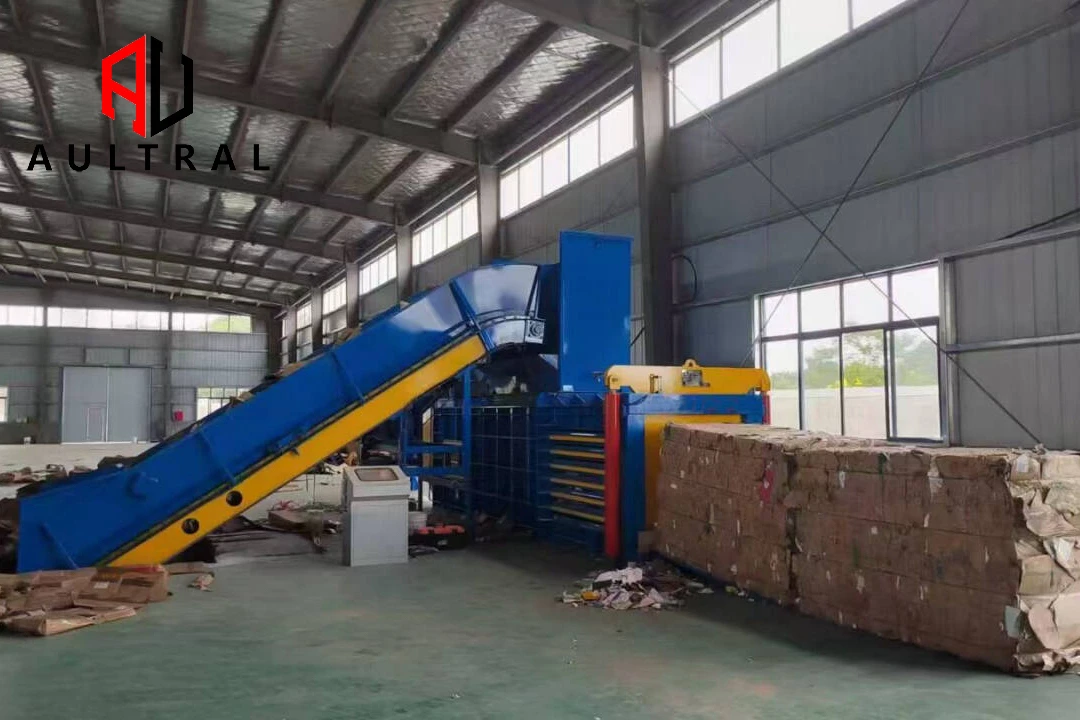 Whether you are processing waste paper, cardboard, plastic bottles, plastic film, textiles, used tires, or other recyclable materials, choosing the correct configuration is essential for achieving stable and efficient operation.
Before recommending a machine, we normally evaluate the material type, daily capacity, material size, desired bale dimensions, bale weight, power supply, available space, and feeding method.
An automatic horizontal hydraulic baler is an efficient solution for recycling companies that need to compress large volumes of recyclable materials.
By combining hydraulic compression with automatic feeding, bale formation, tying, and discharge, the machine can reduce material volume, improve storage efficiency, simplify handling, and help lower transportation costs.
Its wide range of applications makes it suitable for waste paper, cardboard, plastic bottles, plastic film, textiles, used tires, rubber materials, and many other recyclable products.
For recycling businesses looking to improve their material handling process, the right horizontal baler can become an important part of a more efficient recycling system.
If you are looking for a horizontal hydraulic baler, send us your material photos or videos, daily processing capacity, desired bale size and weight, and local power supply. AULTRAL can recommend a suitable configuration based on your actual recycling requirements.