
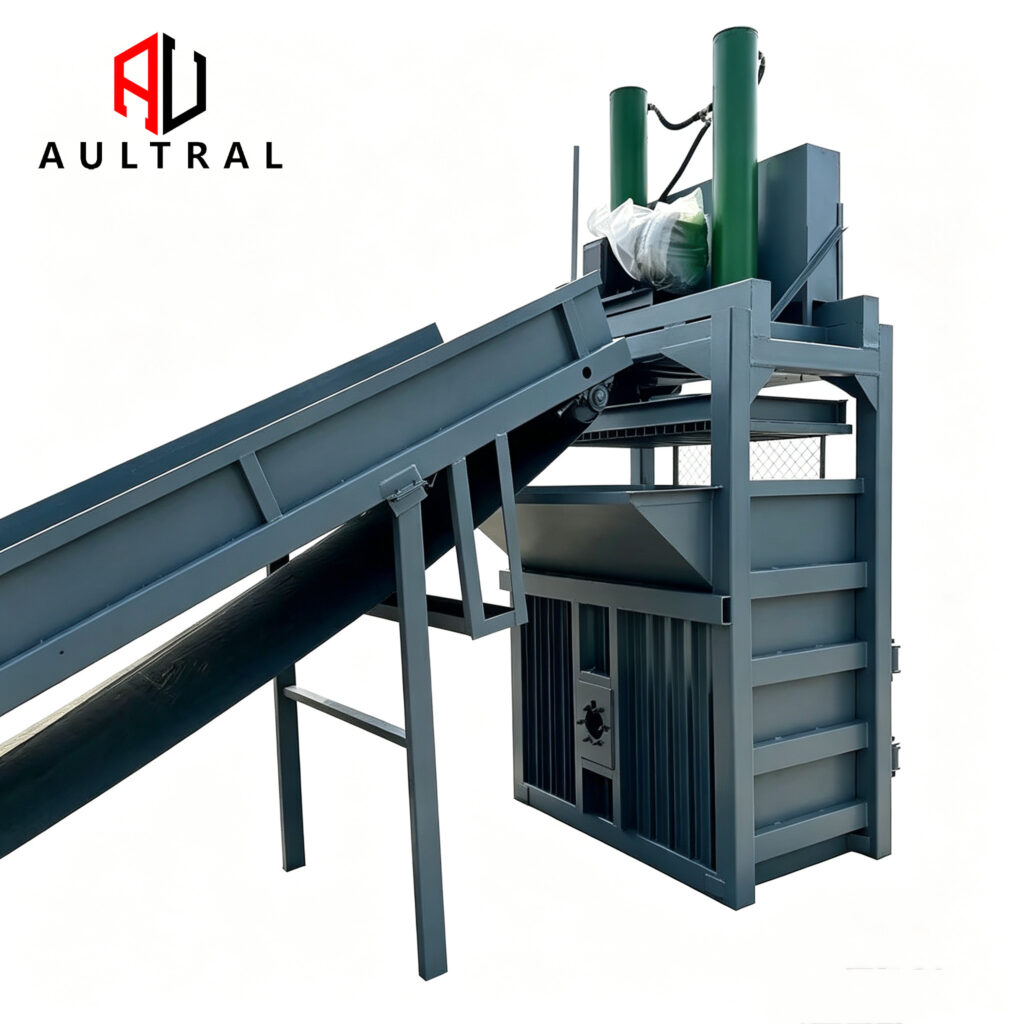
As environmental awareness continues to grow, efficient waste management has become increasingly important for businesses across various industries. From recycling centers and warehouses to supermarkets, manufacturing facilities, and distribution centers, companies generate large volumes of recyclable waste every day. Managing these materials efficiently can reduce storage costs, improve workplace organization, and support sustainable business practices.
A vertical baler machine is a practical solution for compressing loose recyclable materials into compact, manageable bales. With its compact structure, simple operation, and versatile applications, a vertical hydraulic baler is an excellent choice for businesses looking to improve their waste handling and recycling efficiency.
In this guide, we will explore how vertical balers work, their major advantages, common applications, and the key factors to consider when selecting the right machine for your business.
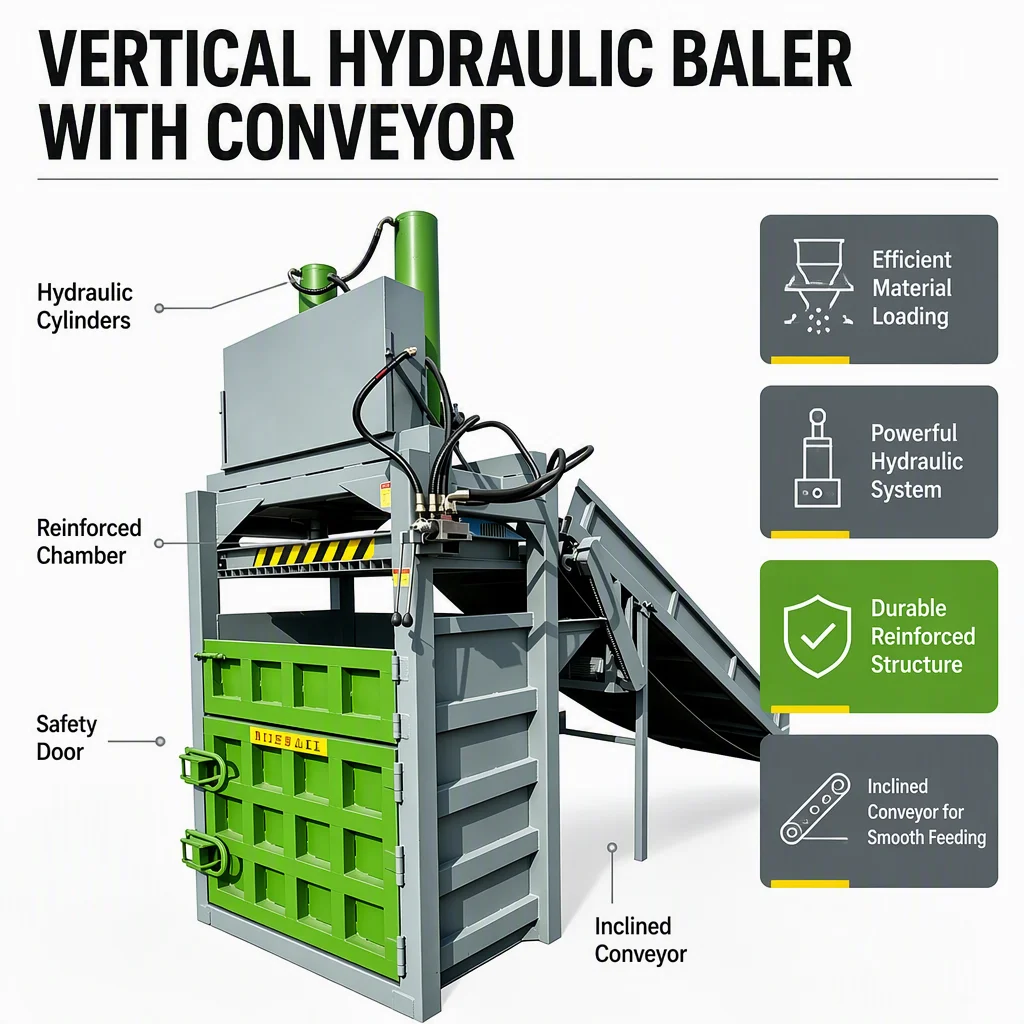 What Is a Vertical Baler Machine?
A vertical baler machine is a type of hydraulic compaction equipment designed to compress recyclable materials vertically inside a compression chamber. The machine uses a hydraulic cylinder to drive a pressing plate downward, reducing the volume of loose materials and forming dense bales.
Compared with large horizontal balers, vertical balers generally require less floor space and are suitable for facilities with limited installation areas or relatively moderate waste volumes.
Depending on the model and configuration, a vertical baler can process various materials, including:
- Waste paper, cardboard, and cartons
- Plastic film, PET bottles, and other plastic waste
- Aluminum cans and light metal scrap
- Textile waste and used clothing
- Waste tires and selected rubber materials
- Other compressible recyclable materials
Different materials require different compression forces, chamber dimensions, and feeding methods. Therefore, choosing a suitable model according to the actual application is essential.
How Does a Vertical Hydraulic Baler Work?
The working process of a vertical hydraulic baler is straightforward. Although operating procedures vary by model, the basic process usually includes the following steps.
Step 1: Load the Material
Operators place recyclable materials into the feeding chamber. Depending on the design, materials may be loaded manually or through an auxiliary feeding system.
Step 2: Start the Compression Cycle
Once the chamber is loaded and the required safety conditions are met, the hydraulic system drives the pressing plate downward to compress the material.
Step 3: Repeat the Compression Process
Additional materials can be loaded and compressed according to the machine’s operating procedure until the bale reaches the required size and density.
Step 4: Secure the Bale
When the bale is complete, operators secure it using suitable strapping materials, following the manufacturer’s instructions.
Step 5: Eject the Finished Bale
The finished bale is removed using the machine’s designated ejection mechanism. Depending on the model, the machine may use manual, semi-automatic, or other bale discharge arrangements.
The resulting bales are easier to store, handle, transport, and deliver to recycling facilities.
Key Benefits of Using a Vertical Baler
1. Space-Saving Design
One of the main advantages of a vertical baler is its compact footprint. It can be installed in warehouses, retail backrooms, recycling stations, and manufacturing facilities where floor space is limited.
By compressing loose waste into dense bales, businesses can also make better use of their storage areas.
2. Reduced Waste Transportation Costs
Loose cardboard, plastic film, and other lightweight materials can occupy a significant amount of space during transportation. Compressing these materials into bales helps improve loading efficiency and may reduce the number of collections or shipments required.
Actual savings depend on material density, transport distance, container capacity, and local collection arrangements.
3. Improved Workplace Organization
Loose waste can create clutter and interfere with daily operations. A vertical baler provides a designated system for collecting and compacting recyclable materials, helping businesses maintain cleaner and more organized workspaces.
4. Versatile Material Applications
Depending on its specifications, a vertical baler can handle a wide range of recyclable materials. Businesses generating cardboard, plastic, textiles, or certain metal waste can select a suitable configuration based on their specific needs.
For materials requiring greater compression force or specialized handling, a customized hydraulic baler may be necessary.
5. Easy Operation and Maintenance
Vertical balers generally feature a straightforward operating structure and hydraulic control system. With proper operator training, routine inspections, and regular maintenance, the equipment can support reliable long-term operation.
Important maintenance tasks include checking hydraulic oil levels, inspecting hoses and connections, cleaning the compression chamber, and examining electrical and safety components.
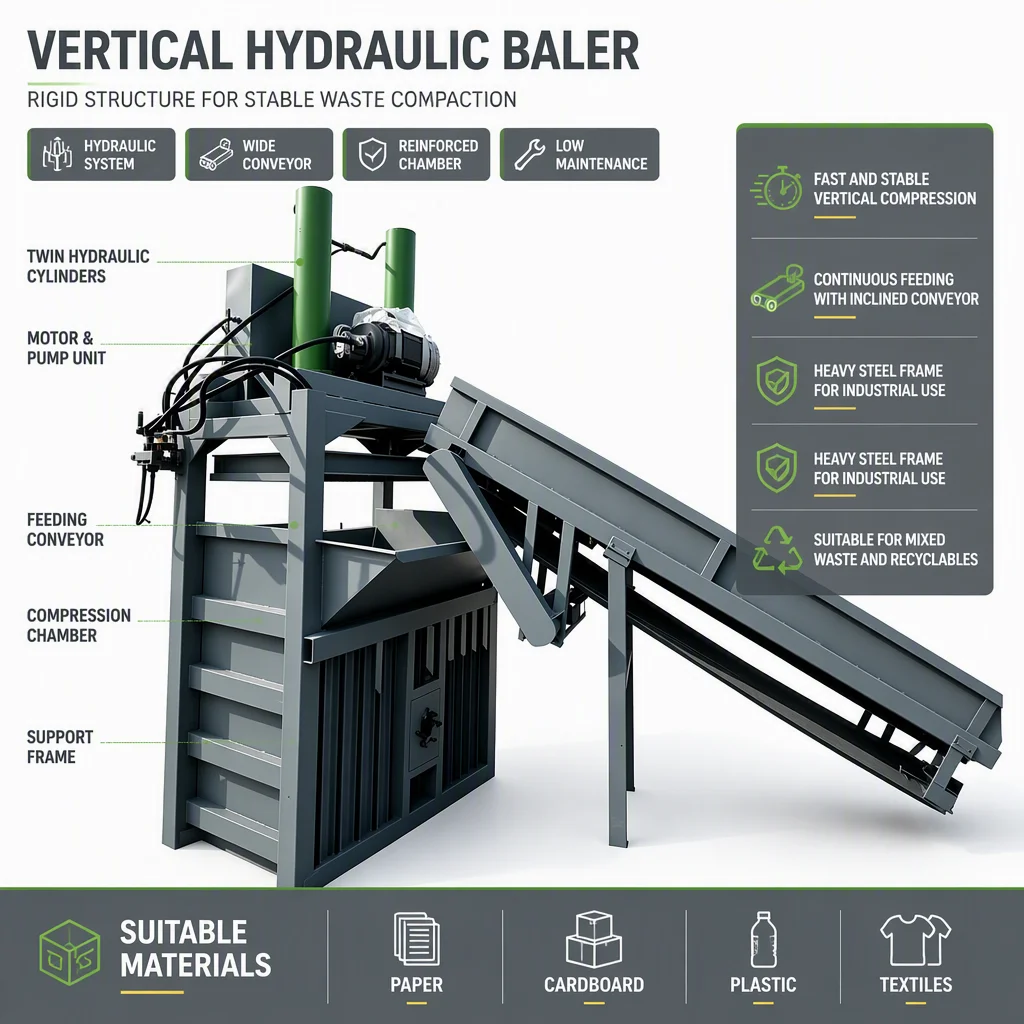 Common Applications of Vertical Baling Machines
Vertical balers are widely used across different industries.
Recycling Centers: Compress cardboard, plastics, and other suitable recyclable materials before storage or transportation.
Supermarkets and Retail Stores: Reduce the volume of cartons and packaging waste generated during daily operations.
Warehouses and Logistics Facilities: Manage packaging materials efficiently and maintain organized storage areas.
Manufacturing Plants: Compact production-related waste, including plastic scrap, textiles, and selected metal materials.
Textile and Garment Businesses: Compress fabric offcuts, used clothing, and other suitable textile waste for easier handling.
Small and Medium-Sized Businesses: Provide a practical waste compaction solution without requiring the installation space of a large horizontal baling system.
The ideal machine depends on the material type, daily waste volume, required bale dimensions, and available working space.
How to Choose the Right Vertical Baler Machine
Selecting the right vertical baler involves more than comparing hydraulic pressure or purchase prices. Consider the following factors before making a decision.
Material Type
Identify the main materials you need to process. Cardboard, plastic film, aluminum cans, and metal scrap have different physical characteristics and compression requirements.
Daily Processing Capacity
Estimate the quantity of waste generated per day or per shift. Choose a machine with an appropriate chamber size and operating cycle to meet your production requirements.
Bale Size and Weight
Consider your storage conditions, handling equipment, and transportation requirements. The desired bale dimensions and weight will influence the machine configuration.
Hydraulic Pressure and Motor Power
Compression force and motor power affect the machine’s performance, but higher specifications do not automatically mean better results. The complete system must be matched to the material and expected output.
Feeding and Bale Ejection
Determine whether manual feeding is sufficient or whether an auxiliary feeding arrangement would improve efficiency. Also, confirm the bale discharge method and whether operators can safely handle the finished bale.
Power Supply and Safety
Confirm the required voltage, frequency, and phase before ordering. The machine should include appropriate guarding, interlocks, emergency-stop provisions, and operating instructions according to its design and applicable safety requirements.
Supplier Support and Customization
Choose a supplier that can provide technical specifications, installation guidance, spare parts, and after-sales support. Customization may be available for chamber dimensions, compression force, motor power, and other requirements.
Why Choose AULTRAL Vertical Baler Machines?
AULTRAL provides waste processing equipment solutions for customers in recycling, manufacturing, warehousing, and other industries.
Our vertical baler solutions can be configured according to different materials, processing requirements, and installation conditions. Depending on the model, customers can select suitable compression forces, chamber dimensions, bale sizes, and power configurations.
We focus on practical equipment selection, clear technical communication, and support throughout the purchasing process. Our team can help evaluate your application and recommend a suitable solution based on your material characteristics and production needs.
Whether you need a compact baler for cardboard recycling or a more powerful hydraulic baler for selected industrial materials, AULTRAL can help you explore the available options.
Frequently Asked Questions About Vertical Balers
Q1: What materials can a vertical baler compress?
Depending on the model, it can process cardboard, paper, plastic film, PET bottles, textiles, aluminum cans, and other suitable materials. Always confirm material compatibility before purchasing.
Q2: Is a vertical baler suitable for a small business?
Yes. Its compact design makes it suitable for many small and medium-sized businesses with limited floor space and moderate waste volumes.
Q3: How do I determine the required compression force?
The required force depends on material type, bulk density, target bale dimensions, and desired bale weight. Share these details with your supplier for a suitable recommendation.
Q4: Can a vertical baler be customized?
Many configurations can be customized, including chamber dimensions, hydraulic pressure, motor power, voltage, and bale ejection arrangements, subject to the machine design.
Q5: What information should I provide when requesting a quotation?
Provide the material type, estimated daily processing volume, target bale size and weight, local power supply, and any space limitations. Photos or videos of the material can also help the supplier recommend the right model.
A vertical baler machine is an effective solution for businesses seeking to reduce recyclable waste volume, improve storage efficiency, and simplify material handling. By selecting the right model for your materials and operating conditions, you can build a more organized and efficient waste management process.