
In today’s recycling industry, efficiency, automation, and cost-saving operations are more important than ever. Among various types of baling equipment, the Fully Automatic Horizontal Baler Machine stands out as one of the most advanced and efficient solutions for processing large volumes of recyclable materials.
This article will explain what a fully automatic horizontal baler is, why it is essential for modern recycling facilities, how it works, and how to choose the right model for your specific needs.
What Is A Fully Automatic Horizontal Baler Machine?
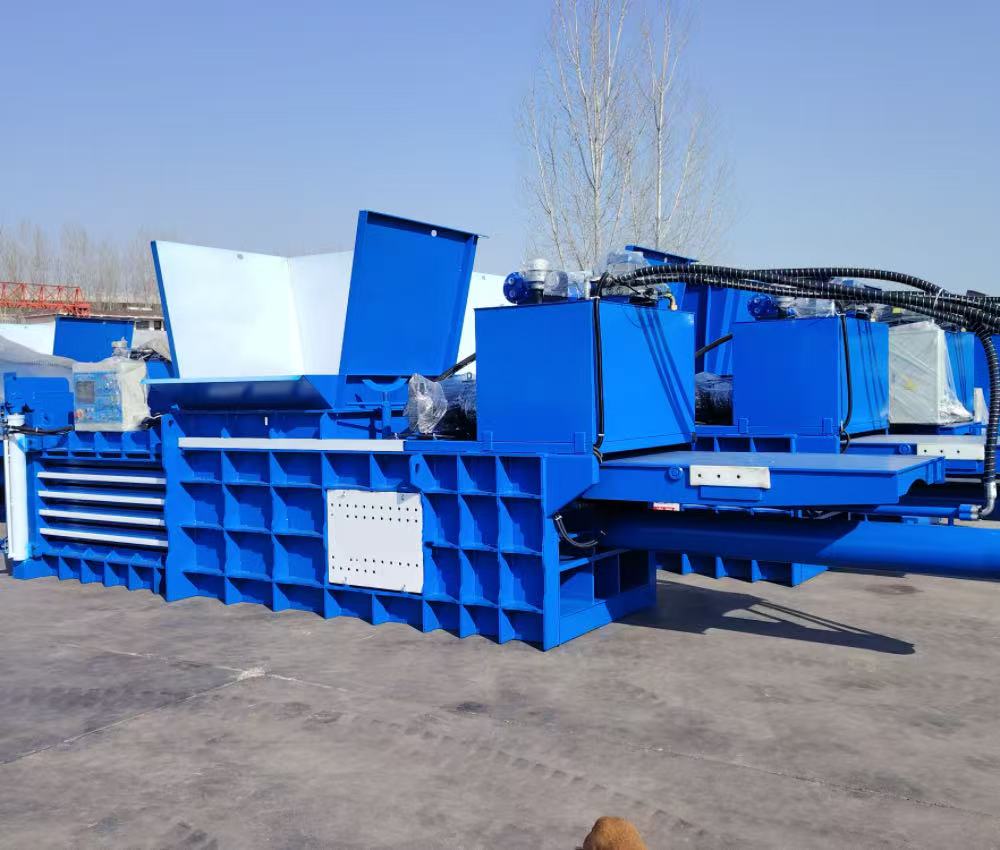
A Fully Automatic Horizontal Baler Machine is an industrial hydraulic baling machine designed to compress large quantities of recyclable waste—such as waste paper, OCC, cardboard, plastic film, PET bottles, and other materials—into compact and uniform bales.
Unlike manual or semi-automatic balers, this type of baler performs all steps automatically, including feeding, compressing, tying, and bale ejection. The operator only needs to start the machine and monitor its operation, dramatically reducing labor intensity and improving productivity.
Key Components Include:
-
Conveyor Feeding System: Automatically transfers waste materials into the compression chamber.
-
Hydraulic Compression Chamber: Uses powerful hydraulic cylinders to press materials into dense bales.
-
Automatic Binding System: Wraps the finished bales with steel wire or plastic straps for easy handling.
-
PLC Control Panel: Controls all machine functions and ensures safety through automatic monitoring.
Why Use A Fully Automatic Horizontal Baler?
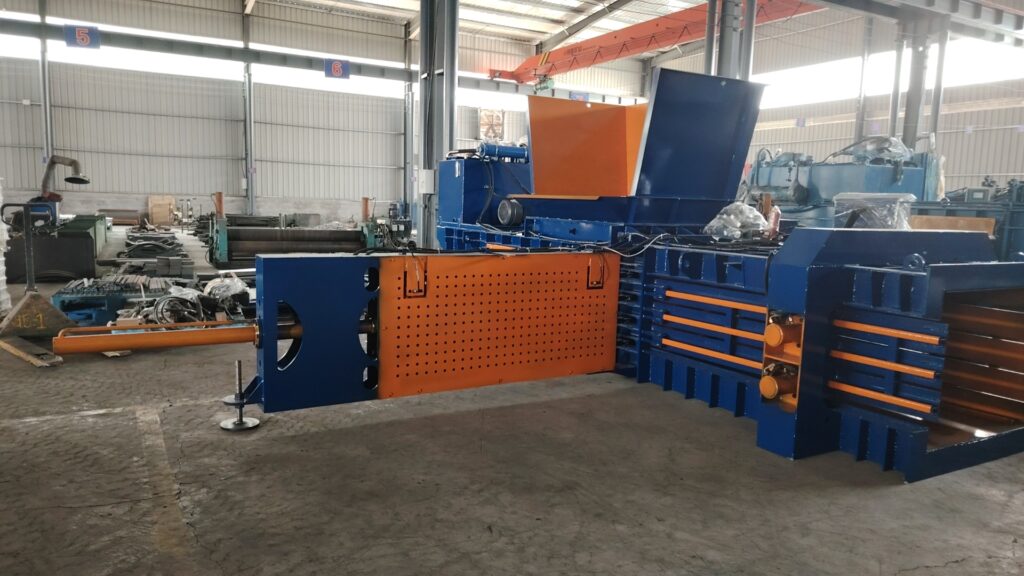
Investing in a fully automatic horizontal baler is a strategic decision for any business dealing with large amounts of recyclable waste. Here are the main reasons why it has become a preferred choice worldwide:
1. High Efficiency and Continuous Operation
The machine can operate continuously with automatic feeding and tying. This makes it perfect for facilities processing several tons of material per hour, such as paper mills, recycling centers, logistics warehouses, and packaging factories.
2. Significant Labor Savings
Since the system handles feeding, compressing, and strapping automatically, only one operator is needed to supervise the machine. This reduces manual workload and operational costs.
3. High Bale Density and Uniform Shape
Powerful hydraulic pressure ensures that every bale is compact and uniform, which reduces storage space and transportation costs. Compact bales also improve container loading efficiency.
4. Long-Term Cost Efficiency
Though the initial investment is higher than semi-automatic models, a fully automatic horizontal baler saves money in the long run through lower labor, maintenance, and energy costs.
5. Safe and Environmentally Friendly
Equipped with multiple safety sensors and automatic shutdown functions, the machine ensures safe operation. Additionally, by compressing waste efficiently, it helps reduce landfill volume and supports recycling efforts.
How Does A Fully Automatic Horizontal Baler Work?
The working process of a fully automatic baler is simple yet highly efficient. Below is a step-by-step overview:
Step 1: Material Feeding
Recyclable materials are placed onto a conveyor belt, which automatically delivers them into the compression chamber. This process can be integrated with sorting or shredding systems.
Step 2: Compression
Once the materials enter the chamber, hydraulic cylinders apply massive pressure to compress the waste horizontally. The compression ratio can reach up to 10:1 depending on the material type.
Step 3: Automatic Binding
After the bale reaches the preset density, the baler automatically ties it with steel wires or plastic straps. The PLC system ensures tight and consistent binding every time.
Step 4: Bale Ejection
The completed bale is automatically pushed out of the chamber and ready for transport or storage. The conveyor can then immediately feed new materials, achieving continuous production.
Applications Of Fully Automatic Horizontal Balers
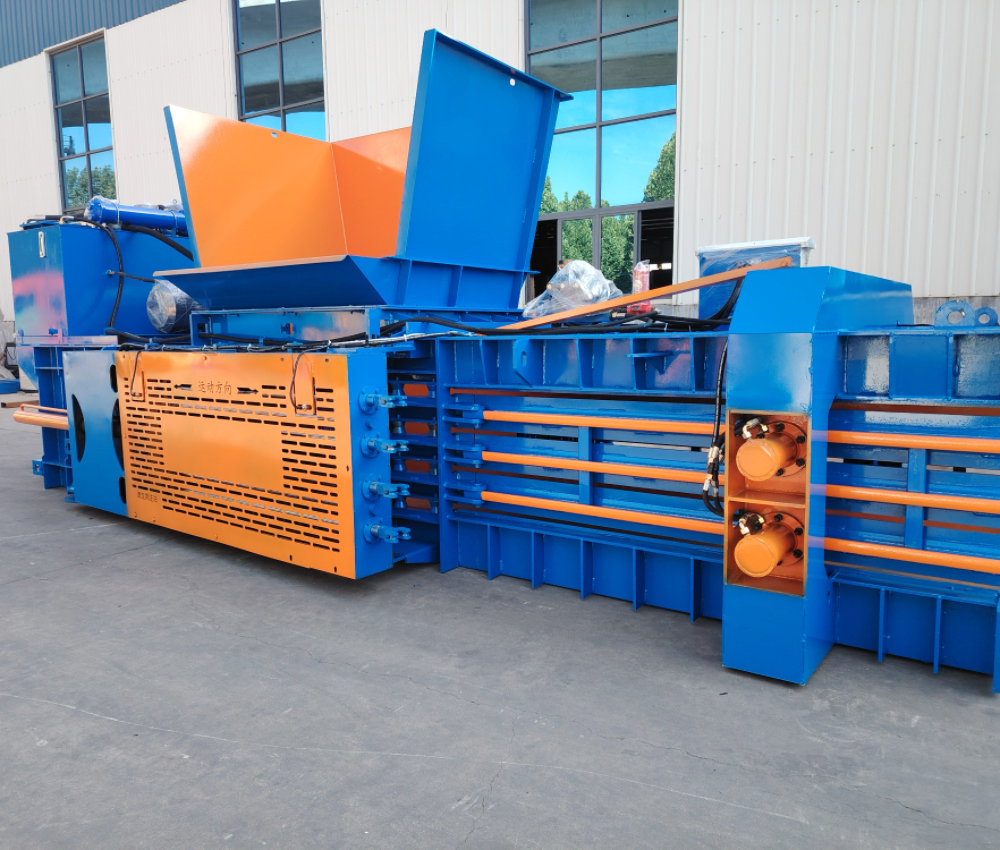
These machines are widely used across industries where large volumes of recyclable waste are generated daily. Typical applications include:
-
Waste paper and cardboard recycling
-
Printing and packaging plants
-
Supermarkets and logistics centers
-
Plastic film and PET bottle recycling lines
-
Textile recycling industries
In each of these sectors, the baler plays a critical role in reducing storage costs, improving material handling, and increasing recycling value.
How To Choose The Right Fully Automatic Horizontal Baler
Selecting the right baler model depends on several key factors. Here’s a quick guide to help you make the best choice:
1. Type and Volume of Material
Different materials have different densities and compressibility.
-
For waste paper and cardboard, choose models with medium pressure (80–100 tons).
-
For plastic film or PET bottles, higher pressure models (120–200 tons) may be required.
-
For metal scraps or textile waste, consider heavy-duty versions with reinforced structures.
2. Bale Size and Weight
Consider the size of bales that best fit your transport or storage requirements. Typical bale sizes range from 1100×1250mm to 1100×1575mm, with bale weights from 800kg to 1200kg.
3. Production Capacity
Estimate how much material you need to process per hour or per day.
-
Small recycling stations may need 3–5 tons/hour.
-
Medium to large factories usually require 8–12 tons/hour or more.
4. Automation Level
If you handle continuous production and prefer minimal labor, a fully automatic system with conveyor feeding and automatic tying is ideal. For smaller operations, a semi-automatic baler may also be sufficient.
5. Power and Installation Requirements
Check available power supply (usually 380V/50Hz three-phase) and ensure there’s enough space for installation, conveyor setup, and bale output area.
Maintenance Tips For Long-Term Performance
To keep your fully automatic baler in excellent working condition:
-
Regularly check the hydraulic oil level and replace it as recommended.
-
Clean dust and debris around the conveyor and chamber daily.
-
Inspect wires, hoses, and seals for wear or leakage.
-
Lubricate moving parts to reduce friction and extend lifespan.
-
Follow the manufacturer’s maintenance schedule and safety procedures.
A well-maintained baler can operate efficiently for more than 10 years with stable performance.
Conclusion
The Fully Automatic Horizontal Baler Machine is not just a piece of equipment—it’s a long-term investment in efficiency, safety, and sustainability. By automating the baling process, it allows businesses to save labor, reduce operating costs, and achieve higher recycling productivity.
Whether you manage a recycling center, a paper mill, or a manufacturing plant, choosing the right baler can dramatically improve your material handling process.
If you are looking for a reliable, CE and ISO-certified baler manufacturer, Shanghai Aultral Machinery Co., Ltd offers a full range of automatic horizontal balers tailored to your specific needs. Contact us today to get professional guidance and customized solutions for your recycling business.