
As global waste volumes continue to rise, scrap tires have become one of the most challenging waste materials to manage. They occupy massive landfill space, pose fire hazards, and degrade extremely slowly. To solve this problem efficiently, more recycling plants and waste-management companies are investing in Tire Recycling Lines—a complete system designed to convert waste tires into valuable reusable materials.
Whether you are entering the recycling industry or expanding your waste-processing business, understanding how a tire recycling line works is crucial. This guide will walk you through what it is, why it’s needed, how it operates, and how to choose the right model for your production needs.
What Is A Tire Recycling Line?
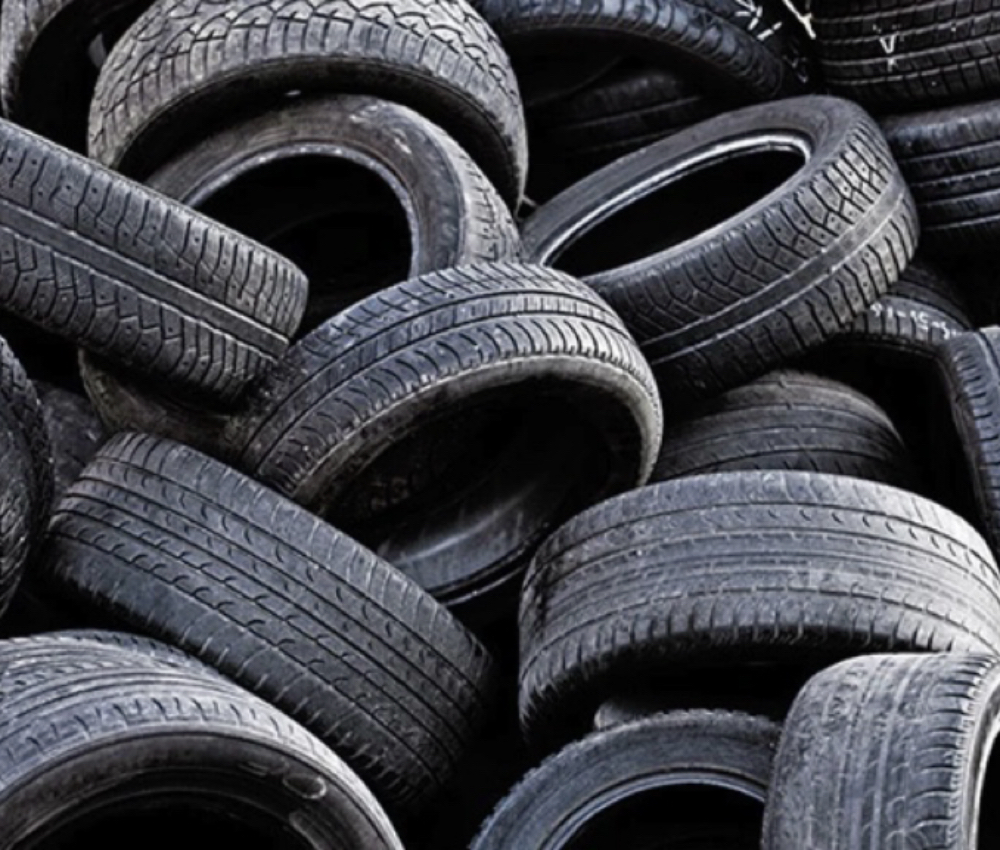
A Tire Recycling Line is a fully integrated system that processes waste car tires, truck tires, and even OTR tires into smaller, reusable components. The main outputs typically include:
- Rubber chips
- Rubber granules
- Rubber powder
- Steel wire
- Nylon fiber
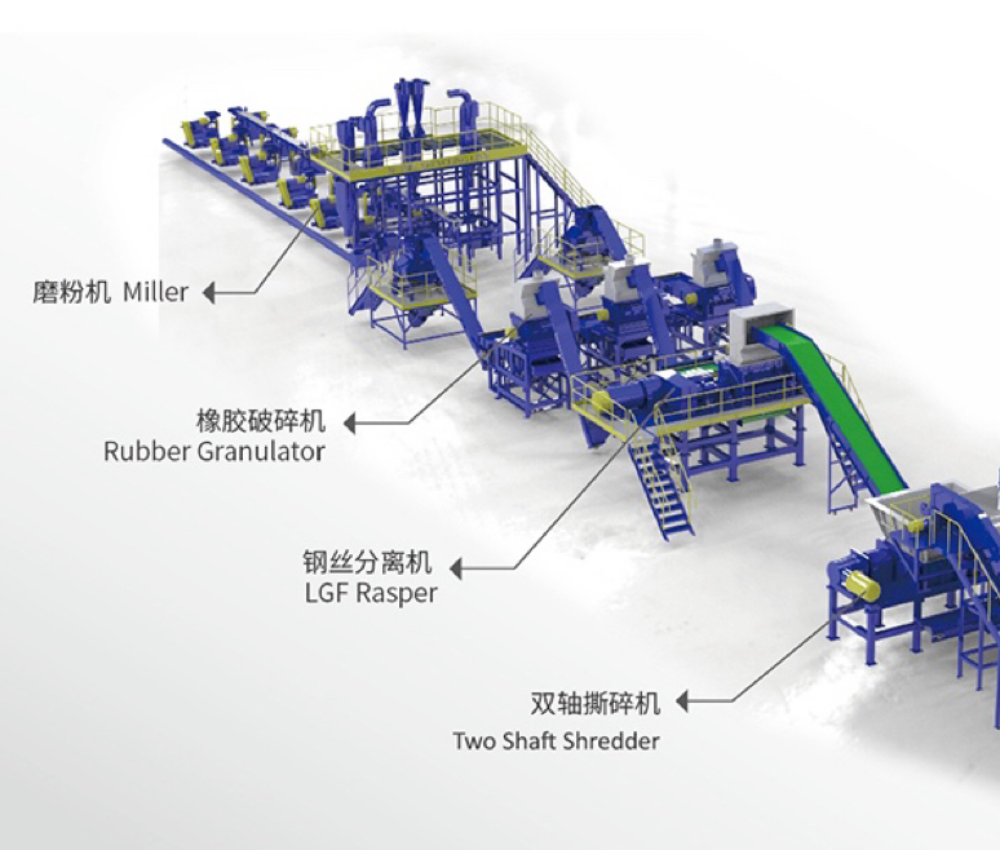
A complete tire recycling line usually consists of multiple machines working together, including:
- Pre-Shredder or Tyre Cutter
- Tire Shredder (Double-Shaft Shredder)
- Rubber Granulator
- Rubber Pulverizer
- Steel Wire Separator
- Fiber Separator
- Conveyor Systems
- Dust & Noise Control Units
By combining these machines, the system transforms bulky scrap tires into clean, uniform material ready for reuse in rubber mats, road construction, new tires, sports fields, playgrounds, and recycled rubber products.
Why Invest In A Tire Recycling Line?
1. Growing Market Demand
The global rubber recycling industry is expanding rapidly. Countries worldwide are tightening environmental policies, forcing companies to process tires properly rather than dumping or burning them.
2. High-Value Output Products
Recycled rubber has strong commercial value. Rubber powder and granules are widely used in:
- Running tracks
- Artificial turf
- Waterproof materials
- Rubber tiles
- Automotive parts
This creates an attractive profit margin for recyclers.
3. Environmental Benefits
Tire recycling prevents pollution, reduces landfill waste, and lowers carbon emissions. It also reduces the need for new rubber production.
4. Easy Automation And Low Labor Cost
A modern tire recycling line can run with minimal manual operation—usually handled by just 2–4 workers depending on the automation level.
5. Long-Term, Stable Business
Scrap tires are available everywhere. Once your production line is established, raw materials are stable, plentiful, and low cost—an ideal foundation for a recycling business.
How Does A Tire Recycling Line Work?
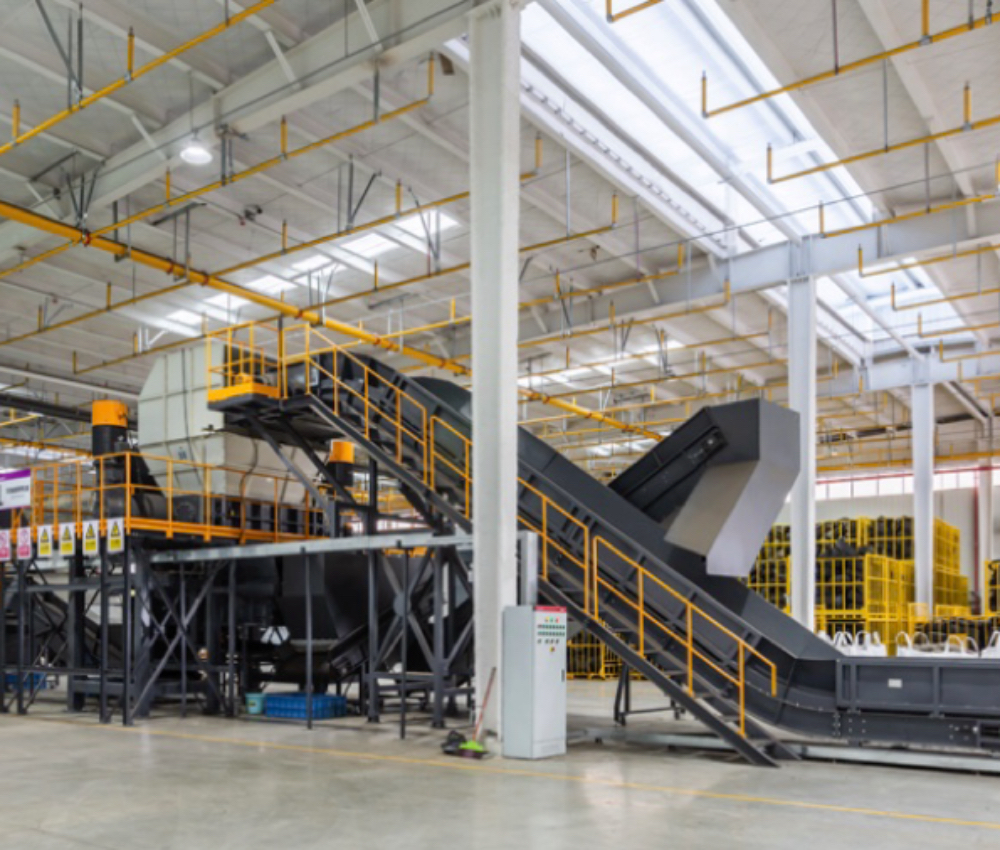
Below is the typical workflow of a complete tire processing system:
Step 1: Tire Cutting Or Sidewall Removal
Large whole tires must be cut into manageable pieces. A tire cutter removes sidewalls and cuts the tire into sections to prepare it for shredding.
Step 2: Primary Shredding (Tire Shredder)
A heavy-duty double-shaft shredder breaks the tire down into 50–150mm rubber chips.
Features of the primary shredder include:
- Strong alloy blades
- High torque, low speed
- Stable output size
- Automatic reverse rotation to prevent jamming
Step 3: Secondary Shredding And Granulation
Rubber chips enter the granulator, which further reduces them to 10–30mm granules.
This machine often includes:
- High-speed rotor
- Screen mesh for exact sizing
- Cooling system to prevent rubber melting
Step 4: Steel Wire Separation
Tires contain steel reinforcement, which is valuable and must be removed.
A magnetic separator extracts steel wire from rubber granules.
Recovered steel can be sold to steel recycling plants.
Step 5: Fiber Separation
For tires with nylon or polyester fibers, a fiber separator removes light fluff using air-flow separation technology.
This ensures clean, high-quality rubber granules.
Step 6: Grinding Into Rubber Powder (Optional)
If the customer requires rubber powder (30–120 mesh), a rubber pulverizer processes granules into ultra-fine powder used in:
- Road asphalt
- Waterproof membranes
- Industrial rubber products
Step 7: Screening And Final Output
The final step includes screening, dust removal, and packaging to ensure products meet the required size and purity.
How To Use A Tire Recycling Line
Operating a complete tire recycling line is straightforward:
- Feed waste tires into the pre-shredder or cutter.
- The conveyor automatically transports rubber pieces to each machine.
- Adjust settings on the shredder or granulator for your desired output size.
- Magnetic and air separation units automatically remove steel and fiber.
- Collect final rubber granules or powder for storage or sale.
The entire process is highly automated and designed for safe, continuous operation.
How To Choose The Right Tire Recycling Line Model
Choosing the correct tire recycling line depends on the following key factors:
1. Daily Capacity Requirement
Typical capacities include:
- 500 kg/h – small plants
- 1–2 tons/h – medium plants
- 3–5+ tons/h – large industrial plants
Your expected daily tire volume determines the machine size.
2. Final Product Requirements
Do you need:
- Rubber chips?
- Granules?
- Powder?
Different end products require different machine configurations.
3. Tire Types You Will Process
- Car tires
- Truck tires
- Tractor tires
- OTR giant tires
Larger tires require more powerful shredders.
4. Budget Range
A complete tire recycling line varies from:
- $30,000–$70,000 for small units
- $100,000–$300,000 for medium lines
- $300,000+ for large industrial systems
Knowing your investment level helps us match the right design.
5. Available Factory Space
A typical medium-size line requires:
- 200–500 square meters
- Proper ventilation
- Stable electricity supply
Providing your layout helps us recommend the best installation design.
Conclusion: Start Your Tire Recycling Business With Confidence
A Tire Recycling Line is an efficient, profitable, and environmentally friendly solution for processing waste tires. It converts old tires into valuable rubber materials and supports sustainable development in the recycling industry.
Whether you are building a new recycling plant or upgrading your current system, choosing the right tire recycling line is essential for long-term growth. With the right machine configuration, automated workflow, and high-quality output, your business can achieve strong performance, stable revenue, and long-term market competitiveness.
If you need technical support or want a quotation for a complete tire recycling line, feel free to contact us anytime—we are here to help you build a successful recycling project.