
Introduction
In modern recycling and waste-management industries, efficiency and space utilization have become essential for reducing operational costs and improving sustainability. Among the most important machines supporting this progress is the horizontal waste paper baler. Whether you operate a recycling plant, printing factory, packaging company, or waste-collection center, a reliable baler helps transform loose paper into compact, transport-ready bales.
This blog provides a full overview of what a horizontal waste paper baler is, why it is important, how it works, and how to choose the right model for your business. You will also learn practical usage methods and key safety considerations.
What Is A Horizontal Waste Paper Baler?
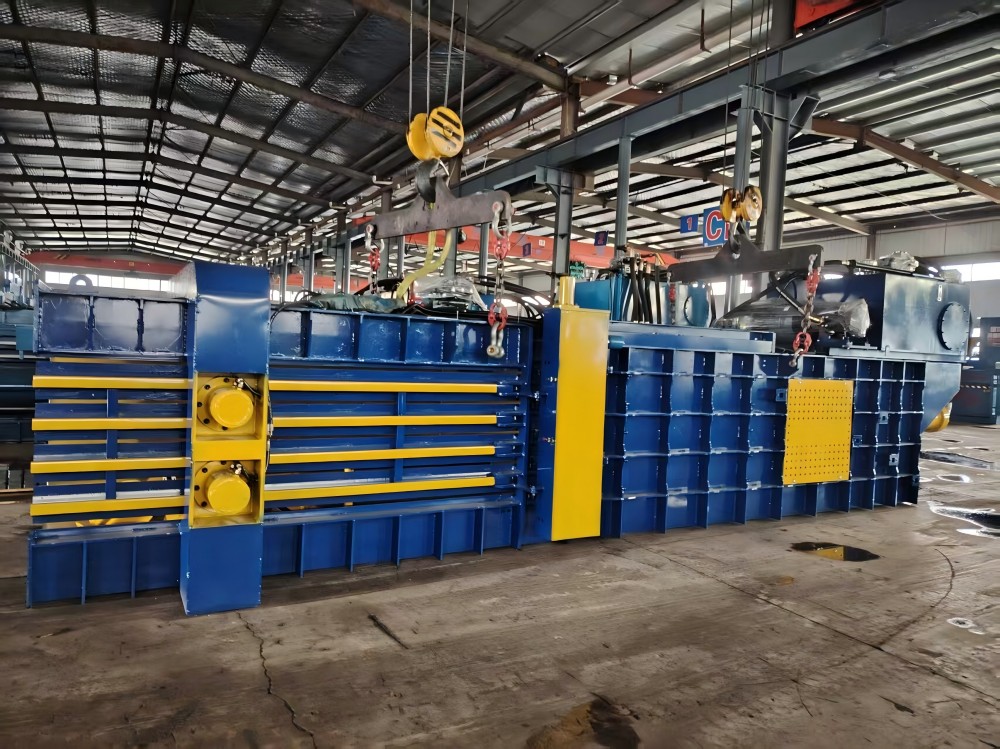
A horizontal waste paper baler is an industrial hydraulic machine designed to compress and bundle large volumes of waste paper—such as cartons, cardboard, newspapers, books, office paper, and mixed paper—into uniform, high-density bales. Unlike vertical balers, horizontal balers are installed horizontally, enabling automatic feeding, higher efficiency, and larger bale sizes.
Key Characteristics
-
Long horizontal design with heavy-duty steel structure
-
Hydraulic compression system for high-pressure compacting
-
Large feeding opening to support conveyor, air system, or manual feeding
-
Higher automation options, including automatic tying and automatic feeding
-
Continuous baling capability, suitable for high-volume users
Common Applications
-
Recycling centers
-
Waste management plants
-
Printing and packaging companies
-
Paper mills
-
Distribution centers
-
Logistics warehouses
Horizontal balers are indispensable for companies needing constant, efficient, and automatic waste-paper handling.
Why A Horizontal Waste Paper Baler Matters
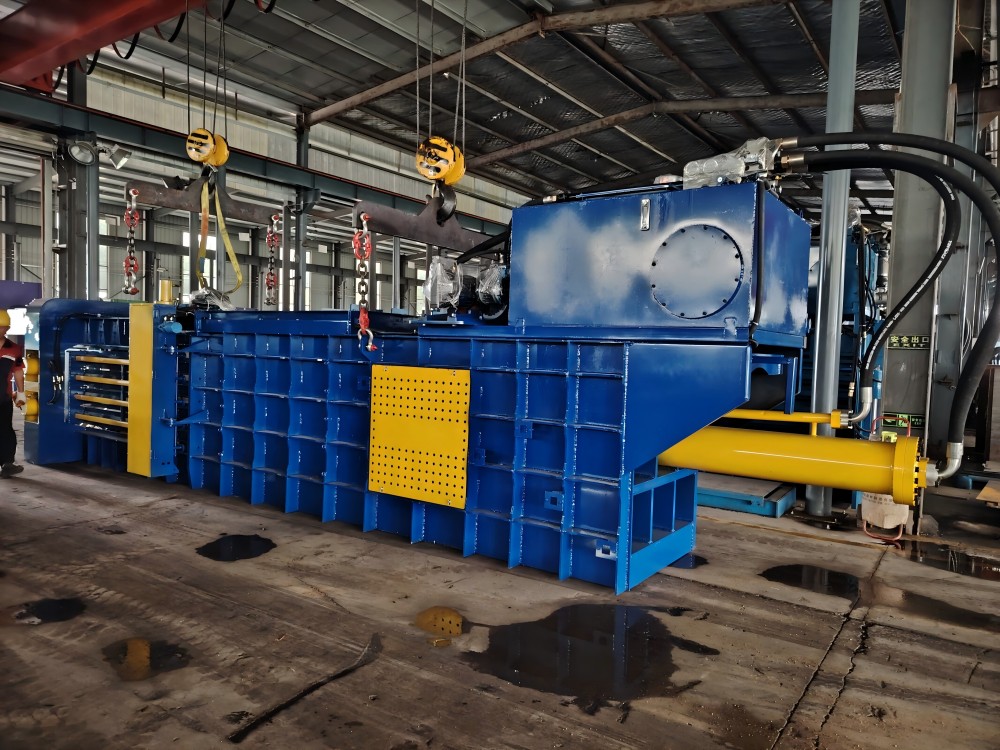
Investing in a horizontal baler brings significant benefits across productivity, cost, safety, and sustainability.
1. Improve Efficiency And Reduce Labor
Horizontal balers support continuous feeding, meaning operators do not need to pause operations during bale ejection. Combined with automatic conveyors, one worker can manage the entire baling process.
2. Save Storage Space
Loose paper occupies a large volume. Compressing them into dense bales reduces space usage by up to 80%, keeping your warehouse clean and organized.
3. Reduce Transportation Costs
High-density bales allow more material per truckload, cutting freight fees and improving logistics efficiency.
4. Increase Recycling Value
Compact, uniform bales are easier for recycling factories to process and usually sell at higher market prices.
5. Enhance Workplace Safety
Loose paper on the ground creates fire risk, slipping hazards, and messy working conditions. A horizontal baler keeps the working area clean and safe.
6. Support Environmental Sustainability
By improving recycling efficiency, companies reduce landfill waste, promote resource reuse, and meet environmental compliance standards.
How A Horizontal Waste Paper Baler Works
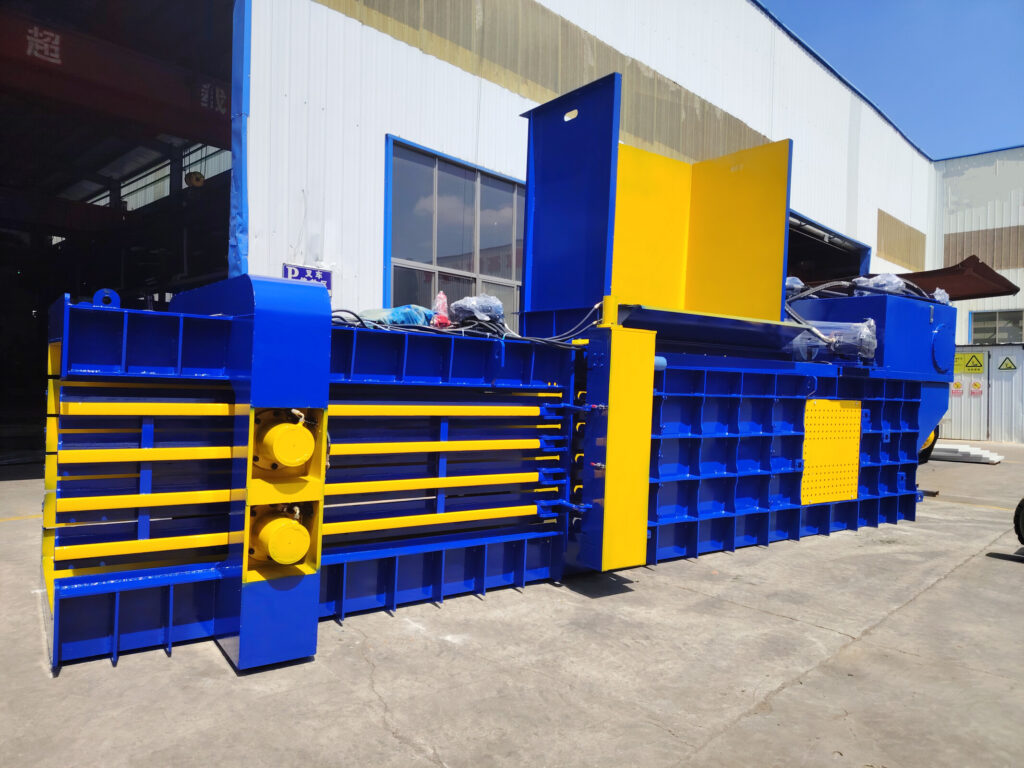
Although baler models vary, the basic working principle remains similar.
1. Feeding The Machine
Material is loaded into the baler via:
-
Conveyor feeding
-
Manual feeding
-
Forklift feeding
-
Air system feeding (for paper factories)
The large hopper helps continuously receive waste paper.
2. Hydraulic Compression
Once the chamber is full, hydraulic cylinders push the ram forward, compressing the loose paper into a dense block. Hydraulic pressure ensures uniform compaction.
3. Bale Forming
The machine continues compressing until the required density or length is reached. Some balers have adjustable bale length settings.
4. Automatic Or Manual Strapping
Depending on the machine:
-
Automatic balers tie bales using automatic wire tying systems
-
Semi-automatic balers require the operator to manually pull and tie the wires
This step secures the bale for storage and transportation.
5. Bale Ejection
The completed bale is pushed out of the machine, either via automatic kicking or hydraulic ejection. The machine then resets for the next cycle.
How To Use A Horizontal Waste Paper Baler
Below is a simplified operating guide.
1. Start-Up And Inspection
-
Check oil level and hydraulic system
-
Inspect wires and sensors
-
Ensure the conveyor or feeding system is working
-
Confirm the safety gates and emergency stop functions
2. Begin Feeding
Load waste paper into the hopper or conveyor. Avoid feeding metal, stones, or unsuitable materials.
3. Compression
The machine automatically starts compression when the chamber is full. In semi-automatic models, operators may manually start the cycle.
4. Bale Tying
-
For automatic models: tying is done by the machine
-
For semi-automatic models: operators tie wires manually through the designated wire channels
5. Bale Output
Once tied, the bale is pushed out. Use a forklift to transfer it to storage.
6. Shutdown And Cleaning
After working, operators should:
-
Turn off the hydraulic system
-
Clean the feeding hopper
-
Check for leftover material
-
Perform routine maintenance
Key Features To Look For When Choosing A Horizontal Waste Paper Baler
Selecting the right baler model ensures long-term stability and cost efficiency. Below are the most important factors to consider.
1. Required Capacity (Tons Per Hour)
Capacity is the first factor. Ask yourself:
-
How many tons of waste paper do you process per hour or per day?
-
What is the peak volume expected during busy seasons?
Small factories may need 3–5 tons/hour, while recycling plants may require 10–20 tons/hour or more.
2. Bale Size And Weight
Typical bale sizes include:
-
1100 × 750 × 1200 mm
-
1100 × 1100 × 1200 mm
-
Custom sizes available
Heavier bales (500–1200 kg) require stronger hydraulic systems.
3. Automation Level
Choose between:
-
Fully automatic baler → best for high-volume operations
-
Semi-automatic baler → more affordable, suitable for medium-scale use
-
Manual baler → rarely used for industrial waste paper
Automation improves efficiency and reduces labor.
4. Feeding Method
-
Conveyor feeding
-
Air feeding system
-
Manual feeding
-
Forklift feeding
Conveyor systems speed up production and improve safety.
5. Power And Hydraulic System
A reliable baler should have:
-
Pure copper motors
-
High-pressure hydraulic cylinders
-
Durable oil seals
-
Overheat protection
-
Energy-efficient operation
6. Material To Be Compressed
Most horizontal balers are suitable for:
-
Cardboard (OCC)
-
Carton boxes
-
Newspaper
-
Mixed paper
-
Books
-
Craft paper
If you also need to compress plastic film, PET bottles, or textiles, choose a model with reinforced hydraulic force.
7. Space And Installation Requirements
Before purchasing:
-
Measure available space
-
Check the length of the machine
-
Evaluate feeding direction
-
Confirm power supply (e.g., 380V/50Hz/3-phase)
8. Maintenance And After-Sales Support
Choose a manufacturer who offers:
-
Spare parts
-
Technical guidance
-
Installation videos or on-site service
-
Online support
A reliable supplier ensures trouble-free operation for years.
Tips For Safe Operation
-
Always wear safety gloves and protective gear
-
Do not stand near bale ejection area
-
Never insert hands into the chamber
-
Avoid compressing metal or hard objects
-
Regularly check hydraulic oil and pressure
-
Keep the working area dry and clean
Safety must be prioritized at all times.
Conclusion
A horizontal waste paper baler is a powerful and essential machine for modern recycling centers, packaging factories, and waste management companies. It greatly improves efficiency, saves labor, reduces costs, and helps protect the environment. With the right model selection and proper daily use, a horizontal baler can serve your business for many years with stable performance.
If you need help choosing a suitable baler model—capacity, feeding method, bale size, or full-automatic vs. semi-automatic—I can help you create a tailored recommendation based on your customer requirements.