
Introduction: The Rising Demand For Efficient Waste Handling
In today’s recycling and waste management industry, efficiency, automation, and cost control have become the core factors influencing business competitiveness. Whether you are managing waste paper, cardboard, plastic film, PET bottles, or other recyclable materials, a Fully Automatic Horizontal Baling Machine provides long-term economic and operational benefits.
This blog will explain what a fully automatic horizontal baler is, why it is essential for modern recycling operations, how it works, and how to choose the best model for your needs.
What Is A Fully Automatic Horizontal Baling Machine?
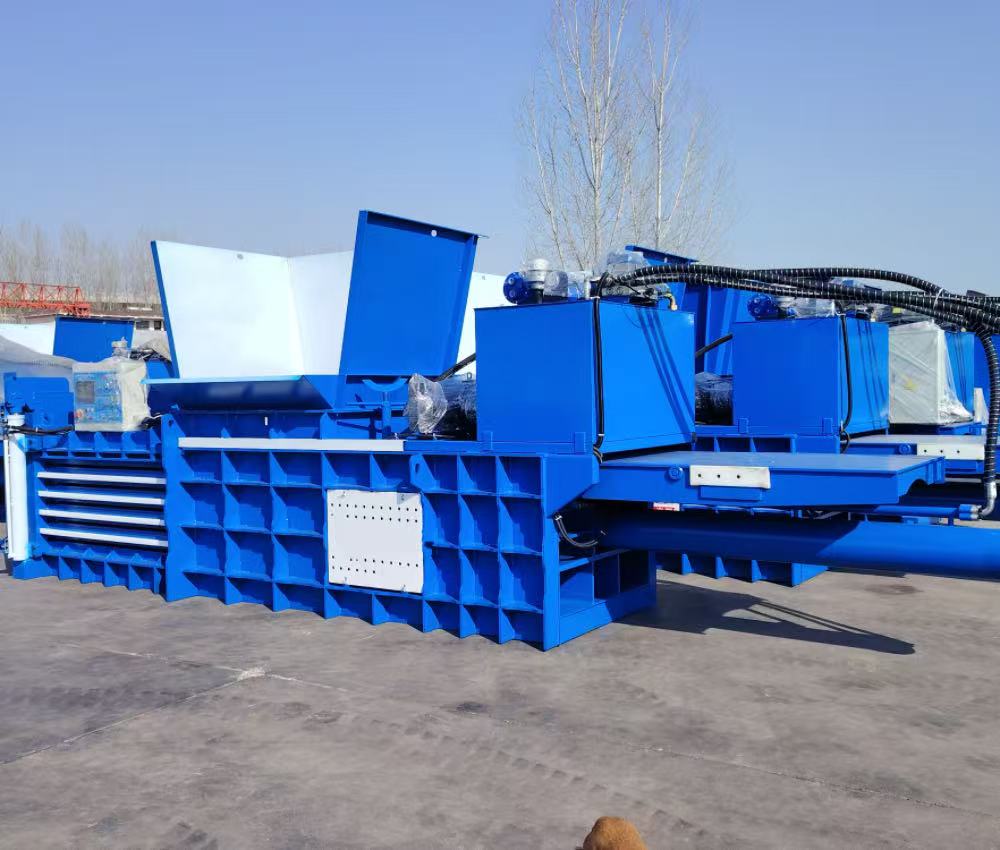
A Fully Automatic Horizontal Baling Machine is an industrial hydraulic compaction system designed to compress loose materials into dense, uniform bales. Unlike manual or semi-automatic balers, the fully automatic model integrates:
-
Automatic feeding
-
Automatic compressing
-
Automatic strapping and bale ejecting
-
Continuous operation with minimal labor involvement
It is commonly used in industries such as:
-
Paper recycling
-
Logistics warehouses
-
Printing factories
-
Carton manufacturing
-
Plastic recycling facilities
-
Waste management centers
The machine operates horizontally, allowing large-volume continuous feeding through a conveyor, air duct, or manual loader.
Why Choose A Fully Automatic Horizontal Baling Machine?
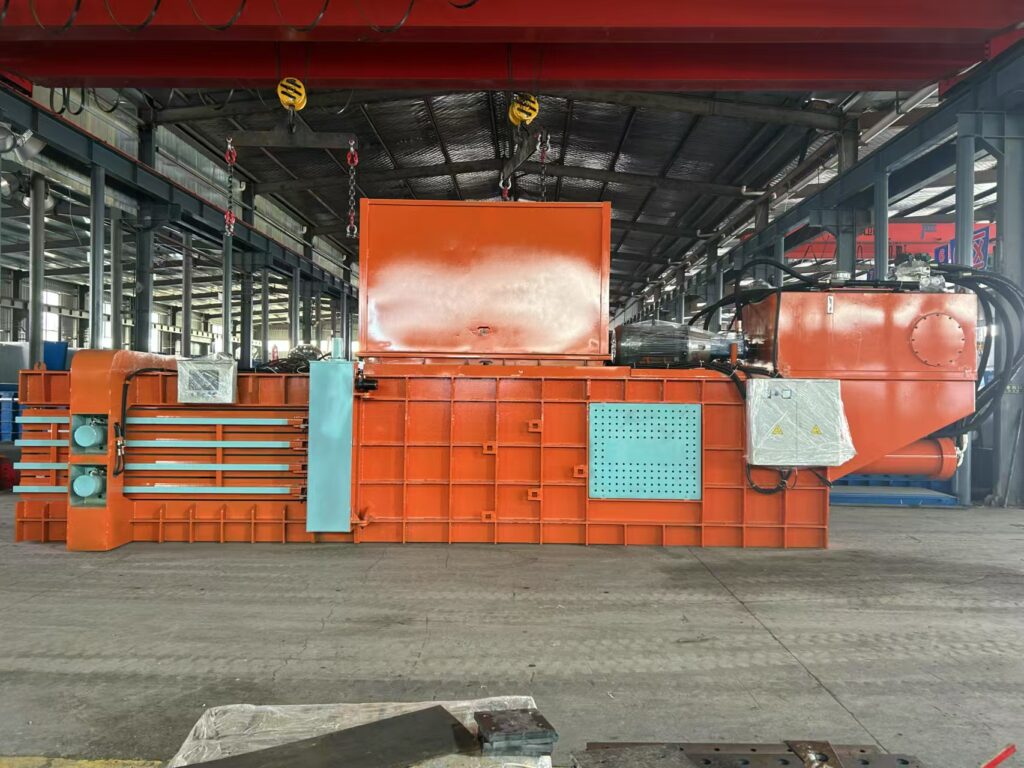
1. Increased Productivity And Continuous Output
A fully automatic baler can handle 3–20 tons per hour, depending on the model. By integrating continuous feeding and automatic tying, the machine significantly boosts throughput—ideal for large-scale recycling companies.
2. Reduced Labor Cost
Only one operator is needed for monitoring instead of multiple workers for feeding, bundling, or ejecting bales. Over a year, this can save thousands of dollars in labor expenses.
3. High Bale Density And Transportation Savings
Hydraulic pressure can reach 80–200 tons, producing compact bales that reduce storage space and cut transportation costs by 30–40%.
4. Stable, Safe, And Reliable Operation
The machine features:
-
PLC control system
-
Automatic alarms
-
Emergency stop functions
-
Safety doors and interlocks
This guarantees stable and secure industrial operation 24/7.
5. Suitable For A Wide Range Of Materials
Fully automatic baling machines can process:
-
OCC waste paper
-
Newspaper
-
Cardboard sheets
-
Plastic film (PE/PP)
-
PET bottles
-
Textile scraps
-
Straw and soft materials
This makes it a versatile machine for different recycling sectors.
How Does A Fully Automatic Horizontal Baling Machine Work?
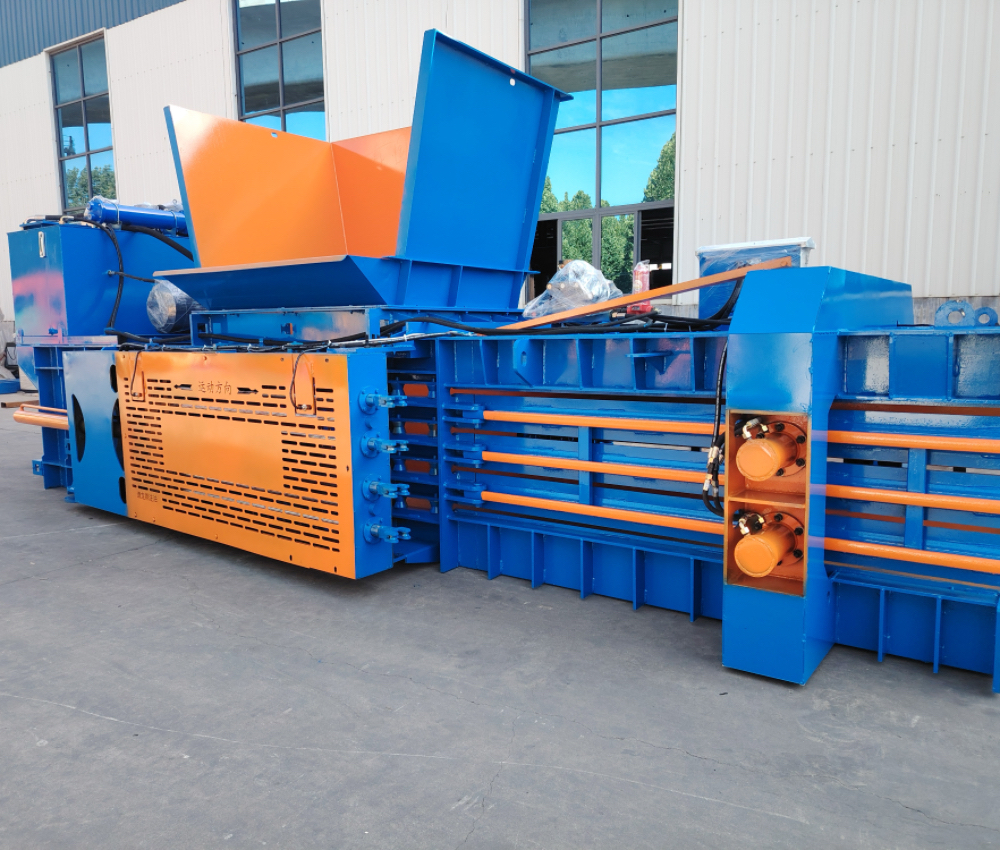
Step 1: Automatic Feeding
Materials are transported into the hopper through a conveyor or air conveying system. Sensors detect material levels and control feeding automatically.
Step 2: Hydraulic Compression
The hydraulic cylinder pushes the ram forward to compress the materials into a compact shape inside the compression chamber.
Step 3: Automatic Strapping
When the bale reaches the preset length, the machine automatically ties it using steel wire or plastic strapping.
Step 4: Bale Ejection
After strapping, the bale is automatically pushed out onto a roller conveyor or stacking area.
Step 5: Continuous Operation
The machine immediately resets and starts the next cycle. No manual intervention is required, ensuring continuous productivity.
How To Use A Fully Automatic Horizontal Baling Machine
1. Start The Machine And Set Parameters
Set bale length, tying method, pressure, and feeding speed through the PLC touchscreen.
2. Begin Feeding
Start the conveyor or air conveying system. The machine will detect incoming materials and adjust feeding automatically.
3. Monitor Operation
Operators only need to check:
-
Hydraulic oil levels
-
Wire supply
-
Running temperature
-
Safety interlocks
The system alarms when there is a shortage of wire or a blockage.
4. Regular Maintenance
To ensure long-term performance:
-
Clean dust around sensors
-
Inspect hydraulic oil every 3 months
-
Replace wear-resistant plates when needed
-
Check motor and pump connections
Guide To Choosing The Right Fully Automatic Horizontal Baling Machine
Selecting the proper model is crucial. Here are the key factors to evaluate:
1. Determine Your Daily or Hourly Output
Ask yourself:
-
How many tons of material do you process per day?
-
Do you need 3 tons/hour, 6 tons/hour, or 10+ tons/hour capacity?
For example:
| Daily Output | Recommended Pressure | Bale Size | Motor Power |
|---|---|---|---|
| 10–30 tons | 80–100 tons | 1100×750mm | 30–45 kW |
| 30–80 tons | 120–150 tons | 1100×850mm | 45–55 kW |
| 80+ tons | 160–200 tons | 1100×1100mm | 55–75 kW |
2. Type Of Material
Different materials require different structures and pressures:
-
OCC / Cardboard → 80–120 tons
-
Plastic film (soft) → 120–150 tons
-
PET bottles → 150–200 tons
Soft plastic requires higher pressure to achieve the same bale density.
3. Feeding Method
-
Conveyor feeding – best for OCC, cartons
-
Air duct feeding – best for paper scraps
-
Manual feeding – small output factories
4. Automatic Tying System
Choose between:
-
Steel wire tying – stronger, suitable for PET and heavy materials
-
PP plastic strapping – cost-saving for light materials
5. Bale Size And Truck Loading Requirements
If your baler’s bale size matches container or truck space, you can reduce transportation costs effectively.
6. Brand, Certification, And After-Sales Service
Ensure the machine is:
-
CE certified
-
ISO9001 compliant
-
Equipped with reliable after-sales support
-
From a manufacturer with strong technical capabilities
Real-World Applications And Industry Benefits
A Fully Automatic Horizontal Baling Machine is not only a piece of equipment but also a productivity engine for modern recycling systems. In real-world applications, these machines provide exceptional value for industries operating with continuous waste streams. For example, large logistics centers generate tons of cardboard boxes daily. With manual baling, workers must sort, load, compress, and tie every bale, which is slow and exhausting. However, a fully automatic baler eliminates bottlenecks, allowing the warehouse to operate smoothly with minimal labor input.
Printing factories and paper mills also benefit greatly. These facilities produce consistent and lightweight paper scraps that require fast compression to keep the production area clean and hazard-free. Using a fully automatic baler with air duct feeding ensures that scraps are automatically transported into the hopper without manual handling, creating a cleaner and safer environment for workers.
Plastic recycling plants handling PP, PE film, or PET bottles typically struggle with low-density material and high transportation costs. A powerful 150–200-ton baler dramatically increases bale density, which means fewer truckloads and lower long-term transportation expenses. As fuel and logistics costs rise globally, improving bale density has become a key way for recycling companies to boost profits.
Final Recommendation
Whether you aim to increase production efficiency, reduce labor costs, or enhance material management, a Fully Automatic Horizontal Baling Machine is an investment that delivers long-lasting value. By choosing the right model according to your material type, daily output, feeding method, and automation needs, you can significantly upgrade your recycling operations.
Conclusion: Is A Fully Automatic Horizontal Baling Machine Worth It?
Absolutely.
If your business handles significant volumes of recyclable materials, a Fully Automatic Horizontal Baling Machine can drastically improve efficiency, reduce operating costs, and help your facility maintain stable, high-speed production.