
Metalworking industries generate large quantities of metal chips, swarf, turnings, and shavings every day. Materials such as aluminum, copper, steel, cast iron, and other alloys are commonly produced during machining, drilling, milling, turning, and cutting operations. Although these metal chips may look like low-value waste, they contain valuable recyclable materials.
A Vertical Metal Chip Briquetting Machine provides an efficient solution for compacting loose metal chips into dense, uniform briquettes. By reducing the volume of metal waste and improving material handling, this type of metal recycling equipment can help manufacturers, scrap recyclers, and metal processing companies improve their recycling efficiency and logistics.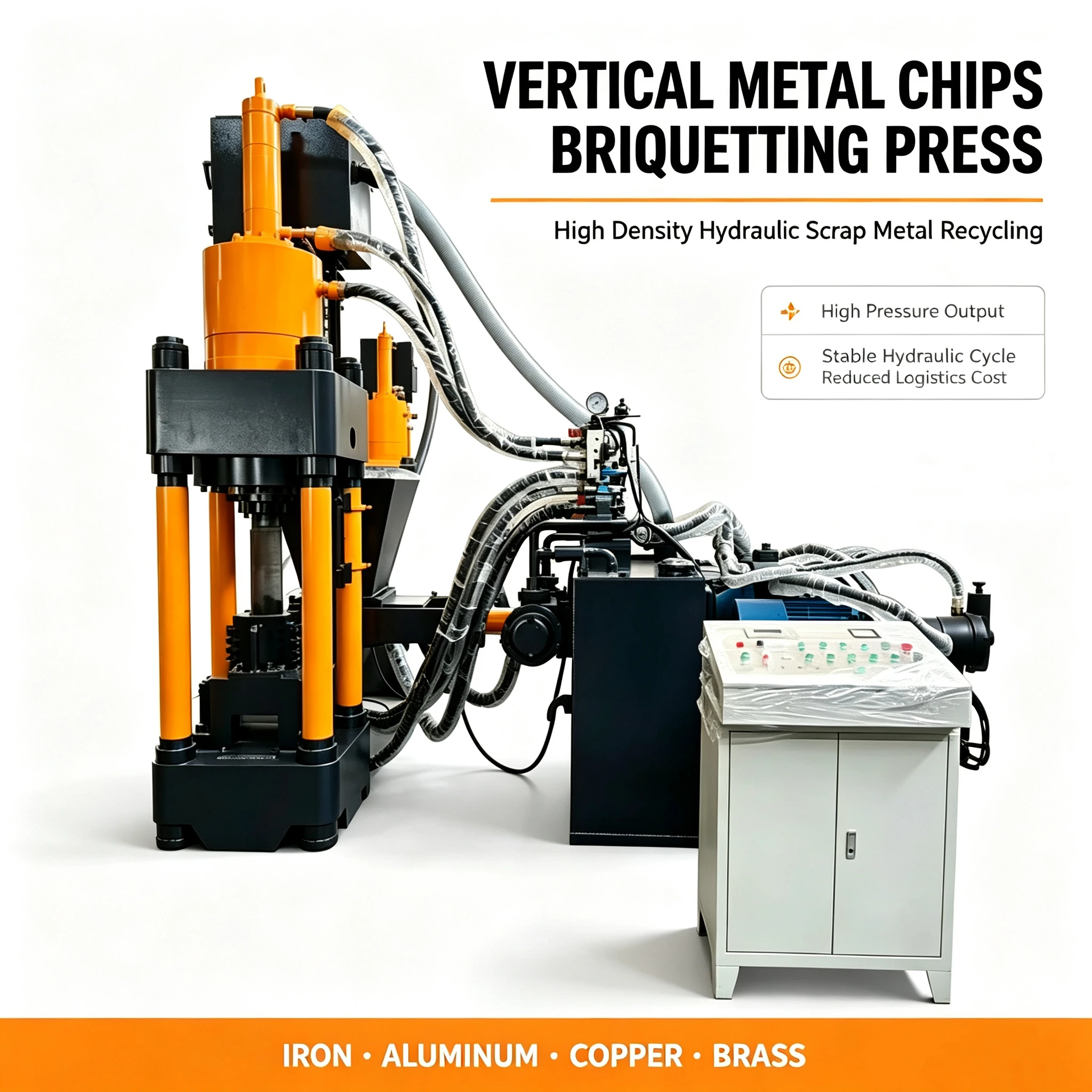
What Is a Vertical Metal Chip Briquetting Machine?
A vertical metal chip briquetting machine is a hydraulic recycling machine designed to compress loose metal chips and swarf into compact briquettes.
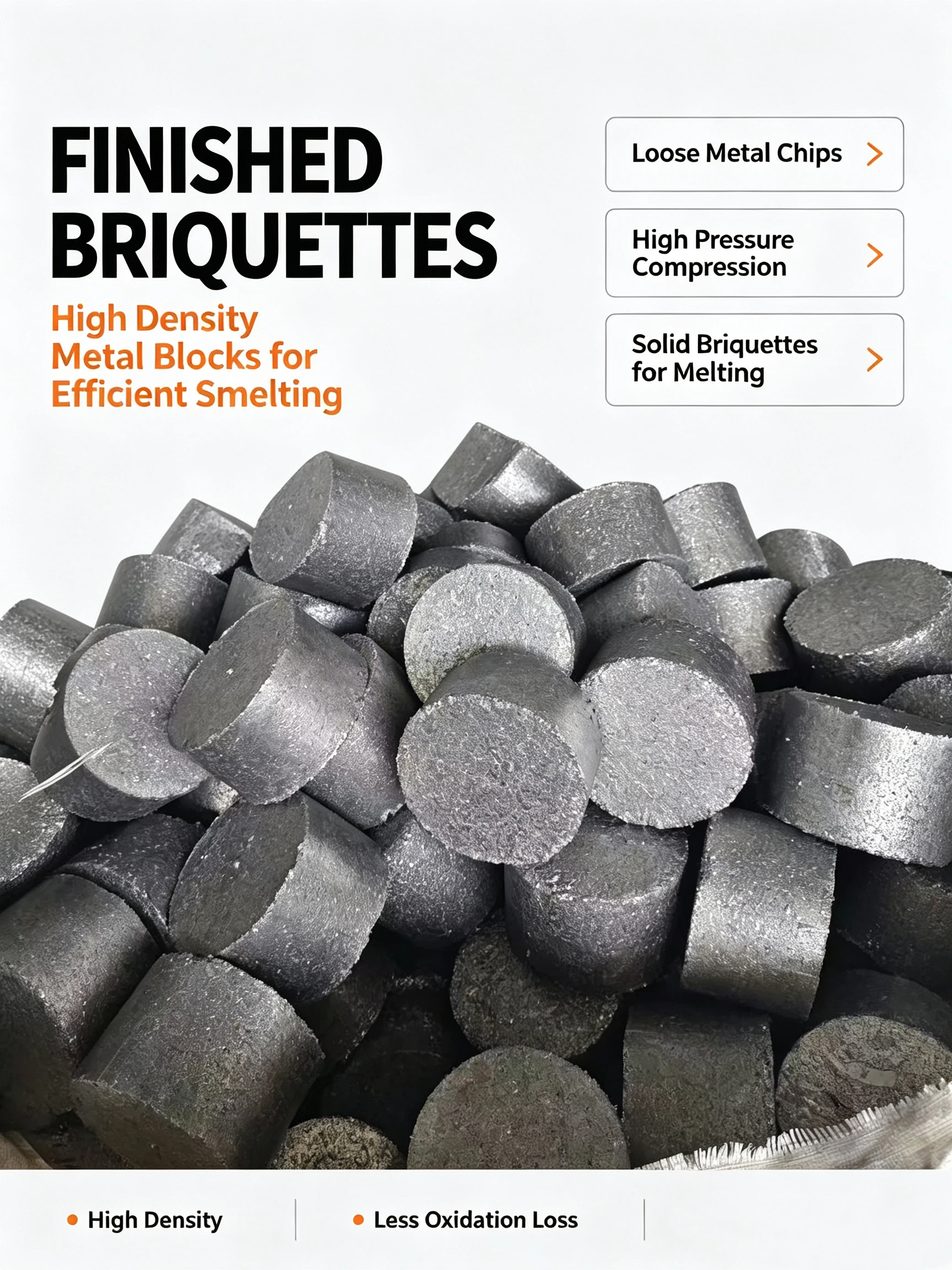
Unlike loose metal chips, which often occupy a large storage volume and are difficult to transport, compressed briquettes have a much higher bulk density. The hydraulic system applies strong pressure to the material inside a forming chamber, forcing the chips together and producing solid cylindrical or customized briquettes.
The vertical structure makes the machine relatively compact and space-efficient. This makes it suitable for workshops, machining factories, scrap yards, and metal recycling facilities where floor space is limited.
Depending on the material and required output, the machine can be configured with different pressing forces, briquette diameters, feeding systems, hydraulic power, and automation levels.
Why Briquette Metal Chips?
Loose metal chips create several challenges during storage, transportation, and recycling.
First, their low bulk density means they occupy significant storage space. A large volume of loose aluminum or steel chips may require multiple containers, increasing handling and transportation costs.
Second, loose chips are difficult to load and transport efficiently. Their irregular shape can leave considerable empty space between individual chips.
Briquetting solves these problems by significantly reducing the volume of metal waste. The compact briquettes are easier to store, stack, handle, weigh, and transport.
For recycling companies, higher material density can also make loading and transportation more efficient, allowing more recyclable metal to be handled within the same storage or transport capacity.
Key Advantages of a Vertical Design
The vertical configuration offers several practical advantages for metalworking operations.
1. Space-Saving Structure
A vertical metal chip briquetting machine generally requires less floor space than many large horizontal systems. Its compact footprint makes it suitable for machining workshops and recycling facilities where available space is limited.
2. High Compression Efficiency
The hydraulic pressing system generates strong compression force to transform loose chips into dense briquettes. The final density depends on the material, chip shape, moisture content, and machine configuration.
3. Easier Material Handling
Compressed briquettes are much easier to handle than loose chips. They can be collected, stacked, loaded, and transported using conventional material-handling equipment.
4. Reduced Transportation Volume
By increasing the density of metal waste, briquetting can reduce the storage and transportation volume required for the same amount of material. This can improve logistics efficiency for both manufacturers and recyclers.
5. Recovery of Valuable Metals
Metal chips often contain valuable materials such as aluminum, copper, brass, steel, and cast iron. Briquetting helps concentrate these materials into manageable forms, making them easier to collect and send for further recycling or remelting.
 What Materials Can Be Briquetted?
Vertical metal chip briquetting machines can be used for many types of metal waste, depending on the machine configuration.
Common applications include:
- Aluminum chips and turnings
- Copper chips and shavings
- Brass machining chips
- Steel turnings
- Cast iron chips
- Stainless steel swarf
- Metal drilling waste
- Milling and turning chips
- Other suitable metal machining residues
Different materials have different physical characteristics. Aluminum chips, for example, behave differently from steel turnings during compression. For this reason, the appropriate pressing force, feeding method, briquette size, and hydraulic configuration should be selected according to the actual material.
Applications in Metal Recycling and Manufacturing
Vertical metal briquetting machines are widely applicable in industries that generate large quantities of metal chips.
CNC Machining Workshops
CNC machining operations can produce substantial amounts of aluminum, steel, brass, and copper chips. Briquetting these materials directly at the workshop can improve waste collection and reduce the space required for temporary storage.
Automotive Manufacturing
Automotive components are frequently manufactured using machining processes that generate metal turnings and chips. A briquetting machine can help factories organize these residues and prepare them for recycling.
Metal Recycling Companies
Scrap recyclers can use metal chip briquetting machines to compact loose machining waste before storage, transportation, or further processing.
Foundries and Metal Processing Plants
Metal residues generated during production can be compacted into a more manageable form before being returned to the melting or recycling process, subject to the customer’s specific process requirements.
 How Does the Briquetting Process Work?
The working process is relatively straightforward.
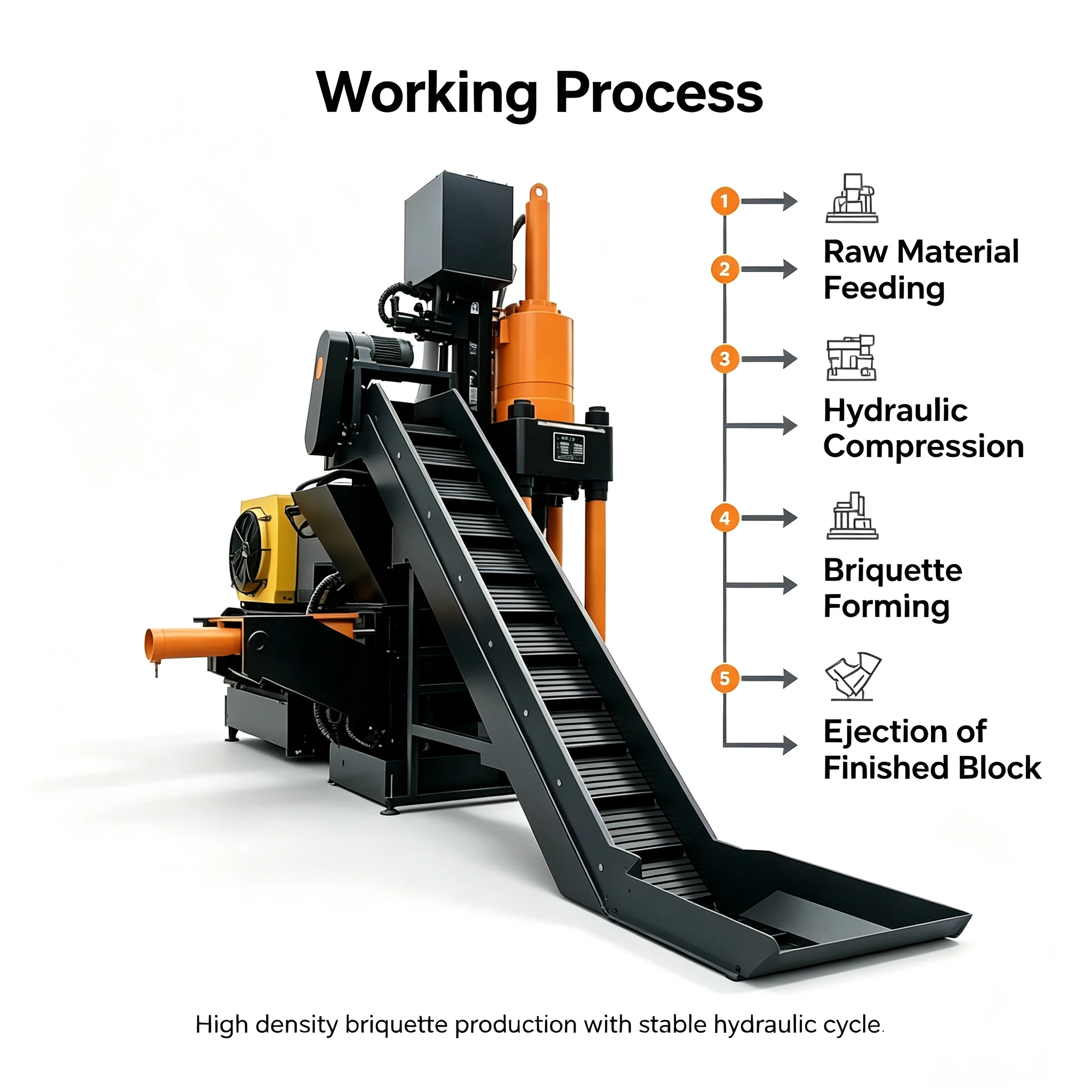
First, loose metal chips are collected and fed into the machine’s material chamber. If the chips contain excessive cutting oil or coolant, pre-treatment or separation may be required depending on the recycling process.
The hydraulic cylinder then pushes the material into the compression chamber. High pressure is applied to compact the chips and remove the empty spaces between individual particles.
After reaching the preset compression position, the machine forms the material into a compact briquette. The finished briquette is then discharged and collected for storage, transportation, recycling, or remelting.
For automated production lines, conveyors, hoppers, chip collectors, and other auxiliary equipment can also be integrated according to the customer’s requirements.
How to Choose the Right Metal Chip Briquetting Machine?
Selecting the right machine depends on several important factors.
Material: Aluminum, copper, steel, cast iron, and other materials require different compression characteristics.
Capacity: Determine the required processing capacity, such as kilograms per hour or tons per day.
Briquette Size: The desired briquette diameter and height should be considered based on transportation, storage, and downstream recycling requirements.
Moisture and Oil Content: Machining chips may contain cutting oil or coolant. The actual material condition should be evaluated before selecting the machine.
Available Space: A vertical machine can be an excellent choice when floor space is limited.
Automation: Manual, semi-automatic, and automated feeding and discharge configurations can be selected depending on production requirements.
A Practical Solution for Metal Waste Management
A Vertical Metal Chip Briquetting Machine is more than a simple metal compactor. It is an important piece of equipment for improving the collection, storage, transportation, and recycling of metal machining waste.
By converting loose metal chips into compact briquettes, businesses can achieve better material organization, higher storage density, and more efficient logistics. For machining factories and recycling companies handling aluminum, copper, steel, brass, or cast iron chips, briquetting can become an important part of a modern metal recycling process.
Before selecting a machine, it is recommended to provide information about the metal type, chip size, moisture or oil content, required capacity, briquette size, and available power supply. Based on these parameters, the appropriate hydraulic pressing force and machine configuration can be selected.