
What Is A Single Shaft Shredder
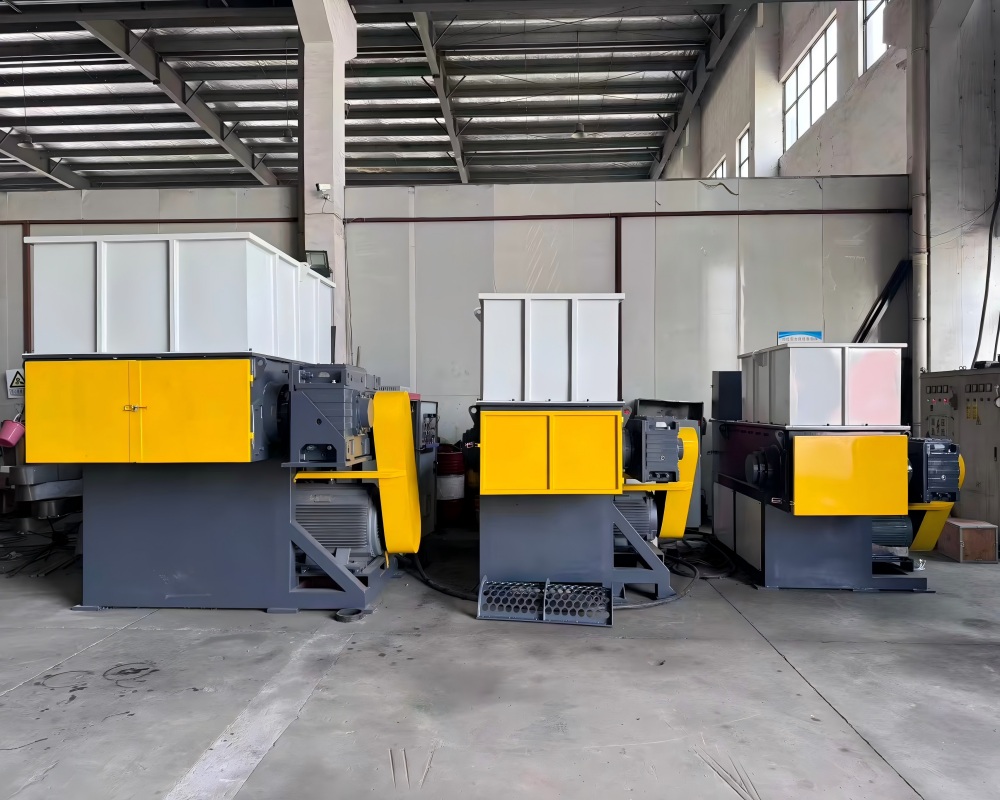
A single shaft shredder is an industrial machine designed to reduce the size of various materials through cutting, tearing, and shearing using a rotating shaft equipped with sharp blades. Unlike dual-shaft or four-shaft shredders, it uses one main rotor paired with a hydraulic pusher system that feeds material steadily into the cutting chamber. This design provides controlled shredding, uniform output size, and higher efficiency for a wide range of materials.
Single shaft shredders are widely used in recycling plants, plastic processing facilities, waste management centers, and manufacturing workshops. They are particularly effective for handling materials such as plastic lumps, pipes, films, woven bags, wood, paper, electronic waste, rubber, textiles, and even light metal scraps.
What makes this machine stand out is its balance between power and precision. It can handle tough materials while still producing consistent particle sizes suitable for downstream processing such as granulation, washing, pelletizing, or briquetting.
Why Single Shaft Shredders Are Essential In Modern Recycling
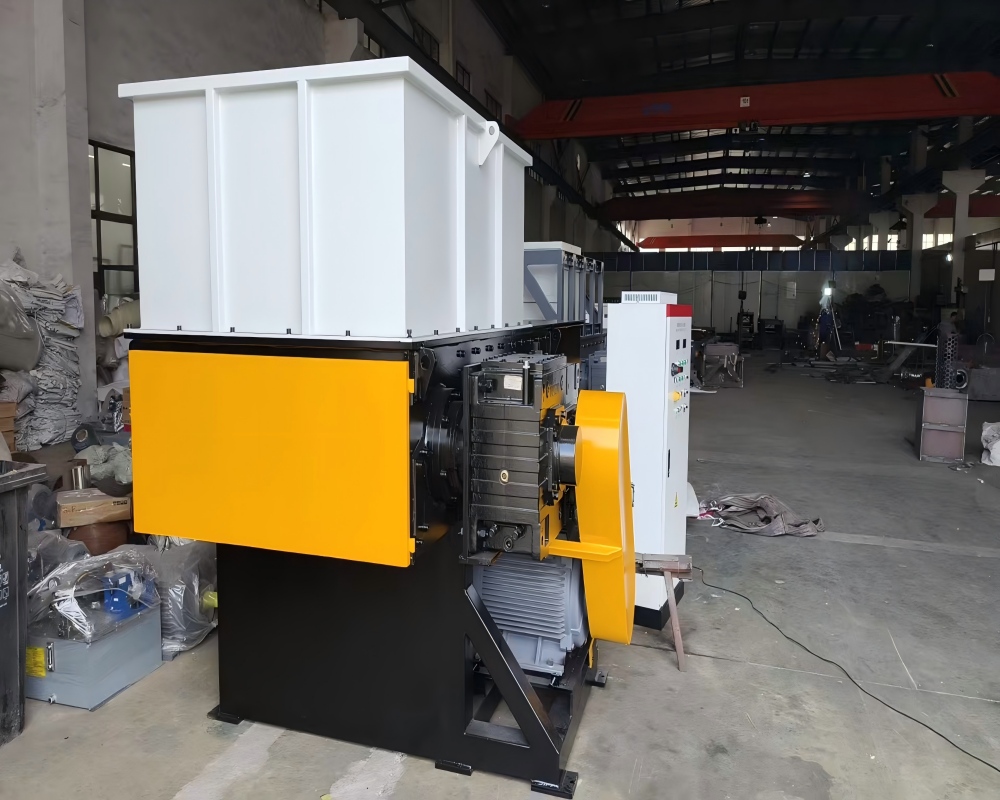
With global industries facing increasing pressure to reduce waste and improve sustainability, single shaft shredders have become indispensable tools. Their importance lies not only in waste reduction but also in resource recovery and operational efficiency.
First, they dramatically reduce material volume. Bulky waste such as plastic drums, pallets, and containers can be shredded into manageable pieces, saving storage space and lowering transportation costs.
Second, they improve material handling. Shredded material is easier to convey, sort, wash, and reprocess. This makes them a key first step in recycling lines.
Third, they increase recycling value. Uniformly shredded material has higher market value because it can be processed more easily into reusable raw materials.
Fourth, they enhance workplace safety. Instead of manually cutting or breaking waste materials, operators can rely on automated shredding, reducing injury risks.
Finally, they contribute to environmental protection. By enabling efficient recycling, these machines reduce landfill waste and help industries comply with environmental regulations.
How A Single Shaft Shredder Works
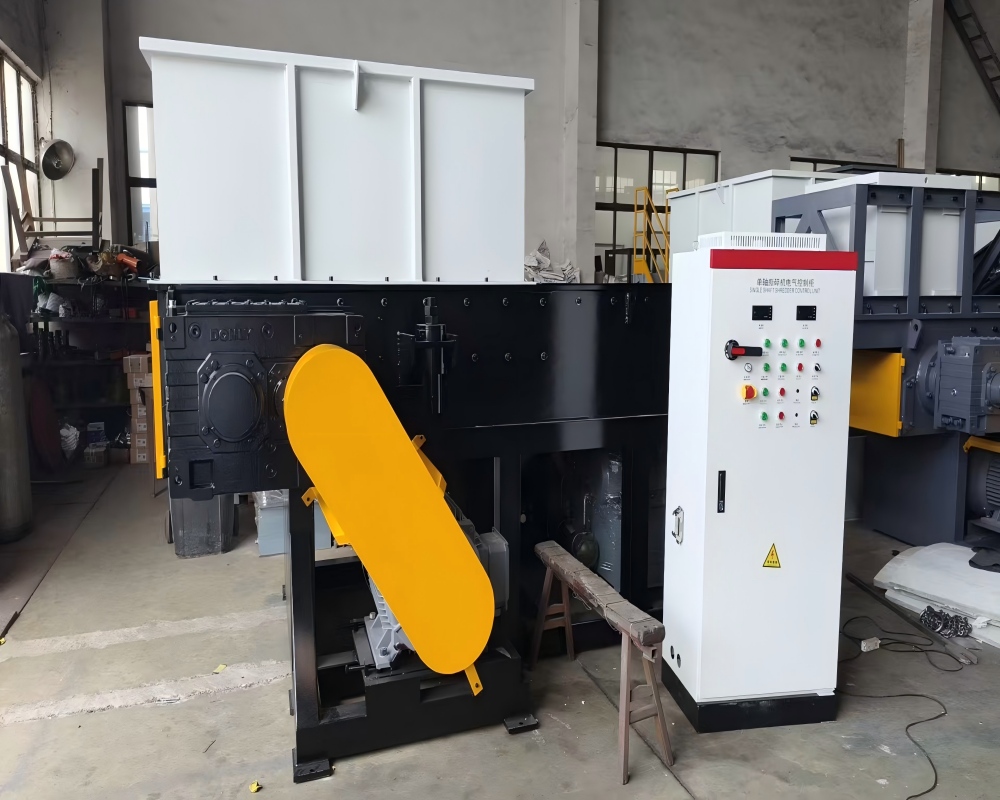
The working principle of a single shaft shredder is straightforward yet highly effective. Materials are loaded into the hopper, either manually or via conveyor. Inside the machine, a hydraulic or mechanical pusher presses the material against the rotating rotor.
The rotor is fitted with multiple cutting blades arranged in a spiral or staggered pattern. As the rotor spins, the blades cut and tear the material against stationary counter knives mounted on the chamber wall. This shearing action gradually reduces the material size.
A screen located beneath the rotor controls the final output size. Only particles small enough to pass through the screen holes can exit the chamber. Larger pieces remain inside until they are shredded further. This ensures consistent output dimensions.
Modern single shaft shredders often include intelligent control systems that monitor load conditions. When the machine senses overload, it automatically reverses the rotor to prevent jamming and protect the motor. Once the load normalizes, it resumes operation.
Key Components And Their Functions
Understanding the main components helps users operate and maintain the machine effectively.
Rotor: The core rotating shaft responsible for cutting. High-quality rotors are made from hardened alloy steel for durability.
Blades: Replaceable cutting knives that determine shredding efficiency. Different blade designs suit different materials.
Hydraulic Pusher: Feeds material toward the rotor, ensuring consistent contact and preventing bridging.
Screen: Controls output size. Changing the screen adjusts final particle dimensions.
Gearbox And Motor: Provide torque and power. Heavy-duty reducers allow the machine to process tough materials without stalling.
Control Panel: Manages operation, safety monitoring, and automation features.
How To Use A Single Shaft Shredder Safely And Efficiently
Operating a single shaft shredder properly ensures maximum performance and long service life.
Before starting, inspect the machine. Check blade tightness, hydraulic oil level, electrical connections, and safety guards. Make sure no foreign metal objects are inside the chamber unless the machine is designed to handle them.
When loading material, avoid overfeeding. Feed steadily rather than dumping large quantities at once. Overloading can reduce efficiency and increase wear.
During operation, monitor sound and vibration. Unusual noise may indicate loose blades, foreign objects, or bearing issues.
After use, clean the chamber and remove residual material. Regular cleaning prevents buildup that could affect performance.
Routine maintenance is essential. Sharpen or replace blades when dull, lubricate moving parts, and check hydraulic seals. Proper maintenance significantly extends machine lifespan.
How To Choose The Right Single Shaft Shredder Model
Selecting the correct model is crucial for productivity and cost efficiency. Here are the key factors to consider when choosing.
Material Type
Different materials require different blade designs, motor power, and torque. Soft plastics need less torque than thick rubber or wood. Always match the machine specifications to your material.
Required Output Size
If you need small, uniform particles, choose a model with smaller screen holes and higher blade density. For rough pre-shredding, larger screens and fewer blades may suffice.
Capacity Requirements
Consider how many kilograms or tons per hour you need to process. Underestimating capacity can create bottlenecks, while oversizing increases costs unnecessarily.
Motor Power
Higher power allows the machine to handle tougher materials but also increases energy consumption. Select a balance between performance and efficiency.
Feeding Method
If your operation uses conveyors or automated systems, choose a shredder compatible with continuous feeding. For manual feeding, a simpler hopper design may be enough.
Maintenance Convenience
Machines with easily replaceable blades, accessible screens, and modular components reduce downtime and maintenance costs.
Future Expansion
If your business is growing, choose a model with some capacity margin so it can handle increased workload later.
Advantages Compared With Other Types Of Shredders
Single shaft shredders offer several advantages over double shaft or hammer shredders.
They produce more uniform particle sizes because of the screen control system. They also consume less energy when processing soft to medium-hard materials. Maintenance is simpler since there is only one rotor assembly. Additionally, they generate less noise and vibration, making them suitable for indoor installations.
While dual-shaft shredders excel at bulk rough shredding, single shaft machines provide better precision and versatility. Many recycling lines use both types together: a dual-shaft shredder for primary reduction and a single shaft shredder for secondary refinement.
Common Applications Across Industries
Single shaft shredders are used in many industries because of their adaptability.
In plastic recycling plants, they process pipes, containers, films, and lumps. In woodworking facilities, they shred pallets, boards, and offcuts. In paper mills, they handle waste paper and cardboard. Electronics recyclers use them to break down casings and components. Textile factories shred fabric scraps for reuse.
Even municipal waste management centers use them to reduce bulky waste volume before sorting or incineration.
Tips For Maximizing Performance And Lifespan
To get the best results from your shredder, follow several professional practices.
Always match blade type to material. Using the wrong blade design can reduce efficiency and increase wear.
Keep blades sharp. Dull blades require more force and strain the motor.
Avoid feeding materials beyond the machine’s design limits. Overloading shortens component life.
Train operators properly. Skilled operators can detect problems early and prevent damage.
Use genuine spare parts. High-quality parts maintain performance and reduce failure risk.
Conclusion: Why Investing In A Single Shaft Shredder Is A Smart Decision
A single shaft shredder is more than just a cutting machine—it is a strategic investment for any business dealing with waste materials or recyclable resources. It improves efficiency, reduces costs, increases recycling value, and supports environmental responsibility.
Whether you operate a recycling plant, manufacturing facility, or waste processing center, choosing the right shredder can transform your workflow. By understanding how the machine works, how to use it properly, and how to select the correct model, you ensure long-term productivity and profitability.
In a world where resource efficiency and sustainability are becoming essential rather than optional, the single shaft shredder stands out as a powerful, reliable, and future-ready solution.