
Introduction
In today’s rapidly evolving recycling and manufacturing industries, efficiency and cost control are more important than ever. One of the most essential machines that helps businesses achieve both is the horizontal metal baler. Whether you are dealing with scrap steel, aluminum, or other metal waste, this powerful machine can transform your operations.
In this article, we will explore what a horizontal metal baler is, why it is important, how it works, and how to choose the right model for your needs.
What Is A Horizontal Metal Baler
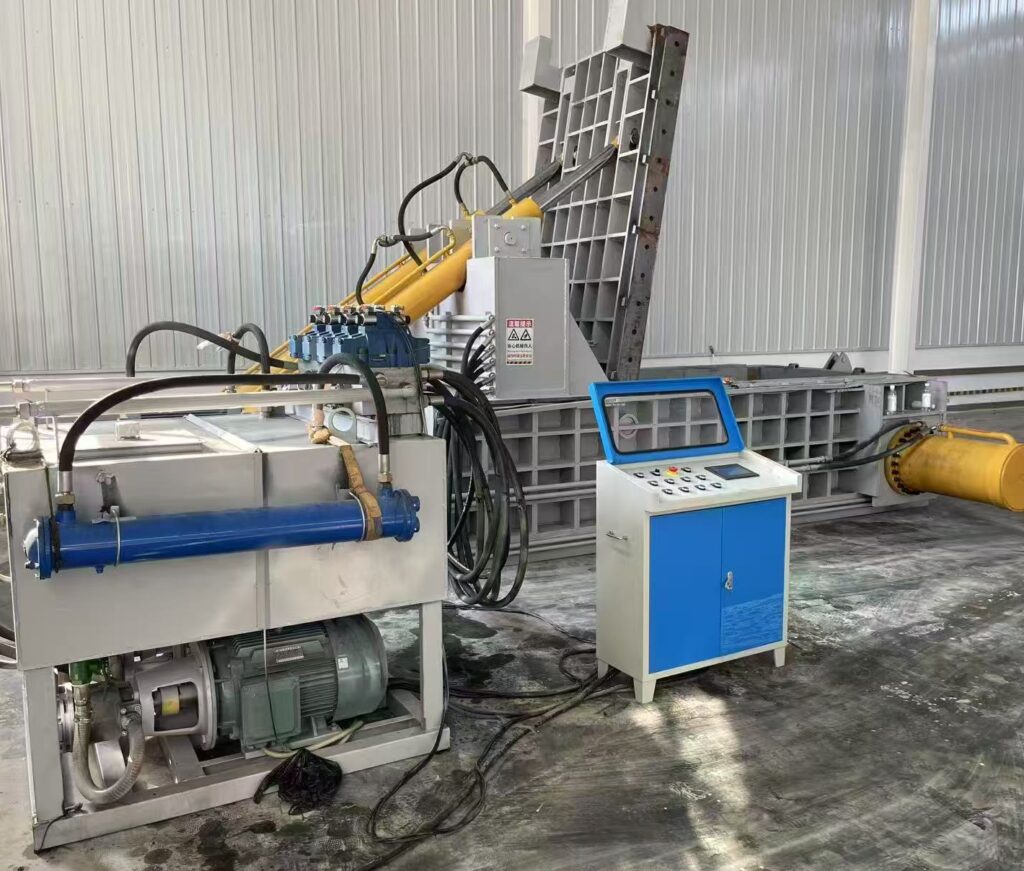
A horizontal metal baler is an industrial machine designed to compress loose metal materials into compact, dense bales. These bales are easier to transport, store, and recycle.
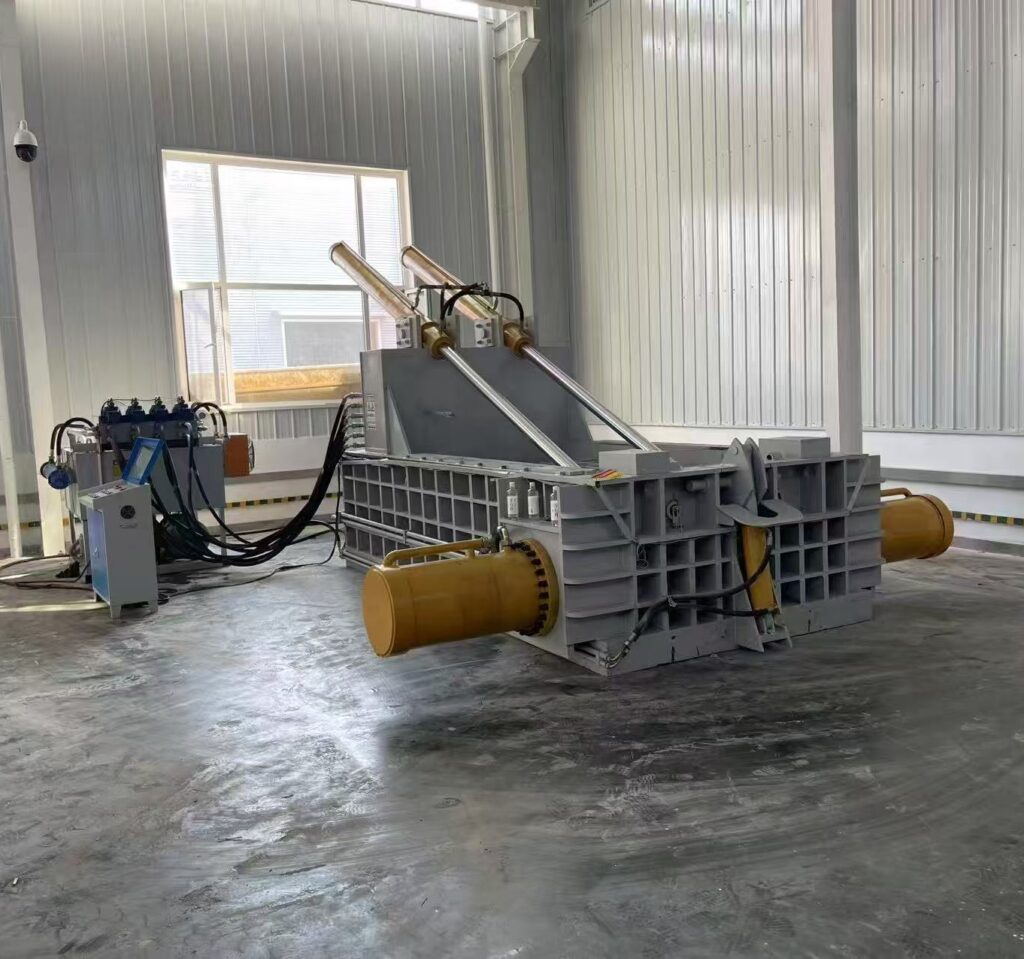
Unlike vertical balers, horizontal balers operate with a horizontal compression chamber, allowing for continuous feeding and higher efficiency. They are widely used in scrap yards, recycling centers, steel plants, and manufacturing facilities.
Key Features
-
High compression force (from 100 tons to over 1000 tons)
-
Continuous or semi-automatic operation
-
Ability to handle large volumes of scrap
-
Durable structure for heavy-duty use
Why Horizontal Metal Balers Are Important
Improve Efficiency And Productivity
Handling loose scrap metal is time-consuming and inefficient. A horizontal baler significantly reduces processing time by compressing large volumes quickly.
Reduce Transportation Costs
Loose scrap takes up a lot of space. By compressing it into dense bales, you can reduce transportation volume and save on shipping costs.
Enhance Workplace Safety
Loose metal can be hazardous. A baler helps organize and compact materials, reducing the risk of accidents.
Increase Material Value
Compact bales are more valuable in the recycling market because they are easier to handle and process.
How A Horizontal Metal Baler Works
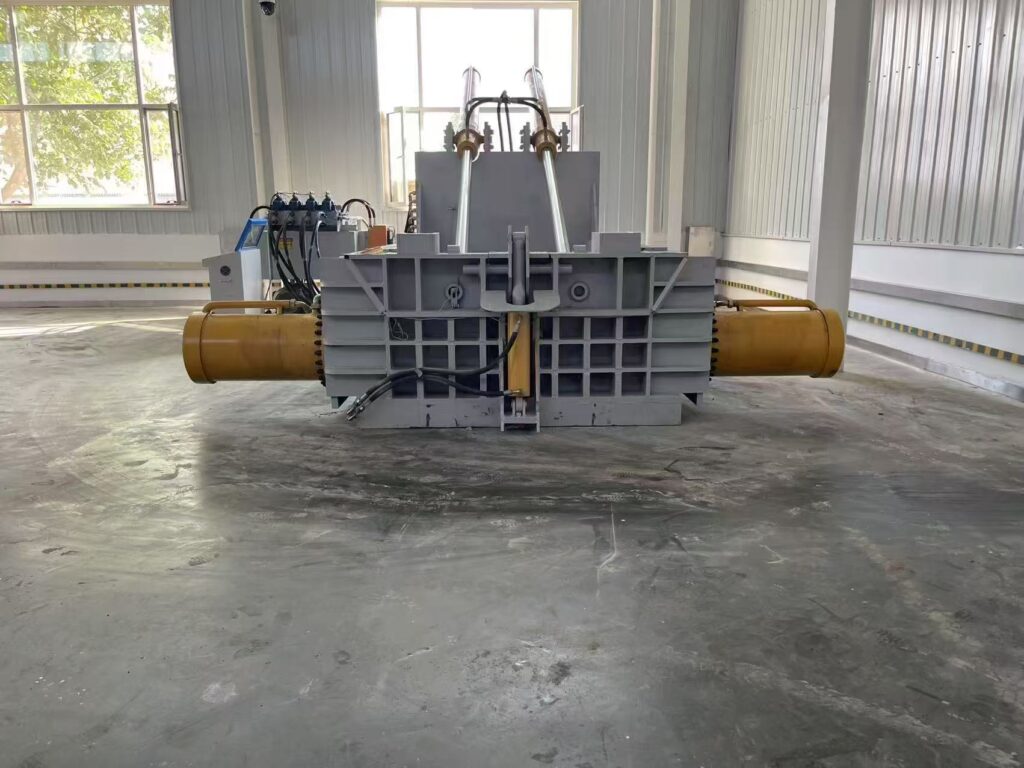
The working process of a horizontal metal baler is straightforward yet powerful.
Step 1: Feeding The Material
Scrap metal is loaded into the hopper manually or via conveyor systems.
Step 2: Compression
A hydraulic system drives a powerful ram that compresses the material horizontally inside the chamber.
Step 3: Bale Formation
Once the desired density is reached, the material is shaped into a uniform bale.
Step 4: Bale Discharge
The finished bale is pushed out automatically or manually, depending on the machine design.
Applications Of Horizontal Metal Balers
Horizontal metal balers are used across various industries:
-
Scrap metal recycling yards
-
Steel and aluminum processing plants
-
Automotive recycling facilities
-
Manufacturing factories
-
Waste management companies
They are capable of handling materials such as:
-
Steel scrap
-
Aluminum scrap
-
Copper
-
Car bodies
-
Industrial waste metal
How To Choose The Right Horizontal Metal Baler
Choosing the right model is crucial for maximizing efficiency and return on investment.
Consider Compression Force
The required pressure depends on the type of material:
-
Light metals (aluminum) → Lower tonnage
-
Heavy metals (steel, car bodies) → Higher tonnage (300–1000 tons)
Evaluate Production Capacity
Ask yourself:
-
How many tons per day do you process?
-
Do you need continuous operation?
Higher capacity machines are ideal for large-scale operations.
Check Bale Size Requirements
Different markets require different bale sizes. Ensure the machine produces bales that meet your buyer’s specifications.
Look At Automation Level
-
Manual
-
Semi-automatic
-
Fully automatic
Fully automatic machines reduce labor costs and improve efficiency.
Assess Power Consumption
Energy efficiency is important for long-term cost savings. Look for machines with optimized hydraulic systems.
Consider Machine Durability
Check:
-
Steel thickness
-
Cylinder quality
-
Hydraulic components
A durable machine ensures long-term reliability.
Tips For Maximizing Performance
To get the best performance from your horizontal metal baler:
-
Perform regular maintenance
-
Use proper feeding methods
-
Avoid overloading the machine
-
Train operators properly
-
Monitor hydraulic system performance
Common Mistakes To Avoid
-
Choosing a machine with insufficient tonnage
-
Ignoring future expansion needs
-
Focusing only on price instead of quality
-
Not considering after-sales support
Conclusion
A horizontal metal baler is a vital investment for any business dealing with scrap metal. It improves efficiency, reduces costs, enhances safety, and increases profitability.
By understanding what it is, how it works, and how to choose the right model, you can make an informed decision that benefits your business in the long run.
If you are looking for a reliable and high-performance solution, investing in the right horizontal metal baler will transform your operations and give you a strong competitive advantage.