
Introduction: Why Vertical Hydraulic Balers Are Essential
In today’s fast-paced industrial world, efficient waste management is more important than ever. Businesses need reliable, high-performance machines that can compress and manage various recyclable materials such as cardboard, paper, plastic, and metals. This is where Vertical Hydraulic Balers come into play. These machines are designed to save space, reduce transportation costs, and improve overall operational efficiency.
Vertical hydraulic balers stand out for their compact design, powerful hydraulic system, and user-friendly operation, making them a must-have in recycling centers, factories, and warehouses. Whether your goal is to streamline waste disposal or generate income from recyclable materials, a vertical baler is a practical investment that delivers long-term benefits.
What Is A Vertical Hydraulic Baler?

A Vertical Hydraulic Baler is a machine that compresses waste materials into dense, manageable bales. Unlike horizontal balers, vertical balers operate with a vertical chamber where materials are loaded from the top. Once loaded, a hydraulic ram applies extreme pressure to compress the materials into compact bales, which can then be tied with wires or straps for easy handling.
Key Features Of Vertical Balers
-
High Compression Force: Vertical balers use a hydraulic cylinder to exert thousands of pounds of pressure, ensuring tightly packed bales that maximize storage space.
-
Compact Footprint: Their vertical design takes up less floor space, making them ideal for facilities with limited space.
-
Versatile Material Handling: From cardboard and paper to plastic bottles and even light metals, vertical balers can handle a wide variety of recyclable materials.
-
Ease Of Operation: Most vertical balers feature simple controls, automated compression cycles, and safety mechanisms, allowing operators to work efficiently with minimal training.
Why Use A Vertical Hydraulic Baler?
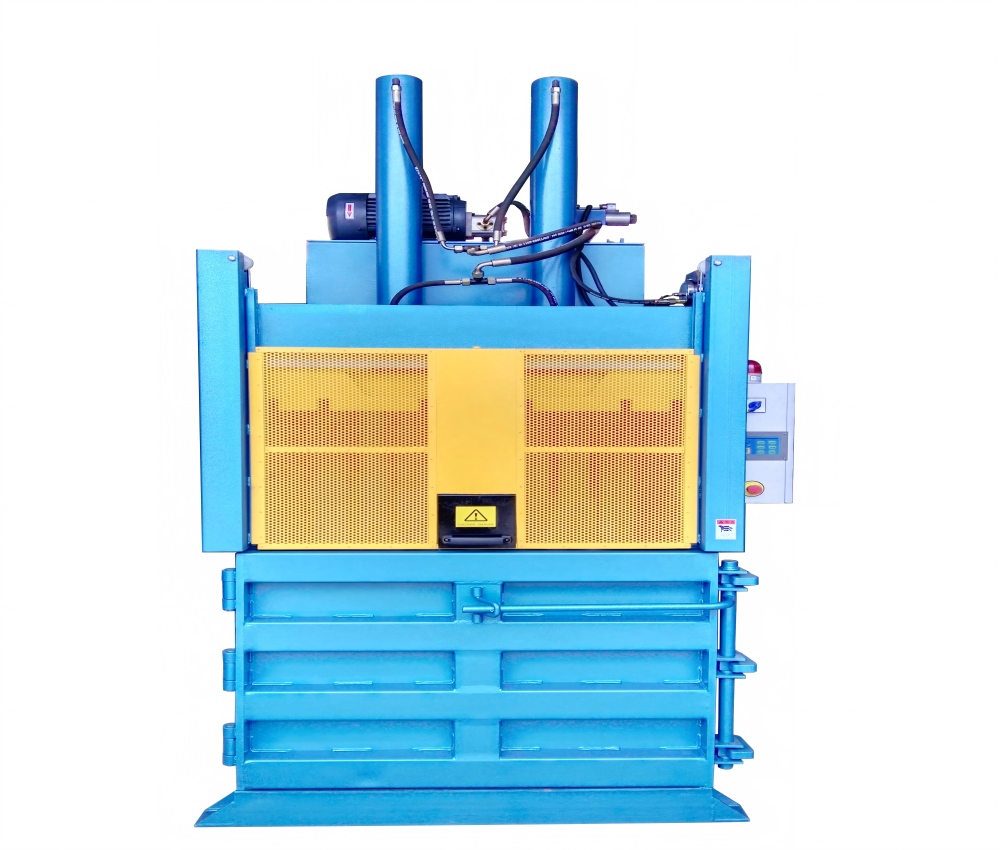
Investing in a vertical hydraulic baler provides multiple advantages for your business or facility:
1. Space Optimization
Compressed bales take up far less space than loose materials, freeing up valuable floor area in warehouses and production facilities.
2. Cost Savings
By compacting waste into dense bales, businesses can reduce transportation costs. More material fits into fewer trips, saving fuel, time, and labor costs.
3. Enhanced Recycling Efficiency
Vertical balers make it easy to manage and segregate recyclable materials. This not only supports environmental sustainability but can also generate additional revenue by selling compacted materials to recycling centers.
4. High Performance And Durability
Modern vertical balers are built with heavy-duty steel frames and powerful hydraulic systems, ensuring reliable, long-term performance even in high-volume operations.
How To Use A Vertical Hydraulic Baler
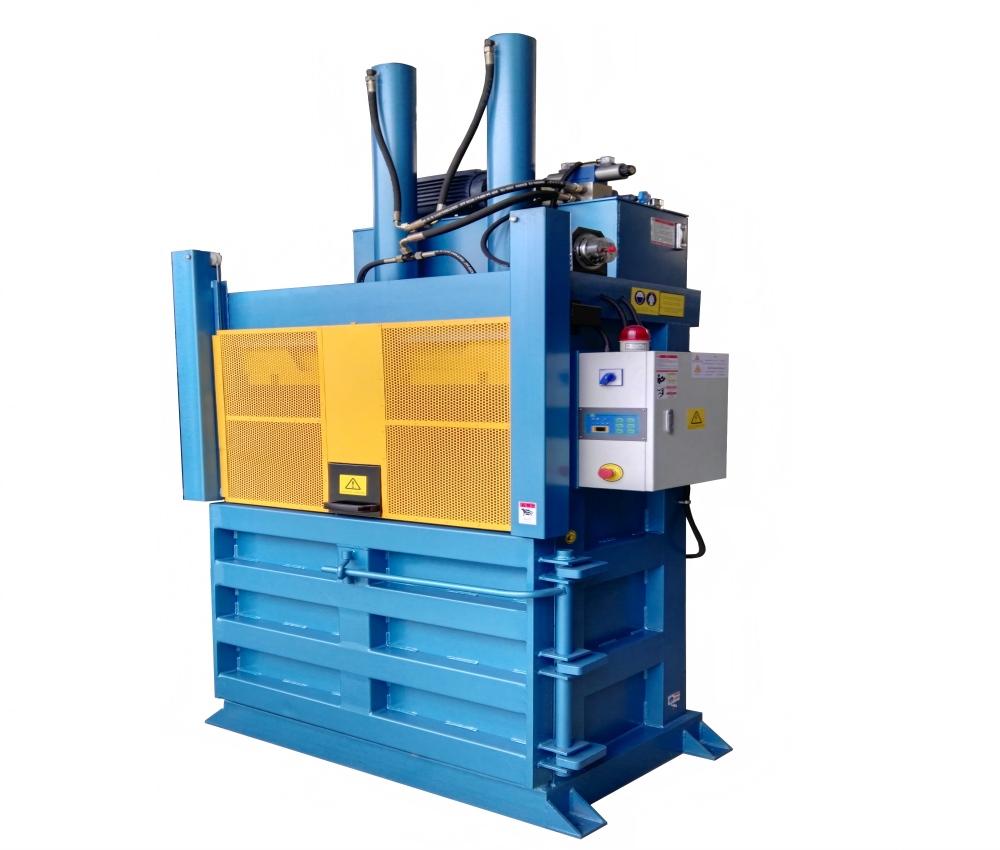
Using a vertical baler is straightforward but must follow safety and operational guidelines:
-
Preparation: Ensure the machine is on a stable surface, and check that all safety mechanisms are functional. Operators should wear protective gloves and safety gear.
-
Loading Materials: Open the top loading door and place the recyclable material into the compression chamber. Avoid overloading to prevent jams.
-
Compression: Close the door and start the hydraulic compression cycle. The ram will descend and compact the material into a dense bale.
-
Tying The Bale: Once compressed, tie the bale with wire or straps to maintain its shape. Some balers come with automatic tying systems for added convenience.
-
Ejection: Open the front door or eject tray and remove the finished bale for storage or transport.
-
Repeat: Continue the cycle for additional batches of material.
Tip: Regular maintenance, such as checking hydraulic oil levels, cleaning the chamber, and inspecting cylinders, ensures peak performance and longevity.
Choosing The Right Vertical Baler: A Practical Guide
Selecting the right vertical baler depends on your specific requirements. Consider the following factors:
1. Bale Size And Weight
Determine the size and weight of the bales your facility requires. For instance, a 10-ton vertical baler is ideal for medium-volume operations, producing bales weighing 200–400 kg. For larger facilities, 30–60 ton balers can handle heavier loads and larger materials.
2. Material Type
-
Paper And Cardboard: Lightweight balers with moderate compression force work well.
-
Plastic And PET Bottles: Choose balers with higher hydraulic pressure and strong, corrosion-resistant components.
-
Metal Scraps: Heavy-duty vertical balers with extreme compression power are necessary for densifying metals efficiently.
3. Automation Level
-
Manual Balers: Simple and cost-effective, suitable for low-volume operations.
-
Semi-Automatic Balers: Offer automated compression cycles but require manual tying, balancing efficiency and affordability.
-
Fully Automatic Balers: Ideal for high-volume recycling facilities, with automatic compression, tying, and ejection for maximum productivity.
4. Power Requirements
Check the motor specifications to match your facility’s electrical supply. Most vertical balers range from 5 kW to 22 kW, depending on compression force and cycle speed.
5. Safety Features
High-performance vertical balers include emergency stop buttons, safety interlocks, and overload protection to prevent accidents during operation. Always prioritize safety alongside efficiency.
High-Performance Features That Set Modern Vertical Balers Apart
Vertical balers today are engineered to deliver maximum efficiency, durability, and safety. Key high-performance features include:
-
Robust Hydraulic Systems: High-pressure cylinders capable of compressing dense materials efficiently.
-
Durable Steel Frames: Heavy-duty construction to withstand years of continuous operation.
-
Fast Cycle Times: Advanced models offer quicker compression cycles for increased throughput.
-
Energy Efficiency: Optimized hydraulics reduce power consumption while maintaining performance.
-
User-Friendly Controls: Touchscreen panels or remote controls simplify operation and monitoring.
Conclusion: Invest In Efficiency And Sustainability
A Vertical Hydraulic Baler is more than just a waste management tool—it’s an investment in efficiency, sustainability, and profitability. Its high performance, versatile operation, and compact design make it a perfect fit for businesses looking to optimize space, reduce costs, and manage recyclables responsibly.
By carefully considering bale size, material type, automation level, and safety features, you can select the ideal vertical baler for your operations. In doing so, you not only improve your workflow but also contribute to environmental sustainability by streamlining recycling processes.
Whether you run a small warehouse, a large recycling facility, or a factory generating significant waste, a vertical hydraulic baler ensures you handle materials efficiently, safely, and cost-effectively.
Upgrade your waste management process today with a high-performance vertical hydraulic baler—because efficiency and sustainability go hand in hand.